Calculate exactly how much your pool pump costs to run per day, month, and year. Compare single-speed vs. variable-speed pump savings.
Compare single-speed vs. variable-speed pump costs based on your electricity rate and run time.
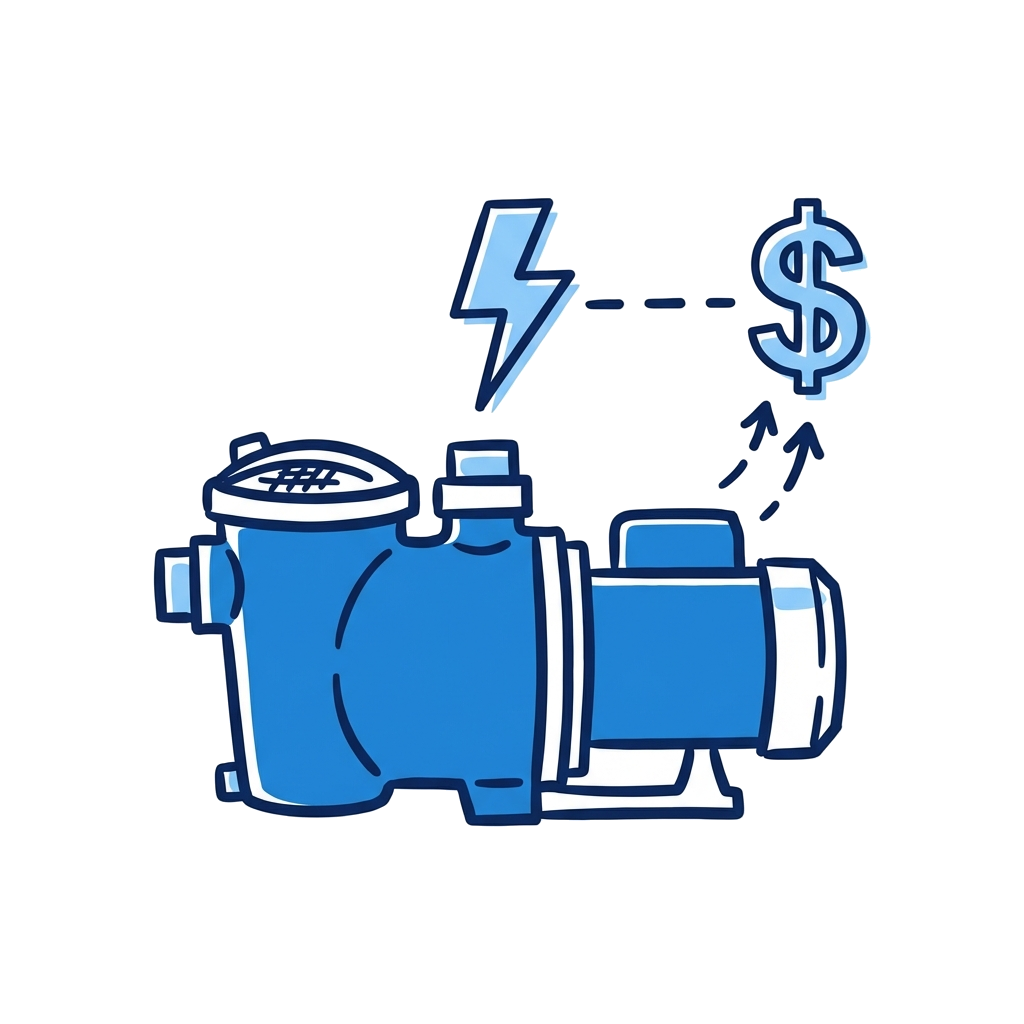
Typical: 8-12 hours per day
US average: $0.12-$0.18. Check your electric bill.
$0
per month
-
-
-
-
Variable speed pumps can save 50-80% on electricity costs by running at lower speeds for longer periods.
Your pool pump is likely one of the biggest electricity consumers in your home, potentially costing hundreds or even thousands of dollars per year. This free calculator helps you understand exactly how much your pump costs to operate and identifies opportunities for savings.
Pool pumps use electricity to circulate water through your filtration system. The energy cost depends on three key factors: pump wattage, hours of operation, and your electricity rate.
The formula for calculating pump energy cost is:
Daily Cost = (Pump Wattage × Hours/Day × Rate per kWh) ÷ 1,000
For example, a 2,000W pump running 8 hours/day at $0.18/kWh costs: (2,000 × 8 × 0.18) ÷ 1,000 = $2.88 per day, or approximately $86.40 per month.
Pool pump energy consumption varies significantly by horsepower and type:
Single-speed pumps run at full power whenever they're on, consuming maximum electricity regardless of actual filtration needs.
Variable-speed pumps can run at lower speeds for routine filtration, dramatically reducing energy consumption while still maintaining proper circulation.
Variable-speed pumps are the single most effective way to reduce pool energy costs. Here's why:
Energy consumption follows the cube of speed reduction. Running a pump at half speed uses only 1/8th the energy (not half). This means:
A 1.5 HP single-speed pump running 8 hours/day at $0.15/kWh:
The same pool with a variable-speed pump running 12 hours at low speed:
Your electricity rate can be found on your utility bill, usually expressed as cents or dollars per kilowatt-hour (kWh). Look for terms like:
Rates vary significantly by location and utility company:
Some utilities offer time-of-use rates with lower costs during off-peak hours (typically late night/early morning). Running your pump during these times can reduce costs significantly.
While the upfront cost is higher ($800-$1,500), variable-speed pumps typically pay for themselves in 1-3 years through energy savings. Many states also offer rebates for energy-efficient pump upgrades.
Many pools are over-pumped. Calculate your actual turnover needs and reduce run time accordingly. Use our Pump Run Time Calculator to find your optimal schedule.
If your utility offers time-of-use rates, schedule your pump to run during the cheapest hours. Early morning (before 6 AM) and late evening (after 9 PM) are typically least expensive.
A dirty filter or clogged skimmer makes your pump work harder. Regular maintenance keeps your system running efficiently and reduces energy consumption.
Oversized pumps waste energy. A properly sized pump provides adequate circulation without excess power consumption.
A typical 1.5 HP single-speed pump running 8 hours/day costs $50-$100/month depending on your electricity rate. Variable-speed pumps can reduce this to $15-$30/month. Use our calculator above for your specific situation.
Yes, in most cases. Variable-speed pumps cost $800-$1,500 but save $300-$600/year in electricity. Most homeowners see a payback period of 1-3 years, after which they continue saving money for the life of the pump (typically 10-15 years).
Check the pump's nameplate or motor label for wattage or amperage. If only amperage is listed, multiply by voltage (typically 115V or 230V) to get watts. You can also look up your pump model's specifications online or use our common wattage estimates above.
It can if your utility offers time-of-use rates. Off-peak electricity is often 20-50% cheaper than peak rates. Check with your utility company to see if this option is available in your area.
A single-speed pump typically uses 8-24 kWh per day depending on horsepower and run time. Variable-speed pumps at low settings use only 2-6 kWh per day for the same filtration results.
Pool pumps typically account for 10-25% of a household's electricity usage during pool season. In warm climates where pools run year-round, this percentage can be even higher.
Running at lower speed is far more efficient due to the pump affinity laws. A pump at half speed uses only 1/8th the energy. Variable-speed pumps at low speed for longer periods always beat single-speed pumps for shorter periods.
Yes, daily circulation is important for water quality. However, you may not need to run it as long as you think. Calculate your actual turnover needs and optimize accordingly.
Reduce run time to the minimum needed for proper turnover, run during off-peak hours if available, keep filters clean, ensure proper water chemistry, and shade your pump motor from direct sun to improve efficiency.
Many states and utilities offer rebates of $100-$500 for upgrading to variable-speed or ENERGY STAR certified pumps. Check with your local utility company or the DSIRE database for available incentives in your area.
Here's a quick comparison of annual operating costs for different pump types (8 hours/day at $0.15/kWh):
While you're out servicing pools, PoolDial answers every call professionally and captures new customer inquiries 24/7. Focus on the work you love while AI handles your phone.
Start Free Trial