
Sole Proprietor vs LLC for Pool Service: What Real Pool Pros Recommend


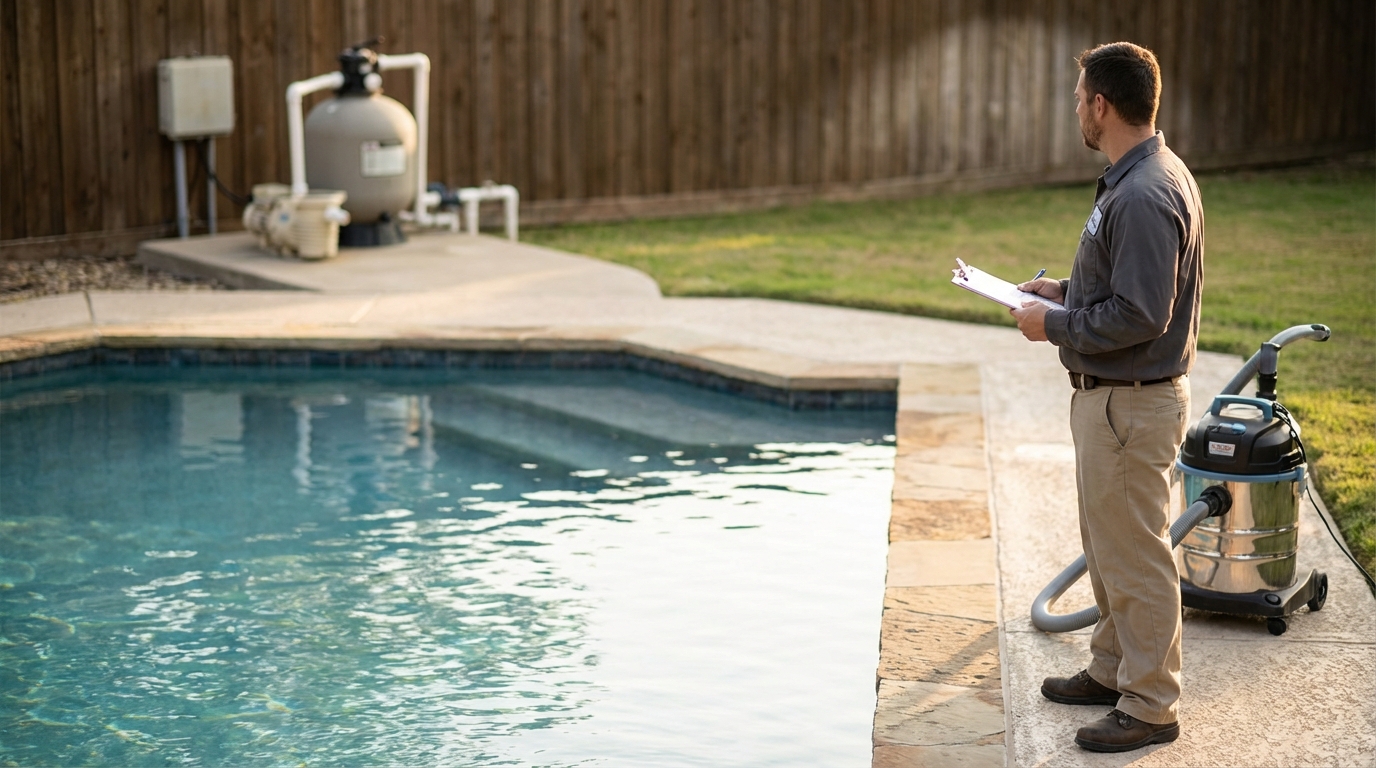
One of the first decisions you'll make when starting a pool service business is choosing your business structure. Should you keep it simple as a sole proprietor, or form an LLC for liability protection? What about an S-Corp for tax savings?
A discussion on r/PoolPros revealed what business structures pool professionals actually use and recommend. Here's what 17 real pool pros had to say.
Key Takeaways
- LLC is the most popular choice among pool pros for liability protection
- S-Corp election becomes valuable at higher income levels ($50K-$75K+ net profit)
- Single-member LLCs are taxed as sole proprietors by default
- Personal liability is the biggest concern with sole proprietorships
- Consult a CPA before making your decision - it depends on your specific situation
What Pool Pros Actually Use: Survey Results
Pool service business owners on r/PoolPros shared what business structures they use. Here's what the discussion revealed:
The clear winner was LLC, with nearly 40% of respondents using this structure. The main reason? Liability protection.
"LLC with liability. That's it. Simple, and if something happens, your personal assets aren't on the line."
- Pool pro on r/PoolProsUnderstanding Each Business Structure
Before diving into the pros and cons, let's clarify what each structure actually means for your pool business:
- No formal registration required
- You and the business are legally the same
- All profits taxed as personal income
- Full personal liability for business debts
- Easiest to start, simplest taxes
- Separates personal and business assets
- Protects your home, car, savings from lawsuits
- Default taxation as sole prop (single-member)
- Can elect S-Corp taxation for savings
- Moderate setup, annual state fees
- Can be LLC with S-Corp tax election
- Pay yourself a "reasonable salary"
- Remaining profits avoid self-employment tax
- Requires payroll, more complex taxes
- Savings only at higher income levels
The Single-Member LLC Clarification
Several pool pros in the survey pointed out an important distinction that confuses many business owners:
"A single member LLC is considered a 'disregarded entity' for tax purposes. You report the income/expenses on your Schedule C, just like a sole proprietorship. The difference is the liability protection."
- Pool business owner explaining LLC taxationThis means you can have the liability protection of an LLC while still having the simple tax filing of a sole proprietor. It's the best of both worlds for many small pool service businesses.
Sole Proprietor: Pros and Cons
Pros
- Zero setup costs or paperwork
- Simplest tax filing (Schedule C)
- Complete control over business decisions
- No annual state fees or reports
- Easy to start immediately
Cons
- Personal liability for everything
- Your home, car, savings at risk if sued
- Less professional appearance to some clients
- Harder to get business credit
- No separation of personal/business assets
The biggest concern pool pros mentioned about sole proprietorships was liability. In an industry where you're working with chemicals, heavy equipment, and on other people's property, the risk is real.
"I was a sole prop for years, but I'm planning on switching to LLC. The liability exposure just isn't worth it when you think about what could go wrong."
- Pool service owner considering the switchLLC: Pros and Cons
Pros
- Protects personal assets from business liabilities
- More professional/credible to customers
- Flexible taxation options (sole prop or S-Corp)
- Easier to get business bank accounts/credit
- Separation of personal and business finances
Cons
- State filing fees ($50-$500 depending on state)
- Annual report requirements in most states
- Slightly more complex record-keeping
- Must maintain separation of finances
- Some states have annual LLC taxes
For most pool service businesses, the LLC is the sweet spot. You get liability protection without the complexity of a corporation, and you can still file taxes as simply as a sole proprietor.
S-Corp: When Does It Make Sense?
Several pool pros mentioned using an S-Corp or electing S-Corp taxation for their LLC. But when does this actually save you money?
*Approximate savings. The $50K distribution avoids 15.3% self-employment tax. Actual savings depend on your specific situation.
The S-Corp election works by allowing you to split your income between salary (subject to employment taxes) and distributions (not subject to self-employment tax). This can save you thousands per year - but only if you're making enough profit to justify the added complexity.
"S-Corp makes sense once you're consistently making $50K-$75K+ in net profit. Below that, the accounting costs and complexity often eat up any tax savings."
- CPA advice commonly cited by pool prosS-Corp Considerations
- Must pay yourself a "reasonable salary" - The IRS will penalize you if your salary is too low
- Requires payroll - You'll need to run payroll for yourself, with withholding and quarterly filings
- More complex taxes - You'll likely need a CPA, which adds cost
- Annual compliance - More paperwork and deadlines to track
When to Upgrade Your Business Structure
Based on the survey responses and common advice, here's a general progression for pool service businesses:
Start: Sole Proprietorship
When you're just testing the waters with a few customers, a sole proprietorship lets you get started immediately with zero paperwork. Focus on building your skills and customer base first.
$25K+ Revenue: Form an LLC
Once you have regular customers and real revenue, it's time to protect yourself. An LLC separates your personal assets from business liability. Most pool pros say this is when they made the switch.
$50K-$75K+ Net Profit: Consider S-Corp Election
When your net profit is consistently high enough, the S-Corp tax election can save you thousands in self-employment taxes. Talk to a CPA to run the numbers for your specific situation.
Don't Forget General Liability Insurance
Multiple pool pros emphasized that your business structure is only part of your protection strategy. Regardless of whether you're an LLC or sole proprietor, you need general liability insurance.
"LLC protects your personal assets from business debts and lawsuits. But insurance actually pays for the damages. You need both."
- Experienced pool service ownerGeneral liability insurance for pool service businesses typically runs $500-$1,500 per year and covers:
- Property damage (breaking a customer's gate, cracking tiles, etc.)
- Bodily injury on customer property
- Completed operations (damage from your work after you leave)
- Legal defense costs if you're sued
State-Specific Considerations
Your state matters when choosing a business structure. A few things to check:
- LLC filing fees vary widely ($50 in some states, $500+ in California)
- Annual franchise taxes - California charges $800/year minimum for LLCs
- Contractor licensing requirements - Some states require specific licenses for pool service
- State income taxes - May affect whether S-Corp election saves you money
For state-specific guidance, check out our legal requirements guides for Texas, Florida, and California.
The Bottom Line
Based on what real pool pros recommend:
- Starting out? A sole proprietorship is fine initially, but plan to upgrade
- Have real customers and revenue? Form an LLC for liability protection
- Making $50K+ in net profit? Talk to a CPA about S-Corp election
- Regardless of structure: Get general liability insurance
The overwhelming consensus from the pool pro community: the LLC is worth it. The small annual cost is nothing compared to the peace of mind of knowing your personal assets are protected.
And as one pool pro put it: "Talk to a CPA. Seriously. A good accountant will save you way more than they cost."
Growing Your Pool Service Business?
PoolDial helps you manage routes, track customers, and streamline operations - so you can focus on building your business, not paperwork.
Start Free Trial