
Does a Pool Increase Home Value? 2026 Data by State and Region


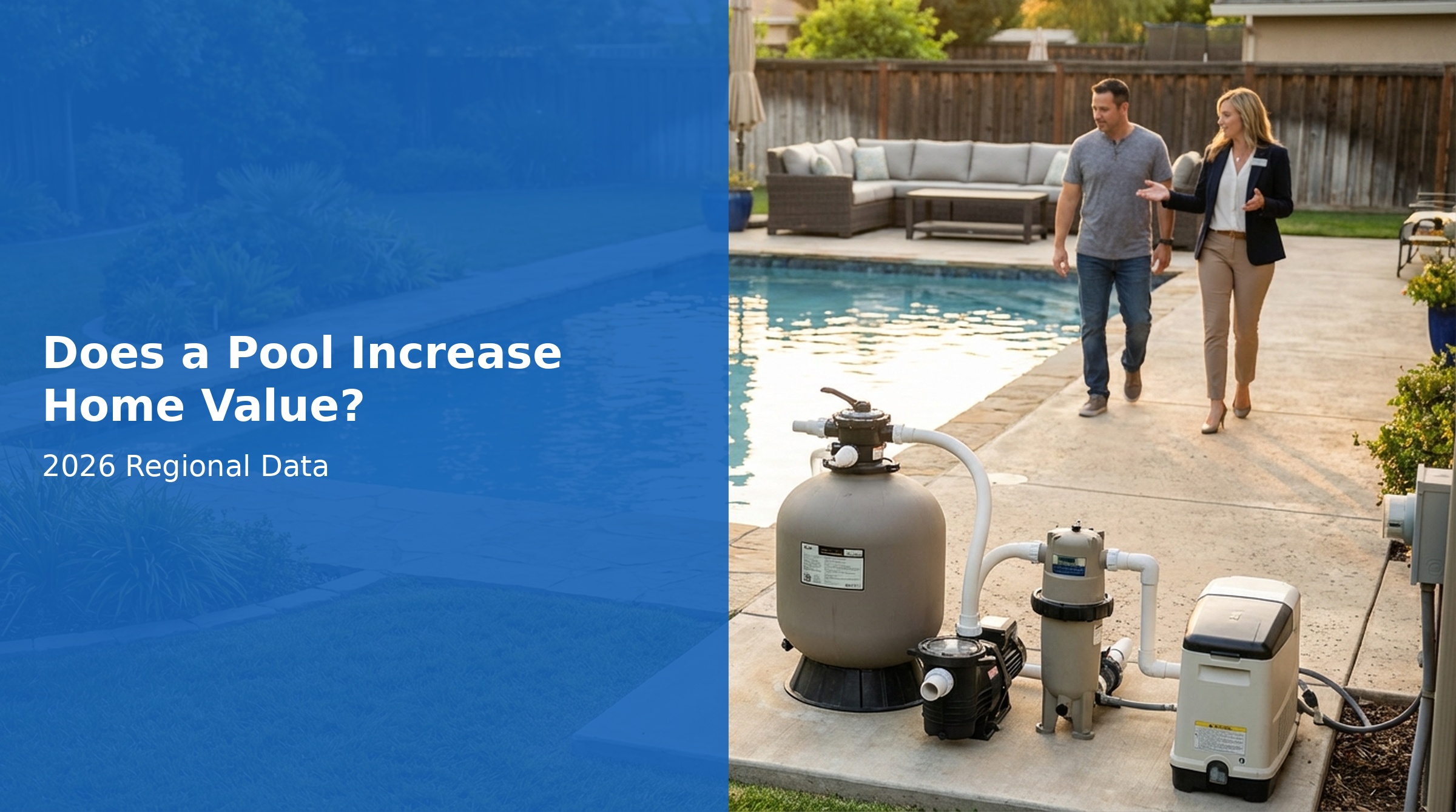
The relationship between pools and home value is highly regional. According to SEC filings from the industry's largest manufacturers, pools are increasingly viewed as a "strategic home investment" rather than a luxury—especially in the Sun Belt states where housing inventory remains tight.
Key Statistics
The "Build-in-Place" Trend
High mortgage rates and housing shortages have fundamentally changed how homeowners think about pools. According to Pool Corporation's SEC filings, consumers are increasingly choosing to renovate their existing homes rather than move, with the pool serving as the "centerpiece" of the outdoor living space.[2]Pool Corporation 10-KFiscal year ended December 31, 2024SEC Filing
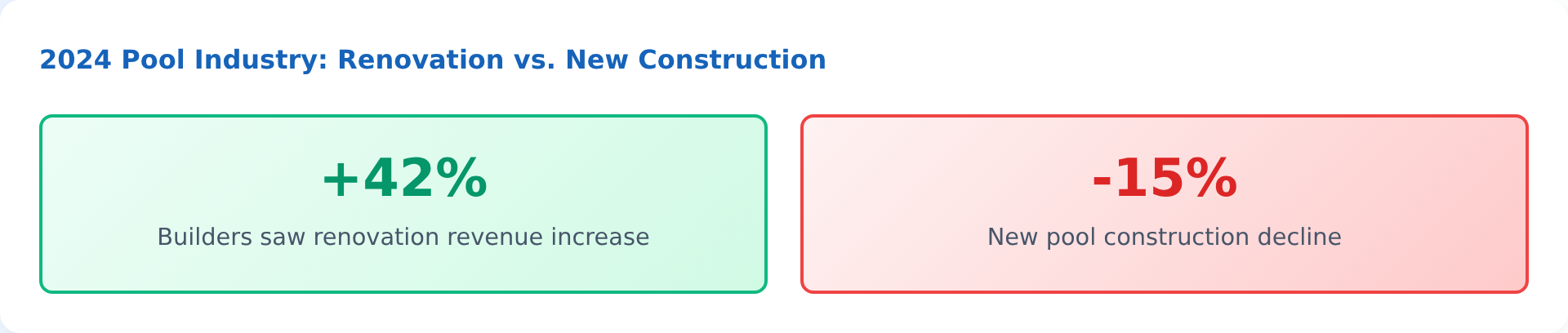
Source: PHTA Industry Surveys, 2024-2025
This divergence tells an important story: while new pool construction fell 15% in 2024, 42% of pool builders reported increases in remodel and renovation revenue.[3]PHTA Industry SurveysQ3-Q4 2024 Pulse Reports via AQUA MagazineArticle Homeowners are investing in their existing properties because the math favors renovation over relocation.
Key Insight
While exact ROI figures vary by market, the "Southern Migration" trend and current housing inventory shortage have transformed pools from a luxury into a strategic home investment. 42% of industry firms reported a rise in major remodel work from homeowners choosing to "build-in-place" rather than move.
Regional Value Differences
Pool value is not uniform across the country. According to Pool Corporation's SEC filings, the value added by a pool is most recognized in the "southern half of the U.S."[2]Pool Corporation 10-KFiscal year ended December 31, 2024SEC Filing
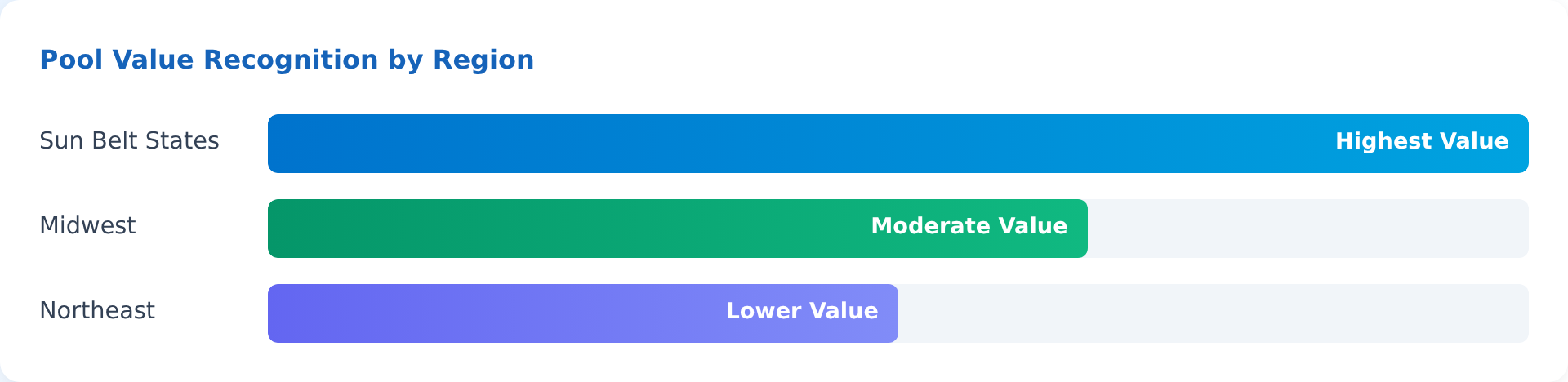
Source: Industry analysis based on Pool Corp 10-K regional sales data
The four major Sun Belt states—Florida, California, Texas, and Arizona—represent 54% of all industry net sales, reflecting where pools provide the most value to homeowners.[2]Pool Corporation 10-KFiscal year ended December 31, 2024SEC Filing
Why Consumers Invest in Pools
According to industry SEC filings, homeowners cite three primary reasons for pool investment:
| Demand Driver | Description | Impact on Value |
|---|---|---|
| Enhanced Property Value | Pools as a "natural addition" for building home equity | High |
| Relaxation & Lifestyle | Outdoor living and entertainment space | Medium |
| Health & Exercise | Low-impact fitness and family activity | Medium |
Source: Latham Group 10-K and Pool Corp 10-K
Latham Group's SEC filings specifically note that pool ownership is viewed as a "natural addition for consumers wanting to build the value of their homes."[1]Latham Group, Inc. 10-KFiscal year ended December 31, 2024SEC Filing
The Housing Shortage Factor
The current housing market has created unique conditions favoring pool investment:
Pool Corporation explicitly cites the "persistent housing shortage and high mortgage rates" as factors encouraging consumers to renovate rather than move.[2]Pool Corporation 10-KFiscal year ended December 31, 2024SEC Filing For many homeowners locked into sub-4% mortgage rates, adding a pool makes more financial sense than buying a new home at 7%+ rates.
Regional Value Breakdown
While exact ROI percentages are not disclosed in SEC filings, the regional concentration of industry activity provides insight into where pools add the most value:
| Region | Share of Industry Sales | Pool Value Recognition |
|---|---|---|
| Florida | ~15% | Highest — Year-round use, expected feature |
| California | ~15% | High — Outdoor lifestyle culture |
| Texas | ~14% | High — Hot climate, growing population |
| Arizona | ~10% | High — Desert climate necessity |
| Other 46 States | ~46% | Variable — Seasonal use impacts value |
Source: Pool Corp 10-K, 2024 (regional sales distribution)
When a Pool Adds the Most Value
Based on industry data, pools add the most home value when:
- Located in Sun Belt states — Year-round use maximizes the lifestyle benefit
- Part of a complete outdoor living space — Pools as "centerpiece" of the outdoor room[2]Pool Corporation 10-KFiscal year ended December 31, 2024SEC Filing
- Fiberglass construction — 35-40% lower total cost of ownership[1]Latham Group, Inc. 10-KFiscal year ended December 31, 2024SEC Filing
- Well-maintained with updated equipment — Modern variable speed pumps and automation add appeal
The Bottom Line on Pool ROI
While industry SEC filings don't provide exact ROI percentages, they make clear that pool value is highly dependent on location. In Sun Belt markets where pools are expected features, they function as home improvements that preserve and enhance property value. In seasonal markets, the value proposition is more about lifestyle than pure financial return.
The 42% of builders reporting increased renovation revenue suggests that homeowners—especially those locked into low mortgage rates—are treating pools as strategic investments in their existing properties.
For more industry data, see our pool ownership rate by state or total cost of pool ownership over 10 years.
Serve Homeowners Who Invest in Their Properties
PoolDial helps pool service professionals manage renovation projects, track equipment upgrades, and build lasting customer relationships.
Start Your Free TrialSources
- [1] Latham Group, Inc. Annual Report (Form 10-K) — Fiscal year ended December 31, 2024. SEC Filing
- [2] Pool Corporation Annual Report (Form 10-K) — Fiscal year ended December 31, 2024. SEC Filing
- [3] PHTA Industry Surveys — Q3-Q4 2024 Quarterly Pulse Reports via AQUA Magazine. Article