What is Acid Abuse? SLANG

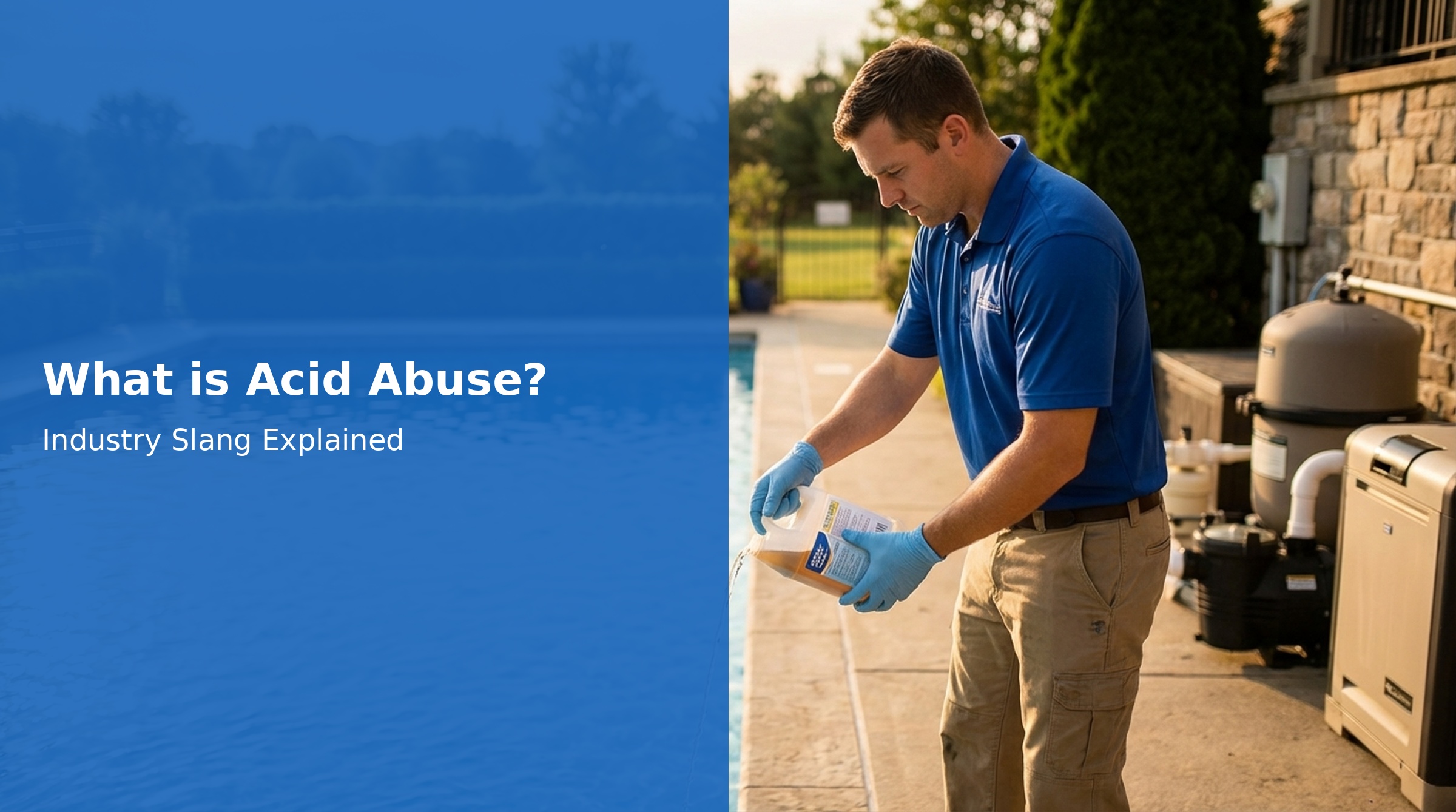
Every experienced pool service professional has seen it—the telltale signs of etched plaster, corroded metal equipment, and frustrated customers dealing with burning eyes and skin irritation. These symptoms often point to a common problem in our industry: acid abuse. This pervasive issue affects countless pools across the country, yet many technicians remain unaware of how their well-intentioned chemical adjustments can cause long-term damage and costly repairs.
Key Takeaways
- Acid abuse occurs when technicians overuse muriatic acid, often underestimating its potency
- Signs include etched plaster, corroded equipment, and dangerously low pH levels
- Proper acid demand testing and gradual dosing prevent most cases
- Understanding water chemistry fundamentals is crucial for safe acid use
- Prevention saves customers thousands in repair costs and protects your reputation
Understanding Acid Abuse in Pool Service
Acid abuse represents one of the most damaging yet preventable problems in pool maintenance. This industry slang term describes the tendency to overuse muriatic acid (hydrochloric acid) when adjusting pool chemistry, typically resulting from technicians underestimating the acid's strength or misunderstanding proper dosing procedures.
The issue often stems from a "more is better" mentality. When faced with high pH readings, inexperienced technicians may add excessive amounts of acid, thinking it will solve the problem faster. However, muriatic acid is incredibly potent—even small amounts can dramatically alter water chemistry. A single ounce of muriatic acid can lower the pH of 1,000 gallons of water by approximately 0.1 units, making precise dosing critical.
The Science Behind Acid Strength
Muriatic acid typically comes in concentrations between 20-32%, making it far stronger than many technicians realize. When added to pool water, it immediately begins lowering both pH and total alkalinity. The relationship between these parameters is complex, and improper acid addition can create a cascading effect of chemical imbalances that become increasingly difficult to correct.
Recognizing the Warning Signs
Identifying acid abuse early can save customers thousands of dollars in repairs and prevent serious safety hazards. Pool service professionals should watch for these telltale indicators:
Physical Damage to Pool Surfaces
Plaster etching appears as rough, pitted surfaces where smooth plaster once existed. The acid literally dissolves the calcium compounds in the plaster, creating permanent damage that requires expensive resurfacing to repair. Etched areas often feel gritty to the touch and may appear discolored or stained.
Aggregate exposure in plaster pools indicates severe etching, where the acid has removed enough surface material to expose the underlying aggregate. This creates an uncomfortable swimming surface and provides areas where algae and bacteria can take hold.
Equipment Corrosion and Damage
Metal components throughout the pool system suffer accelerated corrosion in acidic conditions. Heat exchangers, pump housings, ladder rails, and underwater lights all become vulnerable when pH drops too low. Copper heat exchangers are particularly susceptible, often developing pinhole leaks that require costly replacement.
Pool automation systems and salt chlorine generators also suffer in acidic conditions. The electronic sensors that monitor water chemistry become less accurate, and the electrolytic cells in salt systems experience accelerated calcium buildup as they work harder to maintain proper chlorine levels.
Chemical Imbalances
Consistently low pH readings below 7.0 indicate potential acid abuse, especially when coupled with low total alkalinity. These conditions create an unstable water chemistry situation where small additions of any chemical cause dramatic swings in pH levels.
Real-World Consequences and Case Studies
Consider this scenario: A newer technician encounters a pool with a pH reading of 8.2 and decides to add a full gallon of muriatic acid to "get it down fast." The next day, the pH has dropped to 6.8, the water appears cloudy, and the customer complains of eye irritation. Attempting to correct the situation, the technician adds sodium bicarbonate, causing the pH to swing back up to 8.4. This cycle of overcorrection continues, each time causing more stress to the pool's surfaces and equipment.
In another common situation, a service technician regularly adds acid without testing total alkalinity. Over time, the alkalinity drops to dangerous levels, creating a buffer-less environment where pH becomes extremely unstable. The customer experiences constant chemistry problems, and the pool's plaster begins showing signs of etching within months rather than years.
Prevention Through Proper Practices
Acid Demand Testing
The most effective way to prevent acid abuse is through proper acid demand testing. This process involves adding measured amounts of acid to a water sample to determine exactly how much is needed to achieve the desired pH level. By scaling this test result to the pool's volume, technicians can add precisely the right amount of acid without guessing.
Professional chemical dosage calculators provide accurate dosing recommendations based on current water chemistry readings and pool volume. These tools eliminate guesswork and help technicians avoid the common mistake of over-dosing.
Understanding Water Balance
Proper acid use requires understanding the complete picture of water balance, not just pH levels. The Langelier Saturation Index (LSI) provides a comprehensive view of water balance, helping technicians determine when acid addition is appropriate and when other adjustments might be more suitable.
Total alkalinity serves as the water's buffer system, preventing rapid pH changes. Before adding acid to lower pH, technicians should always check alkalinity levels. If alkalinity is already low (below 80 ppm), adding acid may create dangerous instability even if pH appears high.
Gradual Adjustment Protocols
Professional pool service requires patience and systematic approaches. Rather than trying to correct major pH imbalances in a single visit, experienced technicians make gradual adjustments over several service calls. This approach prevents overcorrection and allows the water chemistry to stabilize naturally.
A good rule of thumb is never to adjust pH by more than 0.2-0.3 units in a single treatment. This conservative approach prevents acid abuse while still making meaningful progress toward balanced water chemistry.
Recovery and Remediation
When acid abuse has already occurred, recovery requires careful attention to water balance restoration. The first priority is raising pH and alkalinity to safe levels using sodium bicarbonate or sodium carbonate. However, technicians must be careful not to overcorrect in the opposite direction.
For pools showing signs of plaster etching, calcium hardness levels may need adjustment to help protect remaining surfaces. The LSI calculation becomes particularly important during recovery, as it helps determine the optimal calcium hardness level for the specific pool conditions.
Professional Standards and Best Practices
Preventing acid abuse ultimately comes down to education and professional standards. Service technicians should understand that muriatic acid is a powerful tool that requires respect and precision. Regular training on water chemistry principles and proper testing procedures helps prevent costly mistakes.
Documentation also plays a crucial role in prevention. Keeping detailed records of chemical additions and water test results helps identify patterns that might lead to problems. When multiple technicians service the same pool, good records prevent confusion and accidental overdosing.
Building a comprehensive understanding of pool service terminology helps technicians communicate more effectively and avoid misunderstandings that can lead to chemical abuse situations.
Protecting Your Business and Customers
Acid abuse doesn't just damage pools—it damages professional reputations and customer relationships. When a service company's chemical practices cause thousands of dollars in plaster damage or equipment corrosion, the resulting liability issues and negative reviews can significantly impact business success.
By implementing proper testing procedures, using accurate dosing calculations, and training staff on the dangers of acid abuse, pool service professionals protect both their customers' investments and their own business interests. The extra time spent on proper chemical management pays dividends in customer satisfaction and reduced liability exposure.
Prevention of acid abuse represents a fundamental aspect of professional pool service. Through proper education, careful testing, and respect for the power of pool chemicals, service technicians can maintain beautiful, safe pools while avoiding the costly consequences of chemical misuse. Remember: when it comes to acid addition, precision and patience always outperform speed and guesswork.