
What is Bicarb?

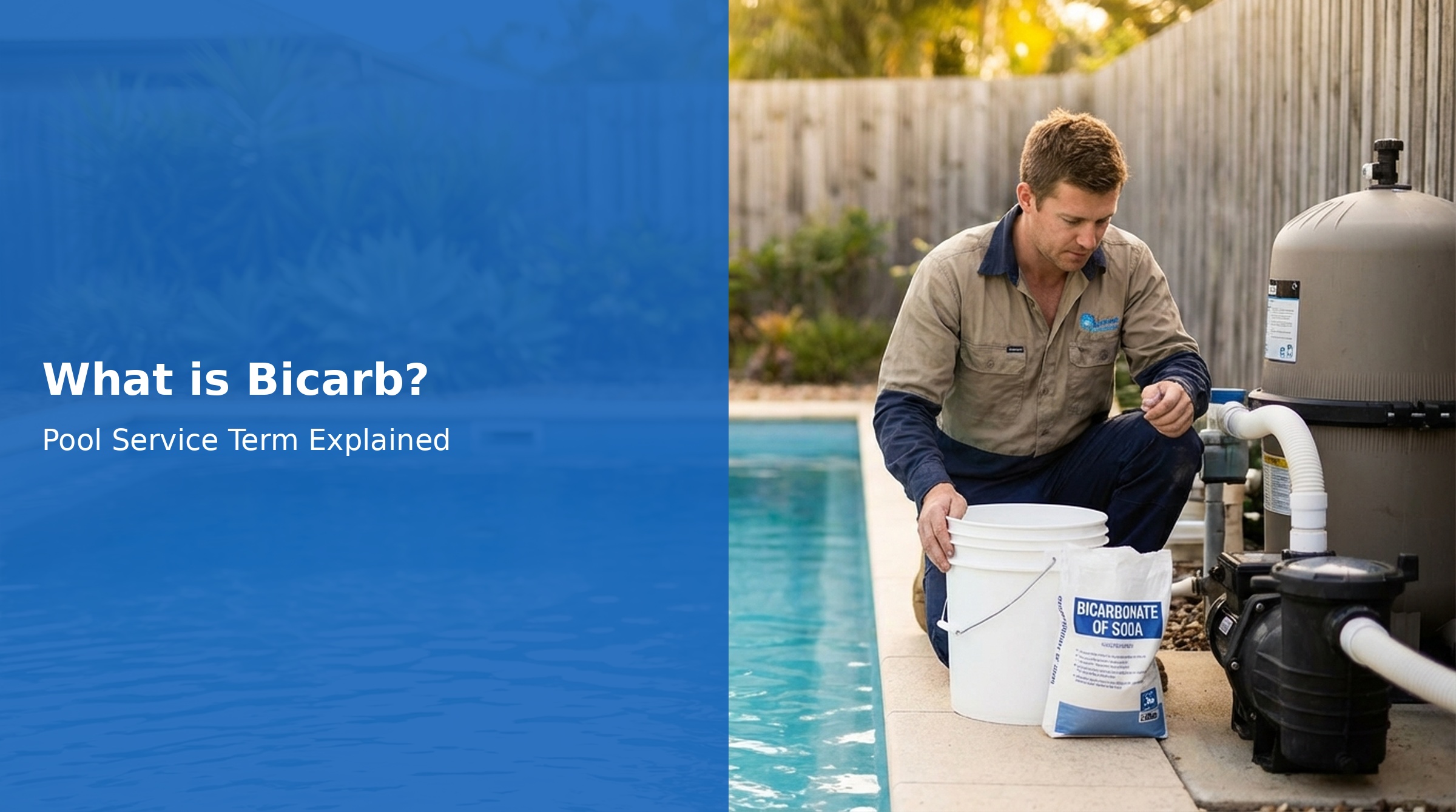
In the pool service industry, "bicarb" is an essential chemical that can make or break your water balancing efforts. Short for sodium bicarbonate, this alkaline compound serves as the primary tool for raising total alkalinity in swimming pools and spas. Understanding when, why, and how to use bicarb effectively is crucial for maintaining crystal-clear water and preventing costly equipment damage that can arise from improper water chemistry.
Key Takeaways
- Bicarb (sodium bicarbonate) is the go-to chemical for raising total alkalinity in pools
- Proper alkalinity levels (80-120 ppm) prevent pH fluctuations and equipment corrosion
- Always dissolve bicarb completely before adding to prevent cloudy water and staining
- Test alkalinity regularly as it directly impacts pH stability and overall water balance
- Different pool surfaces and equipment may require specific alkalinity targets within the ideal range
What is Bicarb in Pool Service?
Sodium bicarbonate, commonly referred to as "bicarb" in the pool industry, is a white crystalline powder that serves as an alkalinity increaser. Unlike baking soda from your kitchen pantry, pool-grade sodium bicarbonate is specifically manufactured for water treatment applications, ensuring consistent purity and effectiveness.
When dissolved in water, bicarb releases bicarbonate ions that act as a buffer system, helping to stabilize pH levels and prevent dramatic chemical swings that can damage pool equipment and create uncomfortable swimming conditions. This buffering capacity is what makes total alkalinity such a critical component of proper water chemistry.
The Science Behind Bicarb
Bicarb works by increasing the water's ability to resist pH changes through what chemists call the bicarbonate buffer system. When acid is added to properly alkalized water, the bicarbonate ions neutralize the acid, preventing pH from dropping too quickly. Conversely, when bases are introduced, the system helps prevent pH from rising too rapidly.
Why Total Alkalinity Matters
Total alkalinity serves as the foundation of pool water chemistry, and bicarb is your primary tool for maintaining it within the ideal range of 80-120 parts per million (ppm). Without proper alkalinity levels, you'll face a cascade of problems that can frustrate both you and your clients.
Equipment Protection
Low alkalinity creates corrosive water conditions that can damage expensive pool equipment including heaters, pumps, and metal fittings. The acidic environment literally dissolves metal components, leading to premature failure and costly repairs. Proper bicarb application protects your clients' investments and reduces your liability.
Surface Preservation
Pool surfaces, particularly plaster and tile, suffer significantly when alkalinity drops below acceptable levels. Low alkalinity water becomes aggressive, etching plaster surfaces and causing permanent damage that requires expensive resurfacing. Maintaining proper alkalinity with bicarb prevents these costly issues.
Chemical Efficiency
When alkalinity levels are correct, all other chemicals work more predictably and efficiently. Chlorine maintains its effectiveness longer, pH adjustments require less frequent intervention, and overall chemical costs decrease. This efficiency translates to better service margins and happier customers.
When to Use Bicarb
Recognizing when to apply bicarb requires understanding the various scenarios that can deplete total alkalinity in pool water.
Routine Testing Scenarios
During regular service visits, test total alkalinity whenever you notice pH instability or difficulty maintaining proper chlorine levels. Pools that require frequent pH adjustments often have underlying alkalinity issues that bicarb can resolve.
Seasonal Applications
Spring openings frequently require alkalinity adjustment after winter weather and rain have diluted or depleted buffer capacity. Heavy rainfall can also wash away alkalinity during the swimming season, necessitating bicarb applications to restore proper levels.
Problem Resolution
When troubleshooting cloudy water, metal staining, or equipment corrosion issues, check alkalinity levels first. Many seemingly complex water problems have simple solutions that begin with proper bicarb application.
Proper Application Techniques
Successful bicarb application requires attention to detail and proper technique to avoid creating new problems while solving alkalinity issues.
Dosage Calculations
Calculate required bicarb amounts using the standard formula: approximately 1.5 pounds of sodium bicarbonate per 10,000 gallons of water raises total alkalinity by 10 ppm. For precise calculations and dosing recommendations, utilize our chemical dosage calculator to ensure accurate applications every time.
Dissolution and Distribution
Always pre-dissolve bicarb in a bucket of pool water before adding it to the pool. This prevents undissolved crystals from settling on pool surfaces where they can cause staining or cloudy water conditions. Add the dissolved solution slowly while the circulation system is running to ensure proper distribution.
Timing Considerations
Apply bicarb during periods when the pool won't be used for several hours, allowing time for complete circulation and stabilization. Avoid adding bicarb immediately before or after other chemical treatments, particularly calcium-based products that might interact unfavorably.
Monitoring and Maintenance
Successful alkalinity management extends beyond initial bicarb application to ongoing monitoring and maintenance practices.
Testing Frequency
Test total alkalinity weekly during peak season and bi-weekly during slower periods. Environmental factors like rainfall, bather load, and chemical additions all impact alkalinity levels, making regular testing essential for maintaining proper water balance.
Integration with Overall Water Balance
Total alkalinity works in conjunction with pH, calcium hardness, and temperature to determine overall water balance. Use tools like our Langelier Saturation Index calculator to understand how alkalinity adjustments impact overall water chemistry and equipment longevity.
Common Mistakes to Avoid
Even experienced pool professionals can make errors when working with bicarb that compromise results and create additional problems.
Overdosing Issues
Adding too much bicarb can drive alkalinity above 150 ppm, making pH adjustment difficult and potentially causing cloudy water or scale formation. When alkalinity is too high, pH tends to drift upward constantly, requiring frequent acid additions that waste chemicals and frustrate clients.
Poor Mixing Practices
Broadcasting dry bicarb directly into the pool without proper dissolution can create localized high-alkalinity zones that damage surfaces or equipment. Always take time to dissolve completely and distribute properly.
Professional Best Practices
Developing consistent bicarb application procedures helps ensure reliable results and builds client confidence in your services.
Maintain detailed service records showing alkalinity levels and bicarb applications over time. This data helps identify patterns and predict future needs, allowing for proactive service rather than reactive problem-solving. For additional technical terminology and chemical relationships, reference our comprehensive pool service terminology glossary.
Understanding and properly applying bicarb is fundamental to professional pool service success. This simple yet crucial chemical forms the foundation of stable water chemistry, protects expensive equipment, and ensures customer satisfaction. Master bicarb application techniques, and you'll solve many common pool problems before they become costly headaches for both you and your clients.