
What is Breakpoint Chlorination?

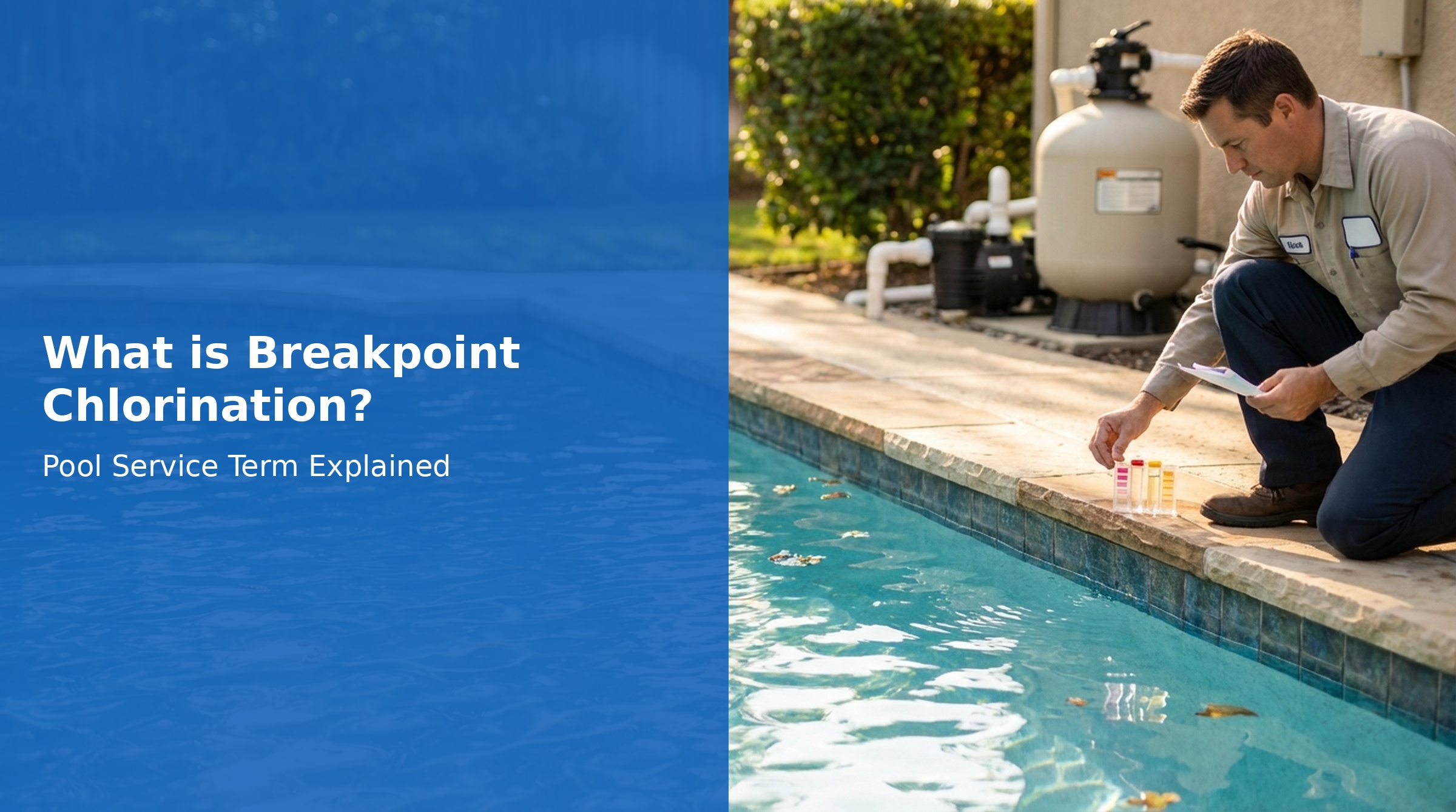
When pool water develops that unmistakable sharp, chemical odor that burns the eyes and nose, many pool owners assume there's too much chlorine in the water. Ironically, the opposite is usually true. That pungent smell indicates the presence of chloramines—combined chlorine compounds that form when free chlorine reacts with nitrogen-based contaminants. The solution lies in a process called breakpoint chlorination, a critical technique every pool service professional must master to restore water quality and swimmer comfort.
Key Takeaways
- Breakpoint chlorination eliminates chloramines by adding chlorine until trichloramines gas off naturally
- The "10x rule" is outdated—you only need slightly more chlorine than your combined chlorine reading
- Target 1-3 ppm free chlorine after achieving breakpoint for optimal water quality
- Test both free and total chlorine to calculate combined chlorine levels accurately
- Proper breakpoint chlorination eliminates odors and reduces eye/skin irritation
Understanding Breakpoint Chlorination
Breakpoint chlorination is the process of adding sufficient chlorine to water to eliminate all combined chlorine (chloramines) present in the system. This biochemical process occurs when chlorine levels reach a critical threshold where trichloramines—the most problematic form of chloramines—become unstable and gas off from the water surface.
When chlorine is added incrementally to water containing nitrogen compounds from swimmer waste, lotions, and organic debris, it follows a predictable pattern. Initially, chlorine combines with ammonia and organic nitrogen to form monochloramines, then dichloramines, and finally trichloramines. Each stage produces different odors and irritation levels, with trichloramines being the most offensive and problematic for swimmers.
The Chemistry Behind the Process
The breakpoint chlorination curve illustrates how chlorine behaves as it's added to contaminated water. During the first phase, chlorine rapidly combines with nitrogen compounds, forming monochloramines. As more chlorine is added, these convert to dichloramines and then trichloramines. The critical breakpoint occurs when there's enough chlorine present to destabilize trichloramines, causing them to gas off as nitrogen gas and leaving behind free available chlorine.
This process typically requires a chlorine-to-ammonia-nitrogen ratio of approximately 7.6:1 to 10:1 by weight. However, in practical pool applications, you don't need to calculate these precise ratios—simply adding enough chlorine to exceed your combined chlorine reading by a small margin will achieve breakpoint.
Why Breakpoint Chlorination Matters for Pool Professionals
Understanding and implementing breakpoint chlorination is essential for maintaining healthy, comfortable swimming environments. Chloramines not only create unpleasant odors and cause eye and respiratory irritation, but they also indicate reduced sanitizing effectiveness. When chlorine is tied up in chloramine compounds, it's less available to kill bacteria, viruses, and algae.
Client Satisfaction and Health Benefits
Pools that haven't achieved proper breakpoint chlorination often generate customer complaints about strong chemical odors, burning eyes, and skin irritation. These issues can damage your reputation and lead to service cancellations. By maintaining proper breakpoint chlorination, you ensure swimmers enjoy clear, odor-free water that doesn't cause discomfort.
From a health perspective, eliminating chloramines reduces respiratory irritation, particularly important for frequent swimmers, children, and individuals with asthma or other respiratory conditions. This makes your service more valuable to health-conscious clients and families with young children.
How to Perform Breakpoint Chlorination
Contrary to the outdated "shock with 10 times the combined chlorine level" rule that many still follow, achieving breakpoint requires a more nuanced approach. Modern testing methods and chemical understanding have refined this process significantly.
Step-by-Step Process
Step 1: Test Current Chlorine Levels
Use a reliable test kit to measure both free chlorine and total chlorine. Calculate combined chlorine by subtracting free chlorine from total chlorine (Combined Chlorine = Total Chlorine - Free Chlorine).
Step 2: Calculate Chlorine Needed
Add enough chlorine to raise the free chlorine level to approximately 1-2 ppm above your combined chlorine reading. For precise dosing calculations, consider using a chlorine dosage calculator to determine exact amounts needed based on your pool volume.
Step 3: Add Chlorine and Circulate
Add the calculated amount of chlorine, ensuring proper distribution through adequate circulation. Liquid chlorine or calcium hypochlorite work well for breakpoint chlorination, though granular products require complete dissolution to prevent bleaching.
Step 4: Monitor and Adjust
Test chlorine levels after 2-4 hours of circulation. If you still detect combined chlorine, add additional free chlorine in smaller increments until breakpoint is achieved.
Real-World Application Example
Consider a 20,000-gallon residential pool with the following test results: Free Chlorine = 0.5 ppm, Total Chlorine = 2.0 ppm. This indicates 1.5 ppm combined chlorine. To achieve breakpoint, add enough chlorine to reach approximately 2.5-3.0 ppm free chlorine. After circulation and retesting, you should see free chlorine levels around 1-2 ppm with zero combined chlorine, indicating successful breakpoint chlorination.
Common Mistakes and How to Avoid Them
Many pool professionals still rely on the outdated 10:1 shocking rule, which often results in excessive chlorine levels and unnecessary chemical costs. This approach can push chlorine levels dangerously high, potentially causing equipment damage and making the pool unusable for extended periods.
Another common error involves inadequate circulation during the breakpoint process. Chlorine must be evenly distributed throughout the water to effectively eliminate all chloramines. Ensure pumps run continuously during treatment and for several hours afterward.
Timing and Environmental Factors
Perform breakpoint chlorination during evening hours or when UV levels are low, as sunlight rapidly degrades chlorine and can interfere with the process. Wind can actually help by promoting the gas-off of trichloramines, though it also accelerates chlorine loss once breakpoint is achieved.
Pool temperature affects the process significantly. Warmer water promotes faster chemical reactions and gas-off, while cooler water may require longer contact times to achieve complete breakpoint chlorination.
Maintaining Water Balance During Treatment
Breakpoint chlorination can temporarily affect water balance, particularly pH and alkalinity levels. Chlorine products typically raise pH, so you may need pH adjustment after treatment. Consider testing and adjusting total alkalinity before breakpoint chlorination to provide better pH buffering during the process.
For comprehensive water balance management, tools like the Langelier Saturation Index calculator can help ensure proper mineral balance alongside chloramine elimination. Maintaining proper water balance enhances chlorine effectiveness and prevents equipment damage.
Professional Tips for Consistent Success
Develop a systematic approach to breakpoint chlorination by maintaining detailed service records. Track combined chlorine levels, treatment amounts, and results to refine your technique for each account. This data helps predict when breakpoint treatments will be needed and allows for proactive service.
Consider the bather load and pool usage patterns when scheduling breakpoint chlorination. High-use pools or those serving large numbers of swimmers may require more frequent treatments. Commercial pools, hot tubs, and residential pools with regular pool parties typically need closer monitoring for chloramine buildup.
For ongoing education and reference, maintain access to comprehensive pool service terminology to stay current with industry standards and best practices.
Conclusion
Mastering breakpoint chlorination is fundamental to providing professional pool service that keeps clients happy and healthy. By understanding the science behind chloramine elimination and applying modern techniques rather than outdated rules, you can efficiently restore water quality without excessive chemical use or costs. Remember that achieving breakpoint requires only slightly more chlorine than your combined chlorine reading—not the extreme levels suggested by older methodologies. This knowledge not only improves service quality but also demonstrates your expertise as a pool care professional who stays current with industry best practices.