
What is Calcium Hardness (CH)?

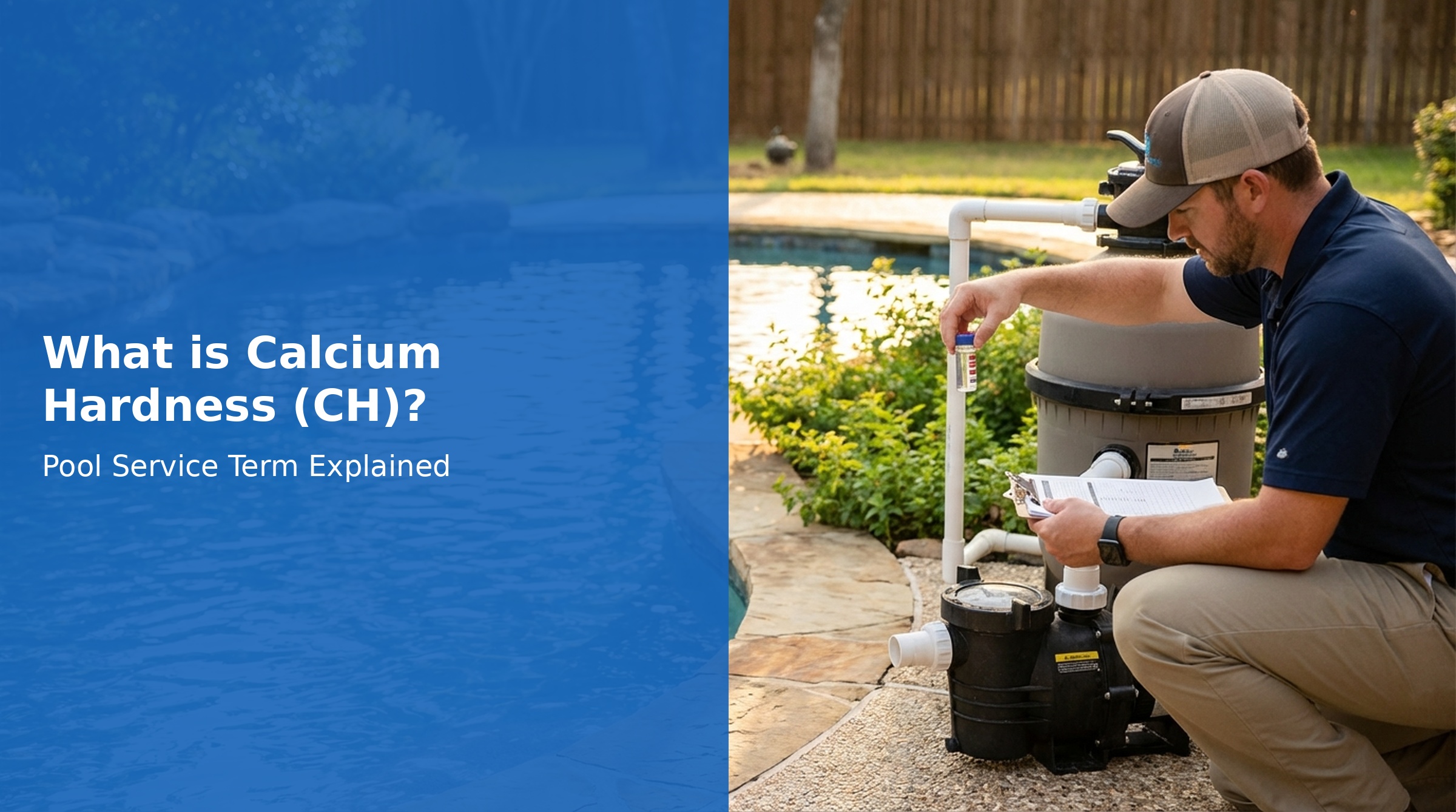
Calcium hardness is one of those water chemistry parameters that many pool service professionals understand conceptually but may not fully appreciate until they encounter the problems it causes. While chlorine levels and pH get most of the attention during routine service calls, calcium hardness quietly works behind the scenes, either protecting your clients' pools or slowly destroying them. Understanding how to properly manage calcium hardness levels can mean the difference between equipment that lasts decades and costly premature replacements that damage your reputation and your client's wallet.
Key Takeaways
- Ideal calcium hardness range is 200-400 ppm for most pool surfaces
- Low CH causes corrosive water that etches plaster and damages equipment
- High CH leads to scale formation and cloudy water
- CH levels naturally increase over time and require dilution to reduce
- Regular testing and proactive management prevent costly repairs
What Is Calcium Hardness?
Calcium hardness (CH) measures the concentration of dissolved calcium ions in pool water, expressed in parts per million (ppm). This parameter represents one component of total water hardness and plays a crucial role in water balance. Unlike other chemical adjustments that can be made with simple additions, calcium hardness management requires a more nuanced approach since you can only add calcium, not remove it through chemical treatment.
The calcium in pool water comes from several sources: fill water, calcium-based sanitizers like calcium hypochlorite, calcium chloride additions, and leaching from concrete, plaster, or stone surfaces. Understanding these sources helps explain why CH levels tend to increase over time, especially in pools using cal-hypo shock or those with extensive masonry work.
The Science Behind Proper Calcium Levels
Low Calcium Hardness: The Hungry Water Problem
When calcium hardness drops below 200 ppm, water becomes aggressive or "hungry" for calcium. This aggressive water will seek calcium from any available source, including pool surfaces, equipment, and plumbing. The results are both immediate and long-term:
- Plaster etching: The smooth finish becomes rough and pitted
- Grout deterioration: Tile grout dissolves, leading to loose tiles
- Metal corrosion: Heat exchangers, ladder rails, and other metal components deteriorate rapidly
- Equipment damage: Internal components of pumps, heaters, and chlorinators suffer accelerated wear
Pool service professionals often encounter low calcium hardness in areas with naturally soft water or in pools that have been drained and refilled multiple times without proper chemical balancing.
High Calcium Hardness: The Scale Formation Challenge
Calcium hardness levels above 400 ppm create different but equally problematic conditions. Excess calcium precipitates out of solution, forming scale deposits throughout the pool system:
- Surface scaling: White, chalky deposits on pool walls, tile, and equipment
- Reduced circulation: Scale buildup in pipes restricts water flow
- Equipment inefficiency: Scaled heat exchangers lose efficiency and may fail prematurely
- Water clarity issues: High CH contributes to cloudy water and interferes with sanitizer effectiveness
Testing and Monitoring Calcium Hardness
Accurate testing forms the foundation of effective calcium hardness management. Most test kits use titration methods with EDTA (ethylenediaminetetraacetic acid) as the reagent. The endpoint color change from red to blue indicates the calcium concentration.
Professional-grade digital testers provide more accurate readings, especially important when calcium levels approach the extremes of the acceptable range. Test calcium hardness monthly during regular service visits, and more frequently when making adjustments or after significant water additions.
Consider the relationship between calcium hardness and the Langelier Saturation Index when evaluating water balance. The LSI calculation incorporates calcium hardness along with pH, total alkalinity, temperature, and total dissolved solids to predict whether water will be scale-forming or corrosive.
Managing Calcium Hardness Levels
Raising Calcium Hardness
Increasing calcium hardness requires adding calcium chloride (CaCl₂), available in flake or pellet form. Calculate dosages carefully, as overcorrection leads to the scale problems you're trying to avoid. A general rule: 1.5 pounds of calcium chloride per 10,000 gallons raises hardness by approximately 18 ppm.
Add calcium chloride in sections around the pool perimeter with the circulation system running. Never add calcium chloride through the skimmer, as concentrated solutions can damage equipment. Allow several hours of circulation before retesting, as complete dissolution and mixing take time.
Lowering Calcium Hardness
Reducing calcium hardness presents more challenges since no chemical additives effectively remove calcium from water. Your options include:
- Partial water replacement: Drain and refill portions of the pool with lower-hardness water
- Reverse osmosis treatment: Mobile RO units can process pool water on-site
- Chelating agents: Products that bind calcium ions, though effectiveness varies
For most service routes, partial water replacement offers the most practical solution. Calculate replacement percentages based on current levels, source water hardness, and target levels.
Seasonal Considerations and Regional Variations
Calcium hardness management varies significantly by geographic location and season. Areas with naturally hard water require more frequent monitoring and dilution, while soft water regions need regular calcium additions to prevent aggressive water conditions.
Summer months typically see increased calcium hardness due to evaporation concentrating minerals and increased use of calcium-based shock products. Conversely, winter months with covers and reduced chemical usage may show more stable levels.
Establish baseline expectations for your service area by tracking seasonal patterns. This data helps predict when problems may develop and allows for proactive management rather than reactive corrections.
Integration with Overall Water Chemistry
Calcium hardness doesn't exist in isolation within your water chemistry management program. Changes in pH affect calcium solubility, while total alkalinity influences water's buffering capacity. High calcium hardness can interfere with chlorine effectiveness and contribute to combined chlorine formation.
Use comprehensive chemical dosage calculations that account for calcium hardness when balancing other parameters. This integrated approach prevents the chemical chase that occurs when adjustments conflict with each other.
Maintain detailed records of calcium hardness levels alongside other test results. This historical data reveals trends and helps identify pools requiring more intensive management or equipment upgrades.
Conclusion
Mastering calcium hardness management separates competent pool service professionals from exceptional ones. While it may seem like a secondary concern compared to sanitization and pH control, calcium hardness directly impacts equipment longevity, surface integrity, and overall water quality. By understanding the science behind calcium's behavior in water, implementing regular testing protocols, and taking proactive management steps, you protect your clients' investments while building a reputation for comprehensive, professional service.
Remember that calcium hardness problems develop slowly but create expensive consequences. The time invested in proper monitoring and adjustment pays dividends in reduced service calls, longer equipment life, and satisfied clients who refer your services to others. For additional technical terms and definitions, reference our complete pool service terminology glossary to expand your professional knowledge base.