What is Chase the Chunks? SLANG

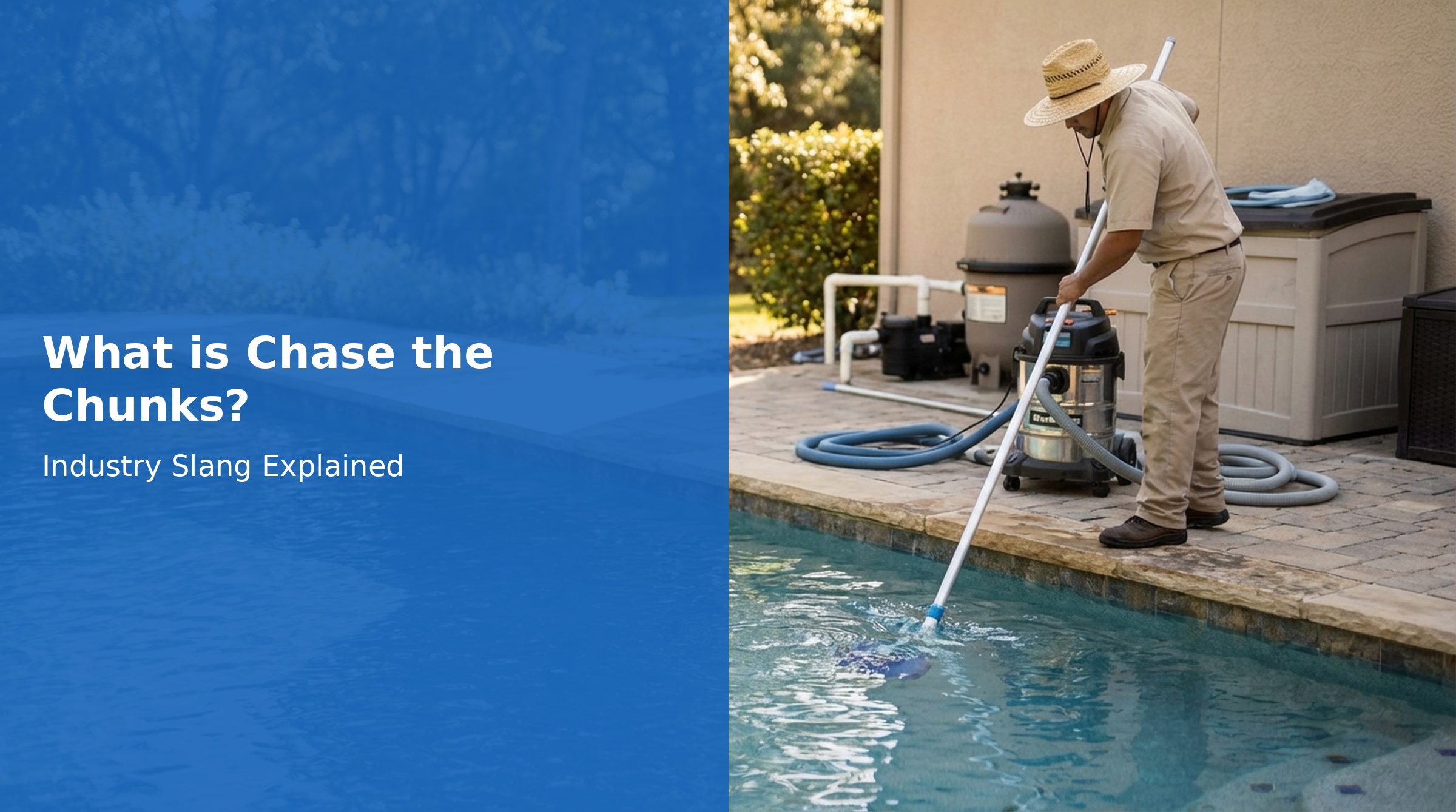
In the world of pool service, some situations require immediate action and precise execution. "Chase the Chunks" is industry slang that every pool professional needs to understand, referring to the critical first step in responding to fecal incidents in swimming pools. While the terminology might sound casual, the process it describes is anything but—it's a serious health and safety procedure that demands professional expertise and adherence to strict protocols.
Key Takeaways
- "Chase the Chunks" means removing solid fecal matter from pool water as quickly as possible during contamination incidents
- Speed is crucial—solid waste should be removed within minutes to minimize bacterial spread
- Proper PPE and disposal methods are essential for technician safety and regulatory compliance
- This is only the first step in a comprehensive decontamination process requiring chemical treatment and filtration
- Documentation and customer communication are critical components of professional incident response
Understanding Fecal Incident Response in Pool Service
When pool service professionals encounter a fecal incident, time becomes the most critical factor. The longer solid waste remains in the water, the greater the risk of bacterial contamination spreading throughout the pool system. "Chasing the chunks" refers to the urgent removal of visible solid matter using pool nets, vacuums, or specialized removal tools.
This process requires more than just scooping—it demands understanding of water movement, bacterial contamination patterns, and proper sanitization protocols. Professional pool technicians must act swiftly while maintaining safety standards and preparing for the comprehensive decontamination process that follows.
Why Speed Matters in Solid Waste Removal
Fecal matter contains harmful bacteria, viruses, and parasites that can rapidly contaminate pool water. E. coli, Cryptosporidium, and Giardia are among the dangerous pathogens commonly found in human waste. The longer these contaminants remain in circulation, the more difficult and time-intensive the decontamination process becomes.
Pool circulation systems can quickly distribute contaminants throughout the entire water volume. What starts as a localized incident can become a system-wide contamination issue within minutes if not addressed promptly and professionally.
Step-by-Step Chunk Removal Protocol
Immediate Response Actions
When encountering a fecal incident, pool service professionals should follow this systematic approach:
Clear the Area: Immediately evacuate all swimmers and restrict pool access. Post clear signage indicating the pool is temporarily closed for maintenance.
Assess the Situation: Determine whether the incident involves formed stool (solid) or diarrheal matter (liquid), as this affects the required response protocol and closure duration.
Gear Up: Don appropriate personal protective equipment including disposable gloves, eye protection, and consider respiratory protection if working in enclosed areas.
Removal Technique and Tools
Use a dedicated pool net or vacuum specifically designated for waste removal—never use equipment that will return to regular maintenance rotation. Work systematically from the contamination source outward, collecting all visible solid matter before it can break apart or disperse further.
For larger incidents, consider using a manual vacuum connected directly to waste rather than through the pool's filtration system. This prevents contaminating the entire circulation system and reduces the overall decontamination requirements.
Post-Removal Decontamination Process
Removing visible solid waste is only the beginning of proper fecal incident response. The real work begins with comprehensive chemical treatment and system decontamination.
Chemical Treatment Requirements
Following CDC guidelines, pools contaminated with formed stool require immediate chlorine shock treatment to achieve and maintain specific free chlorine levels for designated contact times. The exact requirements depend on your current chlorine levels and cyanuric acid concentrations.
Professional pool service technicians should utilize precise chemical dosage calculations to determine the exact amount of chlorine needed for effective decontamination. Guesswork has no place in pathogen elimination.
Filtration and Water Quality Management
Run the filtration system continuously during the decontamination period, backwashing or cleaning filters as needed to maintain proper flow rates. Monitor water chemistry closely, as the decontamination process can significantly impact pH, alkalinity, and sanitizer levels.
Some pool professionals find it helpful to reference their complete service terminology guide when documenting incident response procedures for customer records and regulatory compliance.
Professional Best Practices and Safety Considerations
Health and Safety Protocols
Never attempt to remove fecal matter without proper protective equipment. Waterborne pathogens can cause serious illness through ingestion, inhalation, or contact with mucous membranes. Treat every incident as potentially containing dangerous pathogens regardless of the apparent health of the individual involved.
Dispose of contaminated materials according to local health department regulations. Most jurisdictions require double-bagging contaminated waste and disposing of it as regulated sanitary waste.
Customer Communication and Documentation
Professional pool service includes clear communication with customers about incident response procedures, expected timelines for pool reopening, and any special precautions needed during the decontamination period.
Maintain detailed records of incident response actions, chemical treatments applied, contact times achieved, and final water quality test results. This documentation protects both the service professional and the customer while demonstrating adherence to industry standards.
Training and Professional Development
Fecal incident response is a specialized skill that requires ongoing education and practice. Pool service professionals should stay current with CDC recommendations, local health department requirements, and industry best practices for contamination response.
Consider specialized training in waterborne pathogen control, hazardous material handling, and emergency response procedures. The investment in professional development pays dividends in customer confidence and business reputation.
Conclusion
While "Chase the Chunks" might sound like casual industry slang, it represents a critical professional competency that every pool service technician must master. Rapid, systematic removal of fecal contamination protects public health, minimizes decontamination requirements, and demonstrates the professional expertise that separates skilled technicians from amateur pool cleaners.
Success in fecal incident response requires preparation, proper equipment, safety consciousness, and thorough knowledge of decontamination protocols. By treating these incidents with the seriousness they deserve, pool service professionals protect their customers, their businesses, and their communities while upholding the highest standards of the industry.