
What is DE Filter?

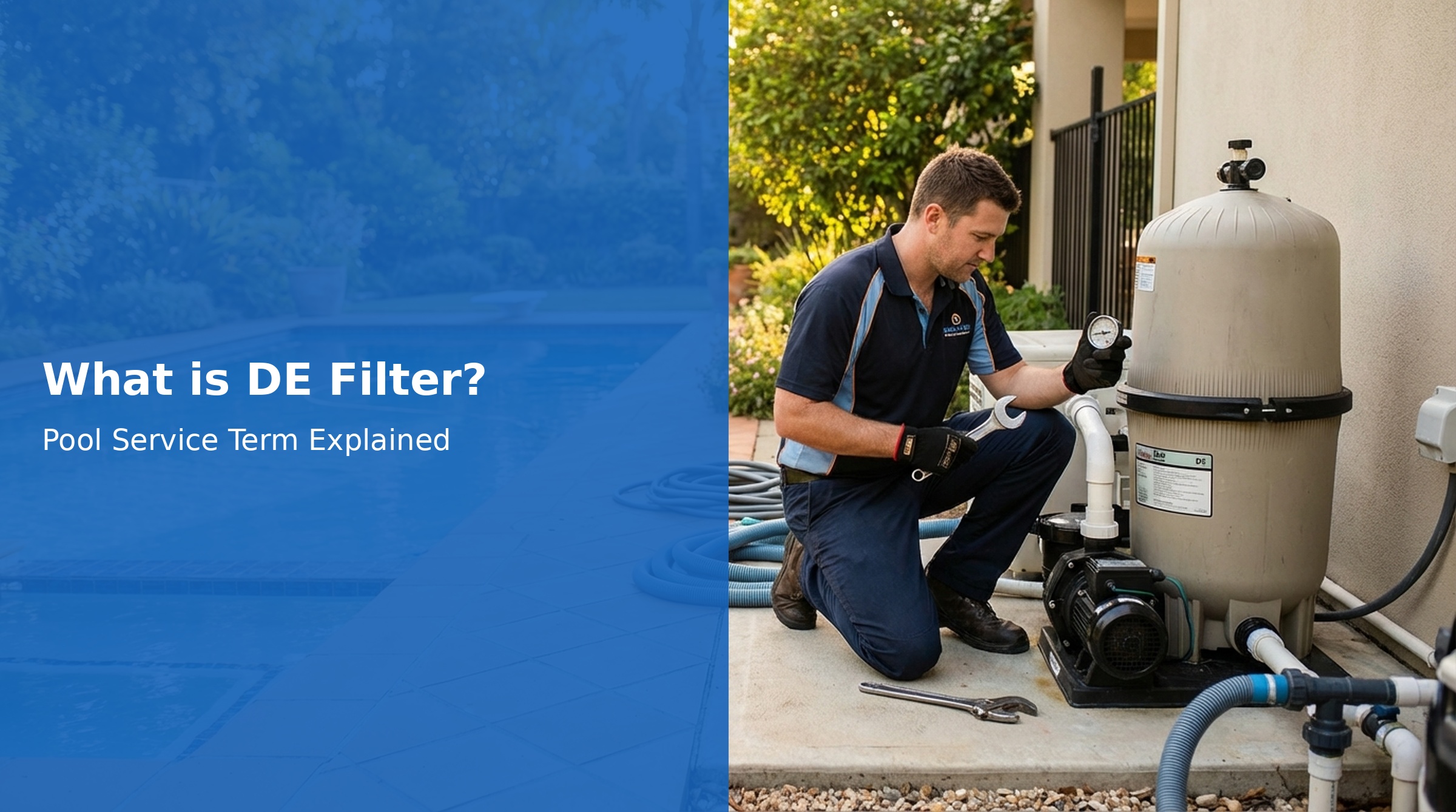
In the world of pool filtration systems, DE filters represent the gold standard for water clarity and contaminant removal. Short for Diatomaceous Earth filters, these sophisticated systems utilize a natural, microscopic substance to achieve filtration levels that surpass both sand and cartridge alternatives. For pool service professionals, understanding DE filters is crucial for maintaining pristine water quality and delivering exceptional results to clients who demand crystal-clear swimming environments.
Key Takeaways
- DE filters provide the finest filtration available, removing particles as small as 2-5 microns
- Diatomaceous earth is a natural substance made from fossilized diatoms
- Regular backwashing and DE powder replenishment are essential maintenance tasks
- Proper water chemistry balance enhances DE filter performance and longevity
- DE filters require more technical expertise but deliver superior water clarity
What is a DE Filter?
A DE filter, or Diatomaceous Earth filter, is a pool filtration system that uses diatomaceous earth powder as the filtering medium. Diatomaceous earth is composed of fossilized remains of diatoms, microscopic aquatic organisms whose skeletal remains create a powder with exceptional filtering properties. When coated onto filter grids inside the filter tank, this powder forms an incredibly fine barrier that traps contaminants, debris, and even microscopic particles that other filtration methods cannot capture.
The DE filter system consists of several key components: the filter tank housing, internal filter grids or elements, a multiport valve for backwashing operations, and the DE powder itself. Water flows through the pump into the filter tank, where it passes through the DE-coated grids before returning clean to the pool. This process removes particles as small as 2-5 microns, compared to 20-25 microns for sand filters and 10-15 microns for cartridge systems.
How DE Filters Work
The Filtration Process
The filtration process begins when pool water enters the DE filter tank through the inlet pipe. The water is distributed evenly across multiple filter grids, each coated with a thin layer of diatomaceous earth powder. As water passes through this coating, the DE powder acts like millions of tiny sieves, capturing particles, oils, and contaminants while allowing clean water to flow through to the manifold and back to the pool.
The efficiency of this system lies in the unique structure of diatomaceous earth. Each microscopic particle of DE has a complex, porous structure with countless tiny holes and channels. This creates an enormous surface area for filtration while maintaining adequate water flow rates. The result is exceptionally clear water that often appears almost glass-like in its clarity.
Precoating and Operation
Before operation, DE filters require precoating with diatomaceous earth powder. This process involves adding the appropriate amount of DE powder through the skimmer while the pump runs, allowing it to coat the filter grids evenly. The amount of DE needed typically equals one pound per 10 square feet of filter area, though this can vary by manufacturer specifications.
Maintenance Requirements for DE Filters
Regular Backwashing
DE filters require regular backwashing to remove accumulated debris and spent DE powder. Unlike sand filters, DE systems need complete recoating with fresh DE powder after each backwashing cycle. The frequency of backwashing depends on bather load, environmental conditions, and water chemistry, but typically occurs every 4-6 weeks during swimming season.
The backwashing process involves reversing water flow through the filter, flushing out dirty DE powder and trapped contaminants. After backwashing, the filter grids should be inspected for damage, and fresh DE powder must be added to restore the filtering medium.
Deep Cleaning and Grid Maintenance
Beyond regular backwashing, DE filters require periodic deep cleaning of the filter grids. This involves disassembling the filter, removing the grids, and cleaning them with a high-pressure hose or specialized cleaning solution. Some grids may need soaking in muriatic acid solution to remove stubborn deposits, particularly in areas with hard water.
During maintenance, inspect grids for tears, holes, or fabric deterioration. Damaged grids allow DE powder to enter the pool and reduce filtration efficiency. Replace damaged grids promptly to maintain optimal performance.
Water Chemistry Considerations
Proper water chemistry is crucial for DE filter performance and longevity. High calcium hardness can cause DE powder to cake and harden on filter grids, reducing efficiency and making cleaning more difficult. Maintaining balanced water chemistry using tools like our Langelier Saturation Index calculator helps prevent scaling and extends filter grid life.
Additionally, maintaining proper sanitizer levels is essential. While DE filters excel at removing physical contaminants, they don't eliminate bacteria or algae. Proper chlorine levels, which can be calculated using our chemical dosage calculator, ensure complete water treatment when combined with DE filtration.
Troubleshooting Common DE Filter Issues
DE Powder in Pool Water
If DE powder appears in pool water, this indicates damaged filter grids, improper assembly, or excessive DE powder addition. Check all grids for tears or holes, ensure proper reassembly after cleaning, and verify correct DE powder quantities.
Poor Filtration Performance
Reduced water clarity despite proper DE filter operation may indicate inadequate DE coating, damaged grids, or water chemistry imbalances. Verify proper precoating procedures, inspect filter components, and test water balance parameters.
Short Cycles Between Backwashing
If backwashing frequency increases significantly, investigate potential causes such as algae growth, excessive debris load, or insufficient water circulation. Address underlying issues rather than simply increasing backwashing frequency.
Professional Best Practices
For pool service professionals, DE filter maintenance requires attention to detail and proper safety procedures. Always wear appropriate respiratory protection when handling DE powder, as inhalation can cause respiratory irritation. Store DE powder in dry conditions and use only pool-grade diatomaceous earth, never industrial grades that may contain harmful additives.
Keep detailed maintenance records for each DE filter system, including backwashing dates, DE powder quantities used, and any grid replacements. This documentation helps identify patterns and optimize maintenance schedules for each client's specific conditions.
Conclusion
DE filters represent the pinnacle of pool filtration technology, delivering unmatched water clarity through their advanced filtering capabilities. While they require more technical expertise and maintenance attention than other filtration systems, the results justify the effort for clients who prioritize exceptional water quality. By understanding DE filter operation, maintenance requirements, and troubleshooting techniques, pool service professionals can maximize these systems' performance and deliver the crystal-clear water that sets premium pool service apart. For additional technical terms and concepts, reference our comprehensive pool service terminology glossary to enhance your professional knowledge base.