
What is Dichlor?

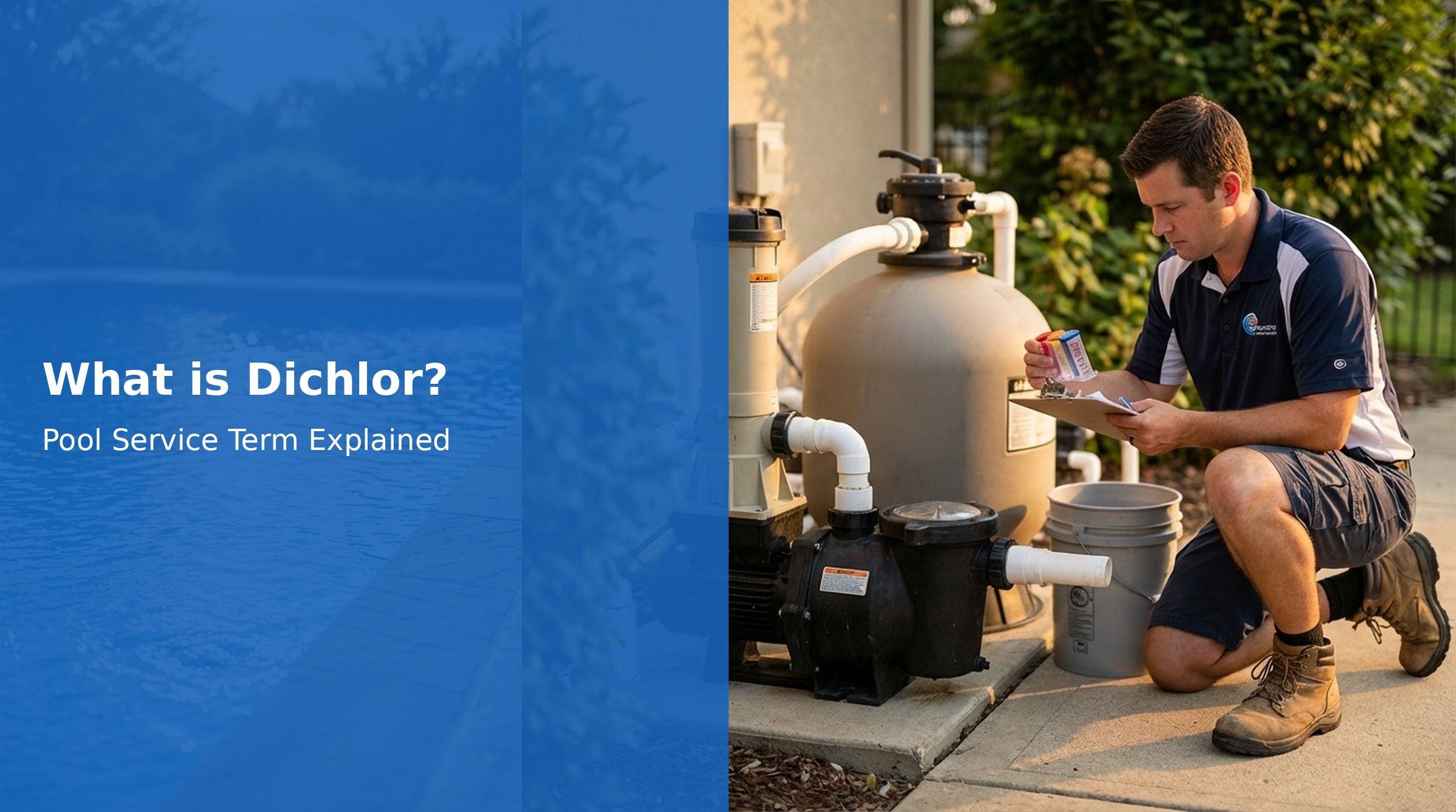
Dichlor stands as one of the most versatile and widely-used sanitizers in professional pool maintenance, yet many service technicians don't fully understand its unique properties and optimal applications. This stabilized chlorine compound offers distinct advantages over other sanitizing options, making it an essential tool in your chemical arsenal when used correctly.
Key Takeaways
- Dichlor is sodium dichloroisocyanurate, a stabilized chlorine with built-in cyanuric acid
- It dissolves quickly, has a near-neutral pH (6.8-7.0), and provides immediate sanitization
- Each pound of dichlor adds approximately 9 ppm of cyanuric acid to 10,000 gallons
- Best used for shock treatments, startup procedures, and pools with low stabilizer levels
- Long-term use can lead to cyanuric acid buildup requiring water dilution
Understanding Dichlor Chemistry
Sodium dichloroisocyanurate, commonly known as dichlor, is a granular chlorine compound that contains approximately 56-62% available chlorine. Unlike calcium hypochlorite (cal-hypo) or liquid chlorine, dichlor comes pre-stabilized with cyanuric acid, which protects the chlorine from rapid degradation due to ultraviolet rays.
The chemical formula reveals why dichlor behaves differently from other sanitizers. When dissolved in water, it releases hypochlorous acid (the active sanitizing agent) while simultaneously adding cyanuric acid to the water. This dual action makes it particularly valuable in specific scenarios but requires careful monitoring to prevent over-stabilization.
pH Impact and Water Balance
One of dichlor's most appealing characteristics is its minimal impact on water pH. With a pH of approximately 6.8-7.0 when dissolved, it won't dramatically shift your water chemistry like cal-hypo (which raises pH significantly) or trichlor (which lowers pH). This near-neutral characteristic makes it ideal for maintaining balanced water while providing effective sanitization.
When to Use Dichlor in Pool Service
Pool Startups and Spring Openings
Dichlor excels during pool startups when cyanuric acid levels are typically low or non-existent. Rather than adding stabilizer separately and waiting for it to dissolve, dichlor provides immediate sanitization while building necessary stabilizer levels. For a typical 20,000-gallon pool startup, you might use 3-4 pounds of dichlor to achieve initial sanitization while establishing a cyanuric acid baseline of 30-40 ppm.
Shock Treatment Applications
When pools require shock treatment but already have adequate stabilizer levels, dichlor offers faster dissolution than cal-hypo and won't create the pH swings associated with liquid chlorine. Its rapid dissolution makes it particularly effective for addressing algae blooms or contamination events where immediate action is required.
Weekly Maintenance Scenarios
For pools with low cyanuric acid levels (below 30 ppm), incorporating dichlor into your regular maintenance routine helps build stabilizer while providing weekly sanitization. However, this approach requires careful monitoring using our cyanuric acid calculator to prevent over-stabilization.
Dosage Calculations and Application Methods
Proper dichlor dosage depends on your specific objectives. For general sanitization, use 1 ounce per 500 gallons to raise free chlorine by approximately 8-10 ppm. For shock treatments, calculate 1 pound per 6,000-8,000 gallons depending on current chlorine demand and contamination levels.
Remember that each pound of dichlor adds roughly 9 ppm of cyanuric acid to 10,000 gallons of water. Track these additions carefully, as excessive cyanuric acid levels (above 100 ppm) can lead to chlorine lock and reduced sanitizer effectiveness. Use our chemical dosage calculator to ensure precise measurements and avoid over-treatment.
Application Best Practices
Always pre-dissolve dichlor in a bucket of pool water before adding to the pool, even though it dissolves relatively quickly. This prevents localized high concentrations that could damage pool surfaces or equipment. Pour the dissolved solution around the pool perimeter with the circulation system running to ensure rapid distribution.
For shock treatments, add dichlor in the evening or after direct sunlight hours to maximize effectiveness. The stabilizer component will protect subsequent chlorine additions, but initial shock treatment benefits from reduced UV exposure during the critical first few hours.
Monitoring and Long-term Considerations
Cyanuric Acid Buildup
The primary limitation of regular dichlor use is inevitable cyanuric acid accumulation. Pools using dichlor exclusively will eventually require partial water replacement to maintain optimal stabilizer levels. Monitor cyanuric acid monthly and plan for water dilution when levels approach 80-90 ppm.
Professional service routes often rotate between different chlorine types to manage stabilizer levels effectively. Use dichlor strategically rather than as your sole sanitization method to maximize its benefits while minimizing drawbacks.
Cost-Effectiveness Analysis
While dichlor typically costs more per pound than cal-hypo, its convenience and dual-purpose nature can justify the expense in specific applications. Calculate the true cost by considering labor savings, reduced pH adjustments, and the value of built-in stabilization when determining optimal usage scenarios for your service routes.
Common Application Mistakes
Many technicians make the mistake of using dichlor as their primary sanitizer for pools that already have adequate cyanuric acid levels. This approach leads to rapid over-stabilization and eventual chlorine effectiveness issues. Similarly, adding dichlor directly to skimmers or feeders can cause equipment damage due to its acidic dissolution characteristics.
Another frequent error involves inadequate record-keeping regarding cyanuric acid additions. Without tracking stabilizer accumulation from dichlor use, pools can quickly develop water balance issues that require costly remediation.
Integration with Water Balance Management
Effective dichlor use requires understanding its role in overall water balance. While it won't dramatically affect pH, the gradual increase in cyanuric acid levels influences chlorine effectiveness and may impact your Langelier Saturation Index calculations over time.
Regular water testing becomes even more critical when using dichlor, as you're managing both sanitizer levels and stabilizer accumulation simultaneously. Implement monthly cyanuric acid testing for pools receiving regular dichlor treatments to stay ahead of potential issues.
Maximizing Dichlor Effectiveness
Dichlor represents a valuable tool in professional pool maintenance when used strategically rather than routinely. Its unique combination of immediate sanitization and built-in stabilization makes it ideal for specific scenarios like startups, shock treatments, and pools with low cyanuric acid levels. However, successful dichlor use requires careful monitoring of stabilizer accumulation and integration with broader water balance management strategies.
By understanding dichlor's chemistry and optimal applications, pool service professionals can leverage its benefits while avoiding common pitfalls. Remember to track cyanuric acid additions, rotate sanitizer types when appropriate, and always consider long-term water balance implications when incorporating dichlor into your service protocols.