
What is Gunite?

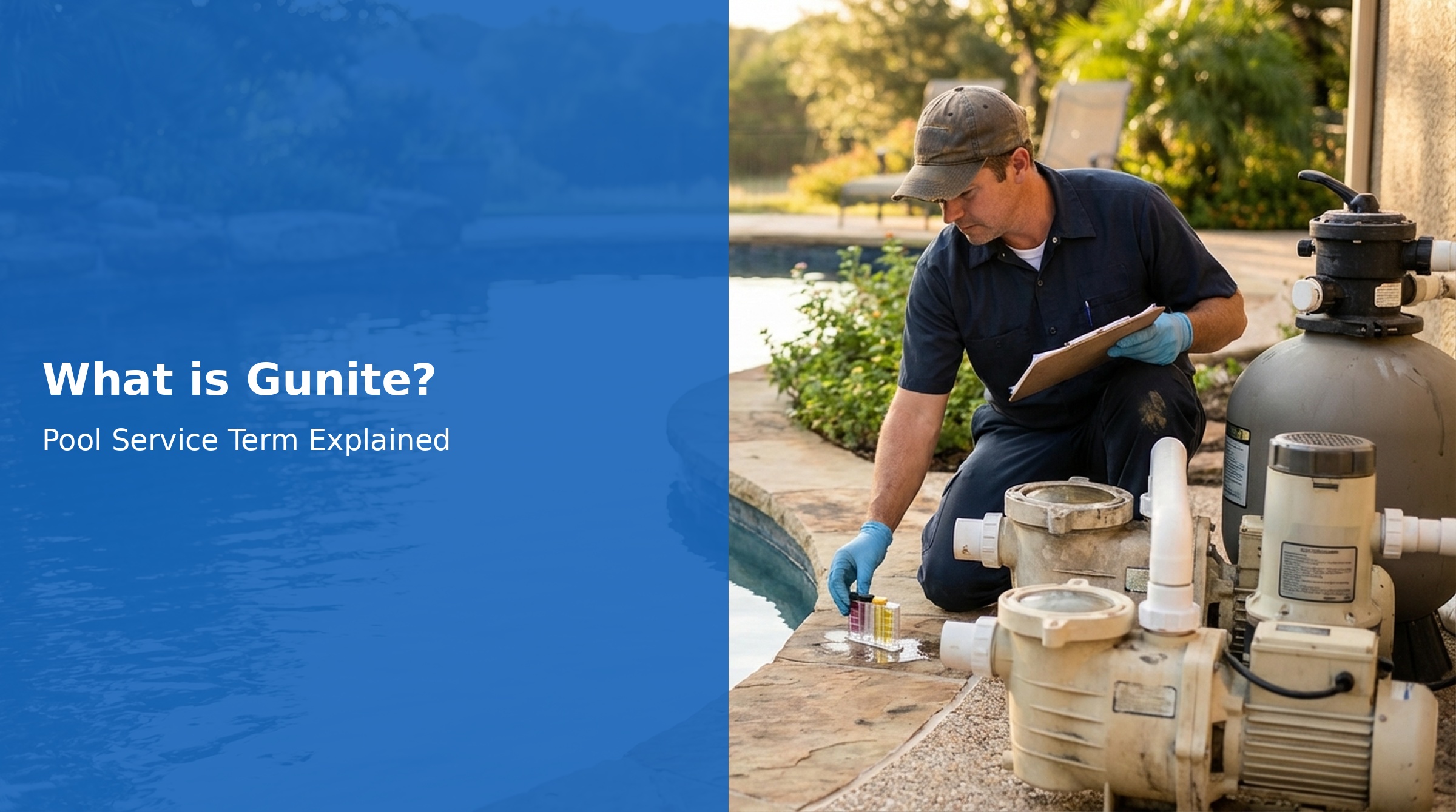
When pool service professionals encounter structural issues or work on pool renovations, understanding gunite becomes essential. This foundational material forms the backbone of millions of swimming pools across the country, yet many technicians only see its finished surface. Gunite construction represents one of the most durable and customizable pool building methods available, making it crucial knowledge for anyone serious about pool maintenance and repair.
Key Takeaways
- Gunite is a pneumatically applied concrete mixture that forms the structural shell of custom pools
- Applied in a dry-spray process, gunite creates stronger bonds than traditional poured concrete
- Understanding gunite helps service professionals diagnose structural issues and recommend appropriate repairs
- Proper water chemistry is critical for preventing gunite deterioration over time
- Gunite pools require different maintenance considerations than fiberglass or vinyl liner pools
What is Gunite in Pool Construction?
Gunite represents a specialized concrete application method where dry cement and sand are mixed with water at the nozzle and pneumatically sprayed onto a framework of steel reinforcement bars (rebar). Unlike traditional concrete that's mixed wet and poured, gunite's dry-spray process allows for precise application and superior bonding characteristics.
The gunite mixture typically consists of one part Portland cement to three or four parts sand, with water added only at the spray nozzle. This creates a dense, strong material that can be applied to vertical and overhead surfaces without forming or support structures. The result is a monolithic shell that serves as the pool's structural foundation.
The Gunite Application Process
Pool builders apply gunite in a carefully orchestrated process. First, they construct a framework of steel rebar configured to the pool's exact specifications. Then, trained nozzlemen spray the gunite mixture onto this framework, building up layers to achieve the desired thickness—typically 6-8 inches for residential pools.
The application requires skill and experience, as the nozzleman must maintain consistent distance and angle while ensuring complete coverage around all rebar. Any voids or thin spots can compromise the pool's structural integrity.
Why Gunite Matters for Pool Service Professionals
Understanding gunite construction helps service professionals make better decisions about maintenance, repairs, and customer recommendations. Unlike fiberglass or vinyl liner pools, gunite pools interact directly with pool water chemistry, making proper chemical balance crucial for long-term durability.
Chemical Impact on Gunite
Gunite's cement-based composition makes it susceptible to chemical attack when water chemistry falls out of balance. Low pH conditions create acidic water that can etch and deteriorate the gunite surface, while high pH can lead to scale formation. The Langelier Saturation Index becomes particularly important for gunite pools, as it helps determine whether water will be aggressive toward or deposit scale on cement-based surfaces.
Service professionals should monitor total alkalinity carefully in gunite pools, as this acts as a pH buffer and helps prevent rapid pH swings that could damage the surface. Using a chemical dosage calculator ensures accurate adjustments that protect the gunite while maintaining swimmer comfort.
Common Gunite Issues and Solutions
Pool service professionals frequently encounter several gunite-related problems that require specific approaches and solutions.
Surface Etching and Deterioration
Aggressive water conditions can cause gunite surfaces to become rough and pitted. This typically occurs when pH consistently runs below 7.2 or when total alkalinity drops too low. The etching process exposes aggregate and creates an increasingly rough surface that harbors algae and becomes difficult to clean.
When you notice etching, immediately test and adjust water chemistry to proper ranges. Severe etching may require acid washing or replastering to restore a smooth, sanitary surface.
Cracking and Structural Issues
While minor hairline cracks are normal in gunite construction due to curing and settling, larger cracks can indicate structural problems. Temperature changes, ground movement, or inadequate initial construction can cause problematic cracking.
Small cracks often can be sealed with appropriate pool putty or cement-based repair compounds. However, extensive cracking may signal the need for professional structural evaluation and major repairs.
Plaster Bond Failure
Sometimes the plaster finish separates from the underlying gunite, creating hollow spots that sound different when tapped. This bond failure typically results from contamination during application, inadequate surface preparation, or differential movement between materials.
Areas of plaster bond failure require removal and reapplication of both bonding agent and plaster to prevent further deterioration.
Maintenance Best Practices for Gunite Pools
Proper maintenance extends gunite pool life and prevents costly repairs. Service professionals should focus on several key areas when maintaining these pools.
Water Chemistry Management
Maintain pH between 7.4-7.6 and total alkalinity between 80-120 ppm for optimal gunite protection. Regular testing and gradual adjustments prevent the dramatic chemistry swings that can damage cement-based surfaces.
Calcium hardness also plays a crucial role, as levels too low can make water aggressive toward gunite, while excessive calcium leads to scaling. Target 200-400 ppm calcium hardness for most gunite pools.
Regular Inspection and Documentation
Document the condition of gunite pools through photos and notes, paying special attention to areas around return fittings, steps, and the waterline where problems often first appear. Early detection of issues allows for less expensive repairs and prevents minor problems from becoming major renovations.
Professional Considerations and Customer Communication
When working with gunite pools, clear communication with customers about maintenance requirements and potential issues builds trust and prevents misunderstandings. Many pool owners don't understand the relationship between water chemistry and their pool's structural integrity.
Explain how proper chemical balance protects their investment and why regular professional maintenance costs less than major repairs. Use visual aids when possible to show customers areas of concern before they become serious problems.
For comprehensive understanding of gunite and related pool terminology, reference our complete pool service terminology glossary to ensure clear communication with both customers and colleagues.
Conclusion
Gunite knowledge separates competent pool service professionals from those who merely maintain water appearance. Understanding this foundational material helps you diagnose problems accurately, recommend appropriate solutions, and communicate effectively with customers about their pool's needs. As the structural backbone of custom pools, gunite deserves the respect and attention that comes with proper technical knowledge and careful maintenance practices.