
What is ORP (Oxidation Reduction Potential)?

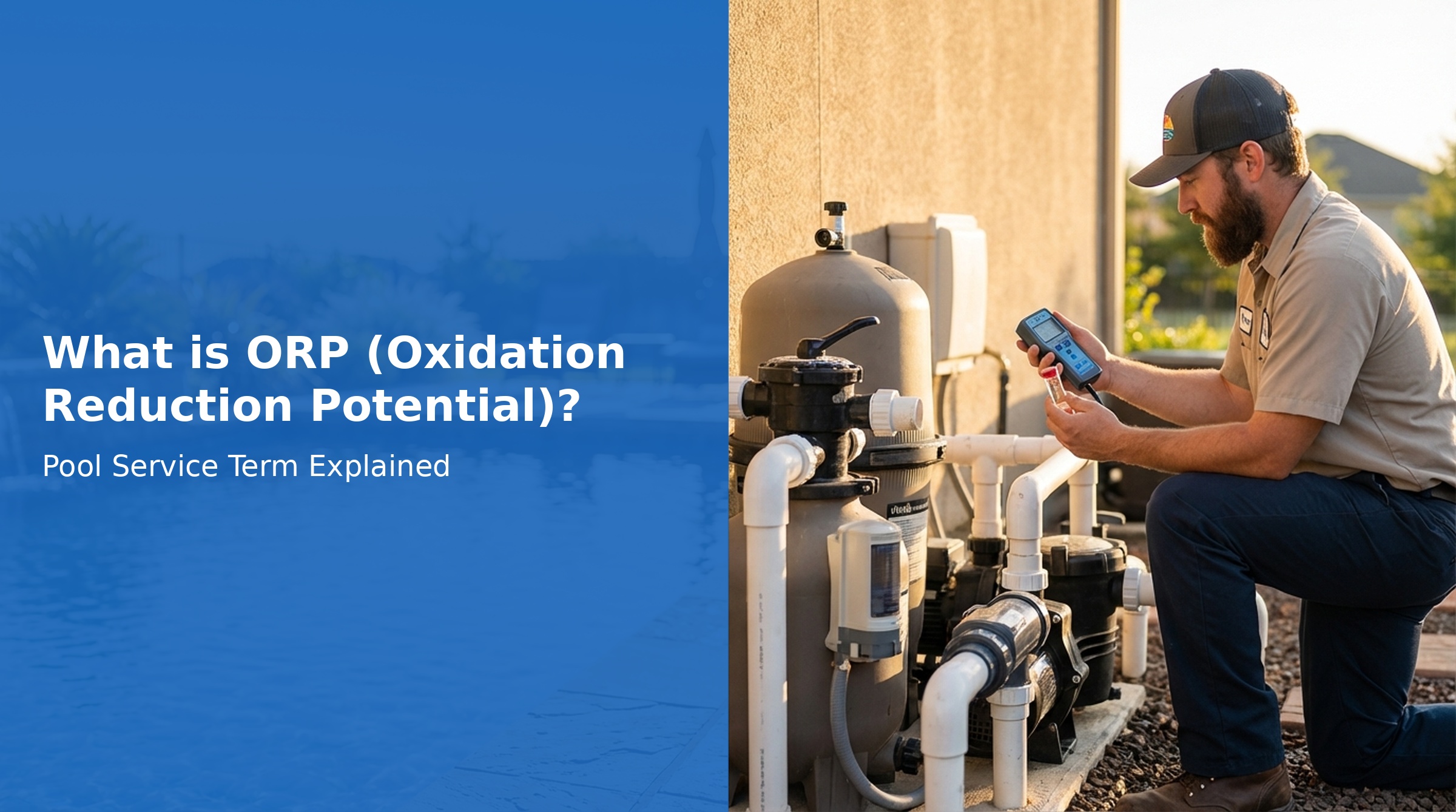
Understanding Oxidation Reduction Potential (ORP) is crucial for pool service professionals who want to deliver superior water quality and ensure their clients' safety. While most technicians are familiar with testing chlorine levels and pH, ORP provides a more comprehensive picture of your pool's actual sanitizing power. This measurement, expressed in millivolts (mV), tells you how effectively your water can neutralize contaminants—information that goes far beyond what traditional chlorine tests reveal.
Key Takeaways
- ORP measures actual sanitizing ability in millivolts, not just chlorine concentration
- Commercial pools typically require minimum 650 mV for proper sanitation
- Cyanuric acid (CYA) significantly suppresses ORP readings throughout the day
- ORP fluctuates daily—higher in morning, lower during peak sun hours
- ORP controllers can automate chlorine dosing based on actual sanitizing power
What Is ORP (Oxidation Reduction Potential)?
Oxidation Reduction Potential measures your pool water's ability to oxidize or break down organic contaminants, pathogens, and other unwanted materials. Think of it as a real-time assessment of your water's sanitizing strength. While a chlorine test tells you how much total chlorine is present, ORP tells you how much of that chlorine is actually available to do the sanitizing work.
The measurement is expressed in millivolts (mV), with higher readings indicating greater oxidizing power. Most residential pools should maintain ORP levels between 650-750 mV, while commercial facilities typically require a minimum of 650 mV to meet health department standards.
The Science Behind ORP
ORP sensors specifically measure the activity of hypochlorous acid (HOCl)—the most effective form of chlorine for sanitization. This is why ORP provides such valuable insight: it's measuring the chlorine that's actually working, not the chlorine that's bound up or neutralized by other factors in your water.
Why ORP Matters More Than You Think
Traditional chlorine testing has limitations that can leave pool service professionals guessing about true water quality. A pool might test at 2.0 ppm free chlorine but still harbor bacteria or algae because much of that chlorine isn't in its active form. ORP eliminates this guesswork by measuring actual sanitizing potential.
Real-World Benefits for Pool Professionals
Enhanced Problem Diagnosis: When customers complain about cloudy water or algae despite "good" chemical readings, ORP often reveals the real issue. Low ORP readings indicate insufficient sanitizing power, even when chlorine levels appear adequate.
Regulatory Compliance: Many commercial pool inspectors now rely on ORP readings as a primary indicator of water safety. Understanding and maintaining proper ORP levels helps ensure your commercial accounts pass inspections consistently.
Customer Satisfaction: Pools with optimal ORP levels typically have that crystal-clear, odor-free water quality that impresses customers and reduces service callbacks.
The CYA-ORP Connection Every Technician Should Know
Here's where ORP gets particularly interesting for pool professionals: cyanuric acid (CYA) dramatically impacts ORP readings. As CYA levels increase, ORP readings decrease, even with identical chlorine concentrations. This happens because CYA binds with chlorine, reducing the amount of active hypochlorous acid available for sanitization.
Daily ORP Fluctuations Explained
You'll notice ORP readings vary throughout the day, and this isn't equipment malfunction—it's chemistry in action. During morning hours, ORP readings typically peak because UV radiation isn't strengthening the bond between CYA and chlorine. As the sun intensifies throughout the day, this bond strengthens, reducing available HOCl and lowering ORP readings.
This daily pattern explains why some pools that test fine in the morning develop problems by afternoon. The sanitizing power literally decreases as UV exposure increases the CYA-chlorine binding effect.
Implementing ORP Testing in Your Service Routes
Equipment and Testing Procedures
Professional-grade ORP meters require regular calibration and proper maintenance for accurate readings. Always calibrate your meter according to manufacturer specifications and store probes in appropriate solutions between uses. When taking readings, ensure the probe is clean and allow sufficient time for stabilization—rushing ORP tests leads to inaccurate results.
Interpreting ORP Results
Low ORP readings (below 600 mV) indicate insufficient sanitizing power and require immediate attention. However, don't automatically reach for more chlorine. First, test your cyanuric acid levels to determine if high CYA is suppressing ORP. Sometimes, diluting the pool to reduce CYA provides better results than adding more chlorine.
High ORP readings (above 800 mV) suggest excessive oxidizing potential, which can cause equipment corrosion and swimmer discomfort. Reduce chlorine dosing or check for other oxidizing agents that might be elevating readings.
Troubleshooting Common ORP Issues
When ORP Won't Respond to Chlorine
If adding chlorine fails to raise ORP readings, investigate these common causes:
- High CYA levels: Cyanuric acid above 50 ppm significantly suppresses ORP. Consider partial water replacement.
- pH imbalance: High pH reduces hypochlorous acid formation. Optimize pH between 7.2-7.6 for maximum ORP response.
- High bather load: Organic contamination consumes available chlorine faster than it can be replenished.
- Equipment issues: Dirty or damaged ORP probes provide false readings. Regular maintenance prevents this problem.
Seasonal ORP Considerations
Summer months present unique ORP challenges due to increased UV exposure, higher bather loads, and elevated water temperatures. Plan for more frequent testing and potentially higher chlorine demands during peak season. Winter pools with covers often maintain stable ORP levels with reduced chemical demand.
Advanced ORP Applications
Automated Chlorine Control
ORP controllers can automate chlorine dosing based on actual sanitizing demand rather than preset schedules. This technology proves particularly valuable for commercial accounts where bather loads vary significantly throughout the day. Properly calibrated ORP controllers maintain consistent water quality while optimizing chemical usage.
Integration with Water Balance
ORP works best as part of comprehensive water management. Use our chemical dosage calculator to optimize chlorine, pH, and alkalinity levels that support consistent ORP readings. Remember that water balance factors all interact—addressing ORP in isolation rarely provides optimal results.
Conclusion
ORP measurement transforms pool service from reactive maintenance to proactive water quality management. By understanding how oxidation reduction potential reflects true sanitizing ability, pool professionals can diagnose problems more accurately, satisfy customers more consistently, and build reputation for superior service quality.
The key is recognizing ORP as a dynamic measurement influenced by multiple factors—not just chlorine levels. Cyanuric acid, pH, UV exposure, and organic load all impact ORP readings. Master these relationships, and you'll have a powerful tool for delivering the crystal-clear, properly sanitized water that sets your service apart from the competition.
For more technical terms and definitions, reference our comprehensive pool service terminology glossary to enhance your professional knowledge and communication with customers.