
What is Phosphate Remover?

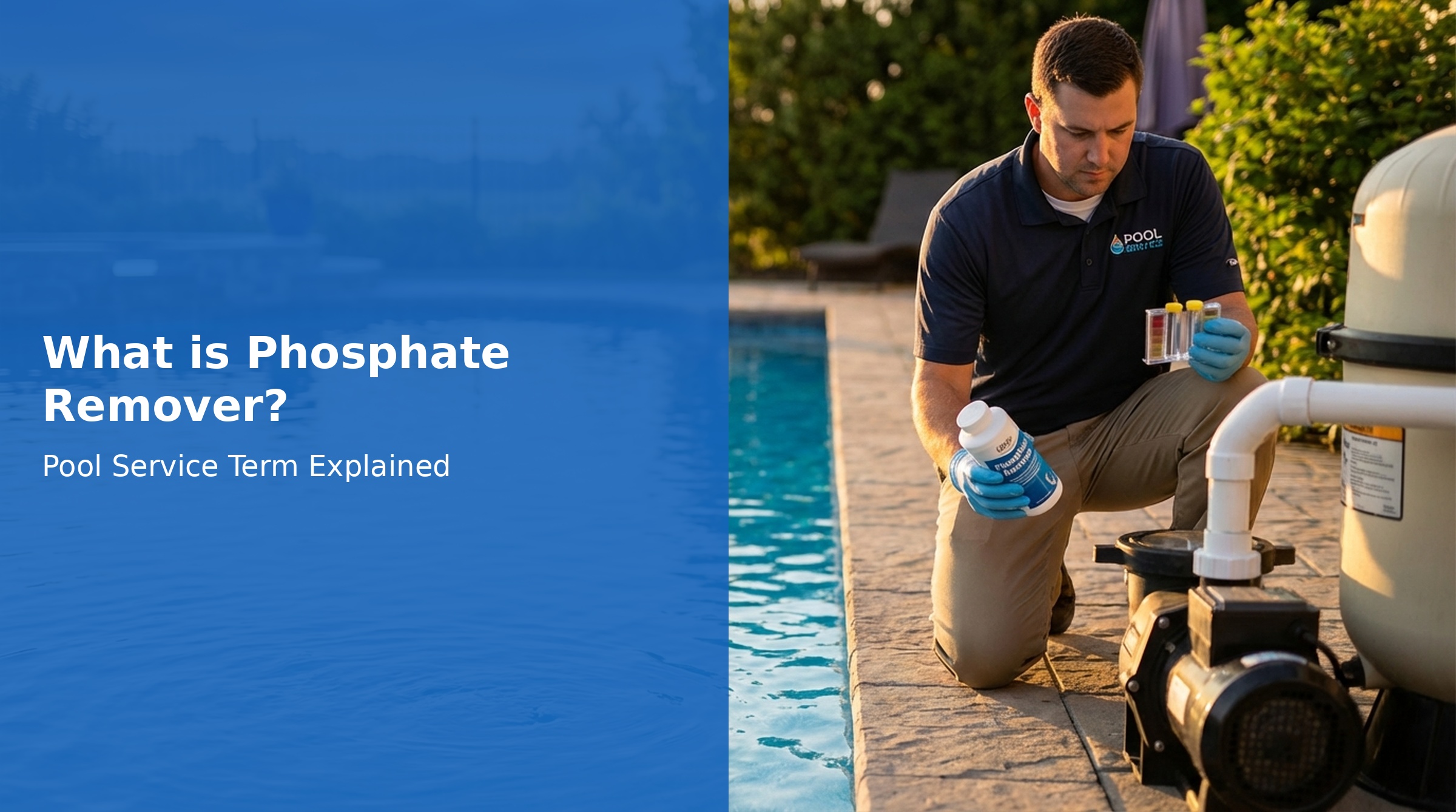
Phosphates in pool water are among the most misunderstood challenges facing pool service professionals today. While these naturally occurring compounds don't directly harm swimmers, they create the perfect feeding ground for algae growth, making pool maintenance significantly more difficult and expensive. Understanding when and how to use phosphate removers effectively can be the difference between a crystal-clear pool and one plagued by persistent algae blooms.
Key Takeaways
- Phosphate removers are chemical treatments that eliminate phosphorus compounds that fuel algae growth
- Most effective when phosphate levels exceed 500 ppb (parts per billion)
- Lanthanum-based removers are most common for residential pools
- Treatment requires proper filtration and may cause temporary cloudiness
- Prevention through regular testing and source control is more cost-effective than reactive treatment
Understanding Phosphates in Pool Water
Phosphates are phosphorus-containing compounds that enter pool water through various sources including fertilizers, organic debris, certain pool chemicals, and even municipal water supplies. While phosphates themselves are harmless to swimmers, they serve as essential nutrients for algae growth, creating an environment where even small amounts of algae can rapidly multiply despite adequate chlorine levels.
Pool service professionals often encounter situations where pools maintain proper chlorine residuals yet continue experiencing algae problems. In many cases, elevated phosphate levels are the underlying culprit, providing algae with the nutrients needed to thrive even in well-sanitized water.
Common Sources of Pool Phosphates
Identifying phosphate sources helps prevent future problems and educates customers about maintenance practices:
- Landscape runoff: Fertilizers and organic matter washing into the pool
- Bather waste: Sunscreen, cosmetics, and organic compounds from swimmers
- Fill water: Municipal water supplies may contain phosphates
- Chemical contamination: Some pool chemicals and algaecides can introduce phosphates
- Organic debris: Leaves, grass, and other plant material
When to Use Phosphate Removers
The decision to use phosphate removers should be based on testing results and pool conditions rather than routine application. Most pool chemistry experts recommend treatment when phosphate levels exceed 500 ppb, though some situations may warrant treatment at lower levels.
Testing and Assessment
Regular phosphate testing using reliable test kits or strips provides the data needed for informed treatment decisions. Test phosphate levels monthly during regular service visits, and immediately when encountering persistent algae issues despite proper sanitizer levels.
Consider phosphate removal when encountering these scenarios:
- Recurring algae blooms despite maintaining proper chlorine levels
- Phosphate readings consistently above 500 ppb
- Increased chlorine demand without obvious cause
- Difficulty maintaining water clarity
- Customer complaints about frequent algae issues
Types of Phosphate Removers
Understanding different phosphate remover formulations helps select the most appropriate product for specific situations and pool types.
Lanthanum-Based Removers
Lanthanum chloride represents the most common active ingredient in residential phosphate removers. These products work by binding with phosphates to form insoluble particles that can be filtered from the water. Lanthanum-based removers are effective, relatively safe, and compatible with most pool equipment and surfaces.
Aluminum-Based Products
Some commercial applications utilize aluminum-based phosphate removers, though these require more careful handling and may affect water balance more significantly than lanthanum products.
Natural Enzyme Treatments
Enzyme-based products break down organic phosphate sources but work more slowly than chemical removers. These products excel at preventing phosphate buildup rather than quickly reducing existing high levels.
Application Best Practices
Proper application technique ensures effective phosphate removal while minimizing potential issues like extended cloudiness or equipment problems.
Pre-Treatment Preparation
Before applying phosphate remover, ensure proper water balance and adequate filtration capacity. Check that the Langelier Saturation Index falls within acceptable ranges to prevent scaling issues when adding treatment chemicals.
Clean or backwash filters before treatment to maximize filtration efficiency during the removal process. Consider switching to a fresh filter cartridge for cartridge systems to ensure optimal performance.
Application Process
Follow manufacturer dosage recommendations based on current phosphate levels and pool volume. Add phosphate remover slowly around the pool perimeter with circulation running to ensure even distribution.
Key application steps include:
- Calculate proper dosage based on test results and pool volume
- Ensure circulation system is operating properly
- Add product slowly around pool perimeter
- Run filtration continuously for 24-48 hours
- Monitor filter pressure and backwash/clean as needed
- Retest phosphate levels after treatment completion
Post-Treatment Management
Expect temporary cloudiness as phosphate-remover complexes form and are filtered from the water. This typically clears within 24-48 hours with proper filtration. Vacuum any settled particles and maintain continuous filtration until water clarity returns.
Preventing Future Phosphate Issues
Prevention strategies prove more cost-effective than reactive phosphate removal and provide better long-term results for customers.
Source Control Measures
Work with customers to minimize phosphate introduction through landscape management, swimmer education, and proper pool maintenance practices. Recommend phosphate-free fertilizers near pool areas and regular skimming to remove organic debris.
Regular Maintenance Integration
Include phosphate testing in regular service visits and maintain detailed records of levels over time. This data helps identify trends and phosphate sources while demonstrating value to customers.
For comprehensive pool chemistry management, refer to our complete pool service terminology glossary to stay current with industry standards and best practices.
Cost-Benefit Analysis for Service Professionals
Understanding the economics of phosphate removal helps position these services appropriately with customers and build profitable service programs.
Phosphate removal typically costs less than dealing with recurring algae problems through increased chemical usage, additional service visits, and customer dissatisfaction. Present phosphate removal as preventive maintenance that reduces long-term pool operating costs while improving water quality.
Consider offering phosphate management as part of premium service packages, particularly for pools prone to algae issues or those in high-phosphate environments.
Conclusion
Phosphate removers represent valuable tools in the pool service professional's arsenal when used appropriately and strategically. Success depends on proper testing, product selection, application technique, and customer education about prevention strategies. By understanding phosphate chemistry and implementing systematic testing and treatment protocols, service professionals can solve persistent water quality issues while building customer trust and satisfaction.
Remember that phosphate removal works best as part of a comprehensive water management strategy that includes proper sanitization, balanced water chemistry, and regular maintenance. When combined with customer education about phosphate sources and prevention, these treatments can transform problematic pools into low-maintenance, crystal-clear swimming environments.