
What is Return Jets?

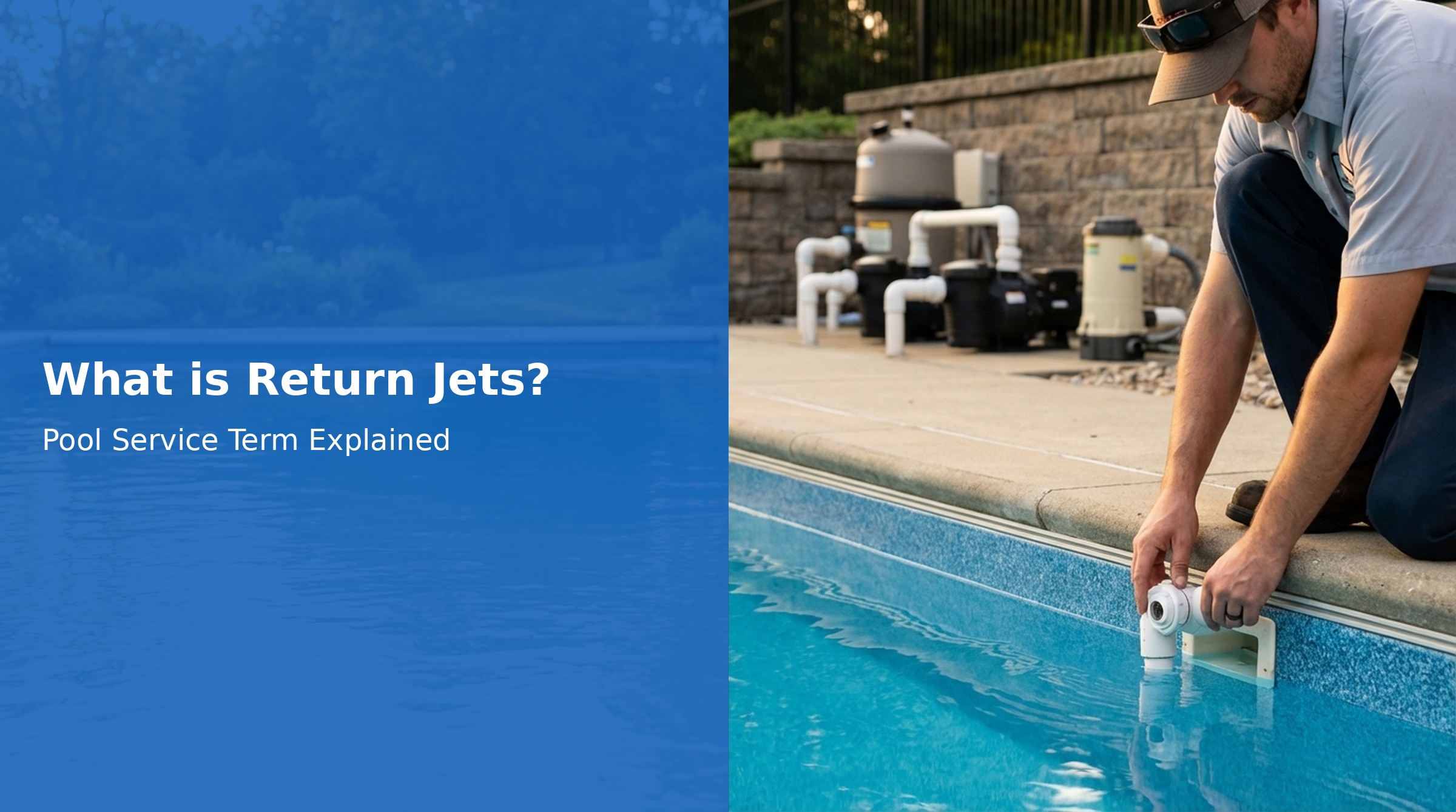
When pool professionals discuss proper water circulation, return jets inevitably become a focal point of the conversation. These seemingly simple fixtures play a crucial role in maintaining water quality, distributing chemicals effectively, and ensuring swimmer comfort. For service technicians who understand the intricacies of return jet positioning, flow rates, and maintenance, the difference between a problematic pool and a pristine one often comes down to optimizing these critical circulation components.
Key Takeaways
- Return jets are the outlets where filtered water re-enters the pool, completing the circulation cycle
- Proper positioning and flow direction are essential for eliminating dead spots and ensuring even chemical distribution
- Regular inspection and adjustment of return jets can prevent common circulation problems
- Eyeball fittings and directional nozzles allow for precise flow control and optimization
- Understanding return jet dynamics is crucial for effective chemical treatment and debris removal
Understanding Return Jets in Pool Circulation Systems
Return jets represent the final stage of a pool's circulation system, where water that has been filtered, heated, and chemically treated re-enters the pool. These fittings, typically installed in the pool walls at a depth of 12-18 inches below the waterline, serve as the distribution points for clean, treated water throughout the pool.
The basic circulation cycle begins with water being drawn from the pool through skimmers and main drains, passing through the pump, filter, heater, and chemical treatment systems before being returned to the pool via these jets. This continuous process ensures water quality maintenance, temperature regulation, and chemical distribution.
Types of Return Jet Configurations
Pool professionals encounter several return jet configurations, each designed for specific pool shapes and circulation requirements:
- Standard Wall Returns: Most common in residential pools, typically featuring adjustable eyeball fittings
- Floor Returns: Less common but effective for certain pool designs, particularly those with limited wall space
- Directional Nozzles: Specialized fittings that create focused water streams for enhanced circulation
- Laminar Jets: Decorative returns that produce smooth water arcs while maintaining circulation
Strategic Positioning and Flow Direction
The effectiveness of return jets depends heavily on their positioning and the direction of water flow they create. Pool service professionals must understand how to optimize these factors to achieve superior water circulation and chemical distribution.
Optimal Positioning Guidelines
When evaluating return jet placement, consider these professional guidelines:
- Position jets to create a circular flow pattern that encompasses the entire pool volume
- Ensure adequate spacing between multiple returns to prevent interference patterns
- Direct flow toward areas prone to debris accumulation
- Angle jets slightly downward to promote surface debris movement toward skimmers
In rectangular pools, the most effective configuration typically involves positioning returns on the shallow end wall, directing flow toward the main drain at the deep end. This creates a circulation pattern that moves surface debris toward skimmers while ensuring bottom water movement.
Eliminating Dead Spots
Dead spots—areas of minimal water movement—represent one of the most common circulation challenges pool professionals encounter. These stagnant zones become breeding grounds for algae and create uneven chemical distribution. Proper return jet adjustment can eliminate most dead spots by redirecting water flow to encompass previously stagnant areas.
Flow Rate Considerations and Optimization
The velocity and volume of water emerging from return jets directly impact circulation effectiveness. Pool service technicians must balance adequate flow rates with energy efficiency and swimmer comfort considerations.
Calculating Proper Flow Rates
Industry standards recommend complete water turnover every 6-8 hours for residential pools and 4-6 hours for commercial installations. This requirement, combined with the number of return jets, determines the flow rate per individual jet. Excessive flow rates can create uncomfortable swimming conditions, while insufficient flow compromises circulation effectiveness.
When multiple return jets share the same plumbing line, water takes the path of least resistance. This can result in uneven flow distribution, with jets closest to the equipment pad receiving higher flow rates than distant returns. Professional installations often incorporate flow balancing valves to ensure even distribution across all returns.
Maintenance and Troubleshooting
Regular return jet maintenance ensures optimal circulation performance and prevents common problems that can compromise water quality. Pool service professionals should incorporate return jet inspection into routine maintenance protocols.
Common Return Jet Issues
Several problems commonly affect return jet performance:
- Debris Blockage: Leaves, hair, and other debris can obstruct jet openings, reducing flow rates
- Calcium Buildup: Hard water conditions can cause mineral deposits that restrict flow
- Loose Fittings: Vibration and water pressure can loosen eyeball fittings over time
- Damaged Nozzles: UV exposure and chemical exposure can degrade plastic components
Professional Maintenance Procedures
Effective return jet maintenance involves regular inspection and cleaning procedures. Remove eyeball fittings monthly to clear debris and inspect for damage. Clean calcium deposits using appropriate descaling solutions, ensuring compatibility with fitting materials. Check tightness and adjust direction as needed to maintain optimal circulation patterns.
When cleaning procedures involve chemical adjustments or water chemistry modifications, reference reliable chemical dosage calculations to ensure proper treatment levels. Understanding water chemistry interactions becomes particularly important when circulation problems affect chemical distribution patterns.
Integration with Water Chemistry Management
Return jets play a crucial role in chemical distribution throughout the pool. Poor circulation can create areas of varying chemical concentrations, leading to localized water quality problems. When circulation issues arise, pool professionals often need to adjust chemical dosing strategies to compensate for uneven distribution.
For comprehensive understanding of circulation-related terminology and its impact on pool service operations, consult the complete pool service terminology glossary which provides detailed explanations of related circulation components and their interactions.
Conclusion
Return jets represent a fundamental component of effective pool circulation systems, requiring careful attention to positioning, flow rates, and maintenance. Pool service professionals who master return jet optimization can dramatically improve water quality outcomes, reduce chemical consumption, and enhance overall pool performance. Regular inspection, proper adjustment, and understanding of circulation dynamics transform these simple fittings into powerful tools for maintaining exceptional pool conditions. By incorporating return jet evaluation into routine service protocols, technicians ensure comprehensive circulation management that benefits both water quality and client satisfaction.