
What is Superchlorination?

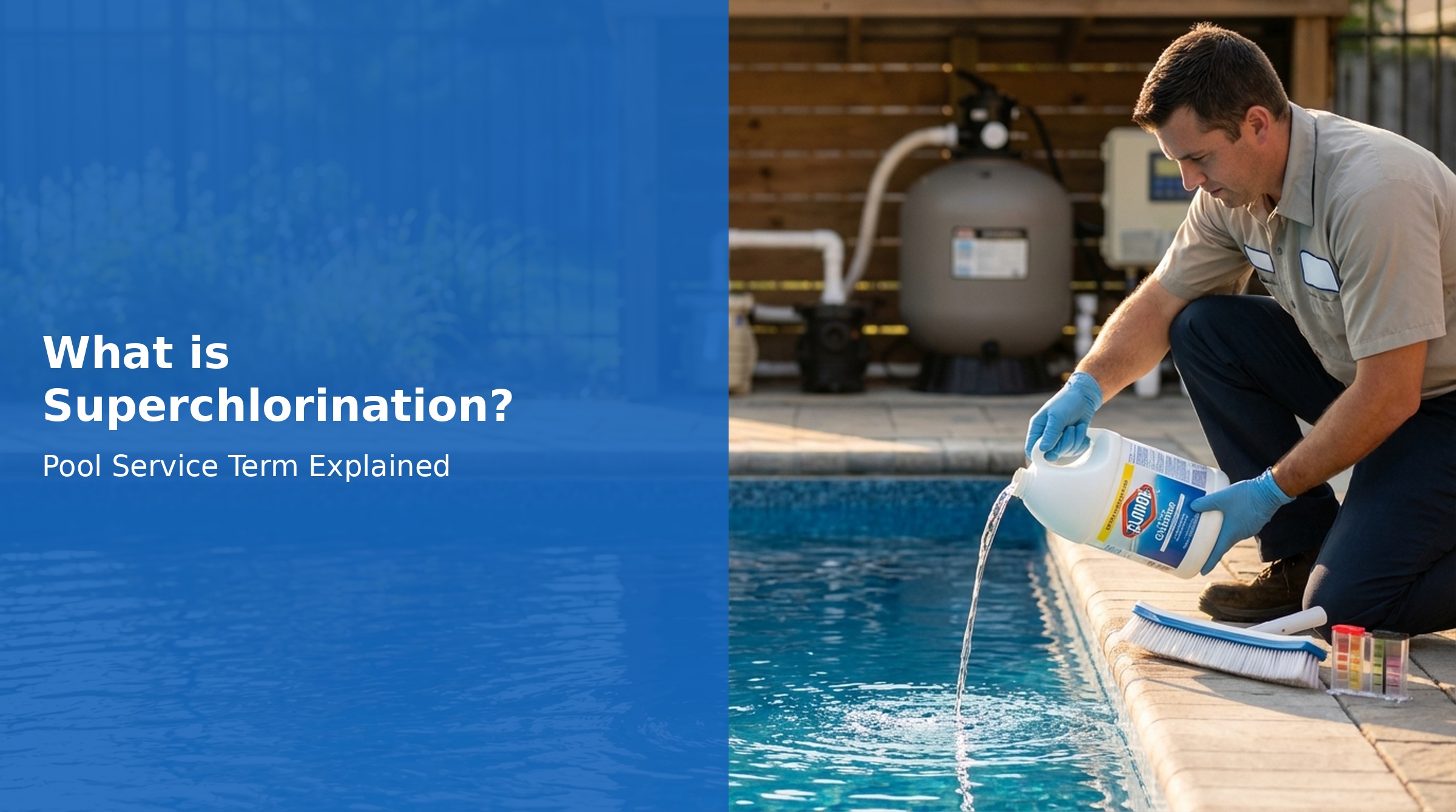
When pool water becomes contaminated with organic pollutants, bacteria, or chloramines, standard chlorination levels may not be sufficient to restore water quality. This is where superchlorination becomes an essential tool in every pool service professional's arsenal. This powerful water treatment process involves temporarily raising chlorine levels significantly above normal operating ranges to oxidize stubborn contaminants and restore crystal-clear, sanitized water.
Key Takeaways
- Superchlorination involves raising free chlorine to 10-20 ppm to shock treat contaminated pool water
- This process effectively eliminates chloramines, bacteria, algae, and organic contaminants
- Proper timing, dosage calculation, and safety protocols are critical for successful treatment
- Regular superchlorination prevents water quality issues and maintains swimmer comfort
- Understanding when and how to superchlorinate separates professional service providers from amateurs
What is Superchlorination?
Superchlorination, also known as shock chlorination or breakpoint chlorination, is a water treatment process that involves adding a large dose of chlorine to achieve free chlorine levels of 10-20 parts per million (ppm) or higher. This elevated chlorine concentration creates a powerful oxidizing environment that destroys organic contaminants, eliminates chloramines, and kills resistant microorganisms that survive normal chlorine levels.
The term "breakpoint" refers to the chemical threshold where added chlorine overcomes chlorine demand and begins producing measurable free chlorine residual. At this point, chloramines are destroyed, and the water achieves true sanitization. Professional pool technicians rely on superchlorination to address water quality issues that routine maintenance cannot resolve.
When Superchlorination is Necessary
Chloramine Elimination
The most common reason for superchlorination is chloramine removal. Chloramines form when chlorine combines with nitrogen-containing compounds like sweat, urine, and cosmetics. These compounds create the characteristic "chlorine smell" and cause eye and skin irritation. When combined chlorine levels exceed 0.5 ppm, superchlorination becomes necessary to break the chloramine bonds and restore water comfort.
Algae Treatment
Green, yellow, or black algae infestations require superchlorination as part of comprehensive treatment protocols. Algae cells have protective barriers that resist normal chlorine levels, making shock treatment essential for complete elimination. The elevated oxidizer levels penetrate algae defenses and destroy cellular structures.
Organic Contamination
Heavy bather loads, storms, or contamination events introduce organic materials that consume available chlorine. Leaves, pollen, body oils, and other organic compounds create chlorine demand that depletes sanitizer effectiveness. Superchlorination oxidizes these contaminants and restores proper sanitizer residual.
Calculating Superchlorination Dosage
Accurate dosage calculation is crucial for effective treatment while avoiding over-chlorination. The general rule requires raising free chlorine to 10 times the combined chlorine level, with a minimum of 10 ppm. For example, if combined chlorine measures 1.0 ppm, target free chlorine should reach at least 10 ppm.
Professional pool service technicians should utilize reliable chemical dosage calculators to determine precise chemical quantities based on pool volume and current water chemistry. These tools account for variables like cyanuric acid levels, which significantly affect chlorine effectiveness and required dosages.
Cyanuric Acid Considerations
Cyanuric acid (CYA) levels dramatically impact superchlorination effectiveness. High CYA levels reduce chlorine potency, requiring higher shock dosages to achieve the same oxidizing power. When CYA exceeds 50 ppm, consider using non-stabilized chlorine products or factor increased dosages into treatment calculations using a cyanuric acid calculator.
Superchlorination Methods and Products
Calcium Hypochlorite
Calcium hypochlorite (cal-hypo) is the preferred product for superchlorination due to its high available chlorine content (65-70%) and rapid dissolution. This unstabilized chlorine doesn't add cyanuric acid, making it ideal for shock treatments. However, it does increase calcium hardness, which requires monitoring in areas with naturally hard water.
Sodium Hypochlorite
Liquid chlorine (sodium hypochlorite) provides effective superchlorination without adding calcium or cyanuric acid. Its lower chlorine concentration (10-12.5%) requires larger volumes, but it dissolves instantly and distributes evenly throughout the pool system.
Dichloroisocyanurate
Dichlor products work well for routine superchlorination but add cyanuric acid with each application. Reserve these products for pools with low CYA levels or when stabilizer addition is desired alongside shock treatment.
Superchlorination Procedures
Pre-Treatment Water Testing
Always test water chemistry before superchlorination. Record free chlorine, combined chlorine, pH, total alkalinity, and cyanuric acid levels. Adjust pH to 7.2-7.6 for optimal chlorine effectiveness, as higher pH levels significantly reduce oxidizing power.
Application Best Practices
Apply shock treatments during evening hours to prevent UV degradation and allow sufficient contact time before swimming. Distribute chemicals evenly around the pool perimeter with circulation equipment running. For cal-hypo products, pre-dissolve granules in a bucket of water to prevent bleaching and ensure complete mixing.
Post-Treatment Monitoring
Test chlorine levels 8-12 hours after treatment to verify effectiveness. Free chlorine should register at or near shock dosage levels, while combined chlorine should read zero or near zero. If combined chlorine remains elevated, repeat the treatment with higher dosage.
Safety Considerations
Superchlorination creates temporarily unsafe swimming conditions. Never allow swimming until free chlorine drops below 5 ppm, preferably to normal operating levels of 1-3 ppm. Post clear signage warning against pool use and communicate treatment schedules with clients.
Handle all chlorine products according to manufacturer safety guidelines. Wear appropriate personal protective equipment, work in well-ventilated areas, and never mix different chemical products. Store chemicals properly and maintain accurate treatment records for liability protection.
Professional Service Integration
Successful pool service businesses incorporate regular superchlorination into maintenance schedules rather than waiting for problems to develop. Weekly or bi-weekly shock treatments prevent chloramine buildup and maintain consistent water quality that customers appreciate.
Understanding superchlorination principles and applications demonstrates professional expertise that justifies premium service rates. Clients recognize the value of proactive water treatment that prevents problems rather than merely reacting to them. For comprehensive understanding of pool service terminology, reference our complete pool service terminology glossary.
Conclusion
Superchlorination represents a fundamental skill that distinguishes professional pool service technicians from casual maintenance providers. Mastering this process requires understanding water chemistry principles, accurate dosage calculations, proper product selection, and strict safety protocols. Regular application prevents most water quality issues while ensuring swimmer comfort and satisfaction. By incorporating systematic superchlorination procedures into service routines, pool professionals deliver superior results that build customer loyalty and support business growth.