What is Tab Feeder? SLANG

In the pool service industry, efficient and consistent chlorination is the backbone of maintaining crystal-clear, sanitized water. Among the various chlorination methods available, tab feeders have become an indispensable tool for pool service professionals seeking reliable, automated chemical distribution. Understanding how to properly select, install, and maintain these devices can significantly impact your service efficiency and customer satisfaction.
Key Takeaways
- Tab feeders provide consistent, automated chlorine distribution using trichlor tablets
- Available in inline and offline configurations to suit different pool systems
- Proper sizing and flow rate adjustment are critical for optimal performance
- Regular maintenance prevents calcium buildup and ensures consistent chlorine output
- Understanding cyanuric acid accumulation is essential when using trichlor tablets
What is a Tab Feeder?
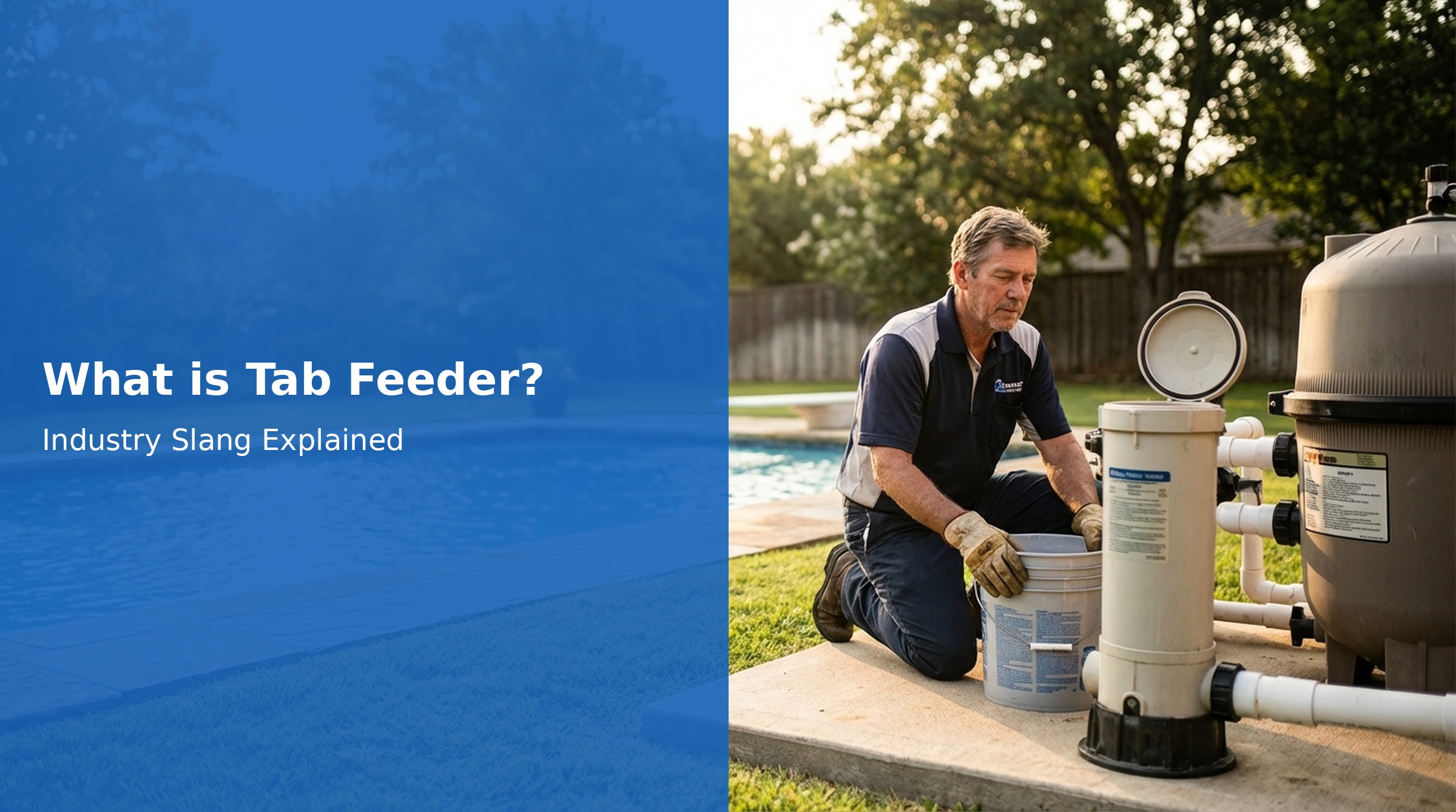
A tab feeder, also known as a chlorine feeder or tablet feeder, is an automated chlorination device that dissolves trichlor (trichloroisocyanuric acid) tablets to maintain consistent chlorine levels in pool water. These devices eliminate the need for daily manual chlorine addition, making them particularly valuable for pool service routes where efficiency and consistency are paramount.
Tab feeders work by allowing pool water to flow through a chamber containing trichlor tablets. As water passes over or around the tablets, it dissolves the chlorine compound and carries it back into the pool circulation system. The dissolution rate can be controlled through adjustable flow valves or bypass mechanisms, allowing technicians to fine-tune chlorine output based on specific pool requirements.
Types of Tab Feeders
Inline Tab Feeders
Inline feeders are plumbed directly into the pool's return line, typically installed after the heater but before any other water features. These units offer several advantages for pool service professionals:
- Consistent flow rates: Direct plumbing ensures predictable water flow through the feeder
- Compact installation: Takes up minimal space in equipment areas
- Reliable operation: Less prone to flow interruptions or bypass issues
- Easy maintenance access: Most models feature removable lids for tablet refilling
Offline Tab Feeders
Offline feeders connect to the pool's plumbing system through separate inlet and outlet connections, creating a bypass loop. Water is diverted through the feeder and then returned to the main circulation line. Key characteristics include:
- Adjustable flow control: Built-in valves allow precise flow rate adjustment
- Larger capacity: Often accommodate more tablets than inline models
- Installation flexibility: Can be positioned away from main equipment
- Easy bypass capability: Simple valve adjustment can isolate the feeder when needed
Sizing and Selection Considerations
Proper tab feeder selection requires careful consideration of several factors that directly impact chlorine output and system performance. Pool volume serves as the primary sizing criterion, but other variables significantly influence feeder effectiveness.
Flow rate through the feeder determines tablet dissolution speed. Higher flow rates increase chlorine output, while lower flows extend tablet life. Most manufacturers provide flow rate guidelines, but field adjustments are often necessary based on actual chlorine demand. Chemical dosage calculators can help determine the required daily chlorine output for proper sizing.
Bather load variations throughout the season affect chlorine demand significantly. Commercial pools and heavily used residential pools may require larger capacity feeders or supplemental chlorination during peak usage periods. Temperature also plays a role, as warmer water accelerates tablet dissolution rates.
Installation Best Practices
Proper installation ensures optimal feeder performance and longevity. For inline installations, position the feeder in the return line after all heating equipment to prevent damage from high temperatures. Ensure adequate clearance above the unit for easy lid removal and tablet refilling during service visits.
Offline installations require careful attention to plumbing connections and flow balancing. Install isolation valves on both inlet and outlet connections to facilitate maintenance and winterization. Position the feeder at or below the main plumbing line level to ensure consistent water flow and prevent air lock issues.
Consider the installation location's accessibility during routine service. Feeders requiring frequent tablet refilling should be positioned where service technicians can easily reach them without navigating tight spaces or removing other equipment.
Operational Management
Effective tab feeder management requires understanding the relationship between flow rates, tablet dissolution, and chlorine output. Start with manufacturer recommendations, then adjust based on actual pool conditions and chlorine test results.
Monitor cyanuric acid levels regularly when using trichlor tablets, as each tablet adds both chlorine and stabilizer to the water. Excessive cyanuric acid accumulation can reduce chlorine effectiveness and may require partial water replacement. Use a cyanuric acid calculator to track stabilizer buildup and plan appropriate maintenance actions.
Establish a consistent tablet refilling schedule based on consumption patterns. Most residential pools require refilling every 1-2 weeks during peak season, while commercial installations may need more frequent attention. Document tablet usage to identify consumption trends and adjust maintenance schedules accordingly.
Troubleshooting Common Issues
Calcium buildup represents the most common tab feeder problem, particularly in areas with hard water. White, chalky deposits on the feeder interior and tablet chamber indicate calcium precipitation. Regular cleaning with muriatic acid solution removes these deposits and restores proper water flow.
Inconsistent chlorine levels often result from improper flow adjustment or tablet quality issues. Verify flow rates meet manufacturer specifications and inspect tablets for unusual dissolution patterns. Poor-quality tablets may dissolve unevenly or contain excessive inert materials that reduce effectiveness.
Air lock conditions in offline feeders prevent proper water circulation and chlorine distribution. Ensure all connections are tight and the feeder is properly primed. Installing automatic air relief valves can prevent recurring air lock problems.
Integration with Pool Chemistry Management
Tab feeders work most effectively as part of a comprehensive chemical management program. Regular water testing and adjustment of other parameters ensure optimal chlorine performance and prevent equipment damage.
Maintain proper pH levels between 7.2-7.6 for maximum chlorine effectiveness. High pH reduces chlorine activity and may accelerate calcium buildup in the feeder. Monitor total alkalinity and calcium hardness levels to prevent scaling issues that can impair feeder operation.
For pool service professionals managing multiple accounts, understanding the terminology and equipment variations is crucial. Reference a comprehensive pool service terminology glossary to ensure clear communication with customers and suppliers about feeder specifications and maintenance requirements.
Maximizing Service Efficiency
Tab feeders significantly enhance pool service route efficiency by reducing the time required for chemical adjustments at each stop. However, proper setup and maintenance are essential for realizing these benefits.
Develop standardized procedures for feeder inspection, tablet replacement, and flow adjustment. Train service technicians to recognize signs of feeder problems before they impact water quality. Regular feeder maintenance prevents emergency service calls and maintains consistent water quality between service visits.
Document feeder settings and tablet consumption rates for each account to identify optimization opportunities. Pools with consistently high or low tablet consumption may benefit from flow rate adjustments or alternative chlorination methods during certain seasons.
Tab feeders represent a valuable tool for pool service professionals seeking consistent, efficient chlorination systems. Understanding their operation, proper selection criteria, and maintenance requirements enables technicians to provide superior service while optimizing route efficiency. Success with tab feeders requires attention to detail in installation, regular monitoring of performance, and proactive maintenance to prevent common operational issues.