
What is Total Chlorine (TC)?

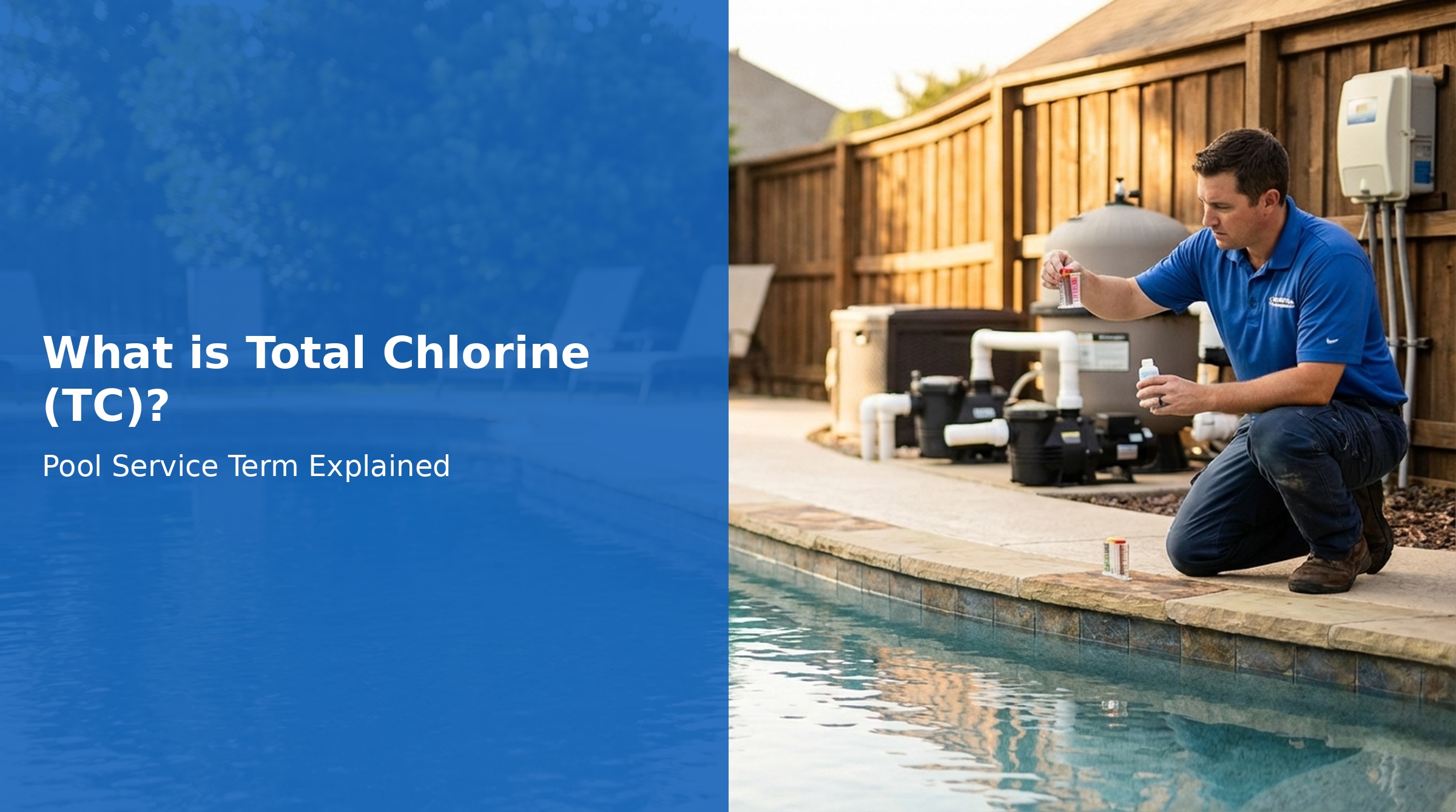
Understanding water chemistry fundamentals is crucial for every pool service professional, and Total Chlorine (TC) represents one of the most important measurements in your testing arsenal. While many technicians focus primarily on free chlorine levels, Total Chlorine provides critical insights into your pool's overall sanitization status and helps identify when immediate action is required to maintain safe, crystal-clear water.
Key Takeaways
- Total Chlorine equals free chlorine plus combined chlorine (chloramines)
- When TC exceeds free chlorine by 0.5 ppm or more, shock treatment is necessary
- High combined chlorine causes strong chlorine odor and eye irritation
- Regular TC testing prevents customer complaints and maintains water quality
- Proper shocking restores free chlorine effectiveness and eliminates chloramines
What is Total Chlorine (TC)?
Total Chlorine represents the complete measurement of all chlorine present in pool water, combining both active sanitizing chlorine (free chlorine) and inactive chlorine compounds (combined chlorine or chloramines). This comprehensive measurement provides pool professionals with essential information about water quality that free chlorine testing alone cannot reveal.
The mathematical relationship is straightforward: Total Chlorine = Free Chlorine + Combined Chlorine. When you test a pool and find that total chlorine reads higher than free chlorine, the difference indicates the presence of combined chlorine, signaling that your sanitization system is compromised.
Understanding the Components
Free chlorine consists of hypochlorous acid and hypochlorite ions—the active sanitizers that kill bacteria, viruses, and algae. Combined chlorine forms when free chlorine reacts with contaminants like sweat, urine, oils, and organic debris, creating chloramines that smell strongly but provide minimal sanitizing power.
Why Total Chlorine Matters for Pool Service Professionals
Monitoring Total Chlorine levels helps you identify problems before they become visible to customers. When combined chlorine accumulates, pools develop that characteristic "over-chlorinated" smell that actually indicates insufficient sanitization. Customers often complain about burning eyes, skin irritation, and strong chemical odors when combined chlorine levels rise.
Professional Implications
Failing to monitor TC can lead to several service challenges:
- Customer dissatisfaction due to poor water quality
- Increased chemical consumption without improved results
- Algae growth despite apparent adequate chlorine levels
- Equipment damage from improper chemical balance
- Potential health department violations in commercial settings
Testing and Interpreting Total Chlorine Results
Professional-grade test kits measure both free and total chlorine simultaneously, typically using DPD (N,N-diethyl-p-phenylenediamine) reagents. Digital colorimeters and photometers provide the most accurate readings for commercial operations, while reliable test strips work well for routine residential service.
Ideal Ranges and Warning Signs
For optimal water quality, Total Chlorine should closely match free chlorine levels. When the difference exceeds 0.5 ppm, immediate shock treatment becomes necessary. In well-maintained pools, combined chlorine should remain below 0.2 ppm.
Consider this common scenario: You test a pool and find 2.0 ppm free chlorine and 3.2 ppm total chlorine. The 1.2 ppm difference indicates significant chloramine buildup requiring immediate attention, despite the seemingly adequate free chlorine level.
Addressing High Total Chlorine Levels
When Total Chlorine exceeds free chlorine significantly, shocking (superchlorination) becomes essential to break down chloramines and restore water quality. The process involves raising free chlorine to 10-20 times the combined chlorine level to oxidize contaminants completely.
Shock Treatment Protocol
Calculate the required shock dosage using this formula: multiply combined chlorine by 10 to determine the minimum shock level needed. For the previous example with 1.2 ppm combined chlorine, raise free chlorine to at least 12 ppm. Our chemical dosage calculator can help determine precise chemical quantities for effective treatment.
Alternative Oxidation Methods
Non-chlorine shock (potassium monopersulfate) effectively eliminates combined chlorine without raising total chlorine levels, making it ideal for situations requiring immediate pool use. However, chlorine-based shock treatments provide both oxidation and sanitization benefits.
Prevention Strategies for Pool Service Routes
Preventing combined chlorine buildup saves time and chemicals while maintaining customer satisfaction. Implement these proactive measures:
- Regular shocking schedules: Weekly shock treatments prevent chloramine accumulation
- Proper bather load management: Adjust chemical programs based on pool usage
- Enhanced filtration: Ensure adequate turnover rates and clean filters regularly
- Stabilizer monitoring: Use our CYA calculator to maintain appropriate cyanuric acid levels
Customer Education Opportunities
Educate customers about pre-swimming hygiene practices that reduce contaminant introduction. Simple measures like showering before swimming and avoiding pool use during illness significantly decrease combined chlorine formation.
Troubleshooting Common Total Chlorine Issues
When pools consistently show high combined chlorine despite regular shocking, investigate underlying causes. Heavy bather loads, inadequate filtration, or chemical imbalances often contribute to persistent problems.
Systematic Problem-Solving Approach
Start by verifying test kit accuracy and reagent freshness. Check filter condition, circulation patterns, and overall water balance. Sometimes, partial drain and refill becomes necessary when combined chlorine levels remain persistently high despite proper treatment.
Integration with Overall Water Management
Total Chlorine monitoring works best as part of comprehensive water management programs. Regular testing of pH, alkalinity, calcium hardness, and cyanuric acid ensures optimal chlorine effectiveness and prevents combined chlorine formation.
Professional pool service requires understanding the interconnected nature of water chemistry. When all parameters work together harmoniously, Total Chlorine levels naturally remain close to free chlorine readings, indicating efficient sanitization systems.
Conclusion
Mastering Total Chlorine testing and interpretation elevates your pool service quality and customer satisfaction. By understanding the relationship between free and combined chlorine, you can identify problems early, implement effective solutions, and maintain consistently high water quality standards. Regular TC monitoring, combined with proper shock treatment protocols and preventive maintenance, ensures your customers enjoy safe, comfortable swimming experiences while building your reputation as a knowledgeable pool care professional.
For additional technical terms and comprehensive water chemistry guidance, consult our complete pool service terminology glossary to enhance your professional expertise.