
What is Trichlor?

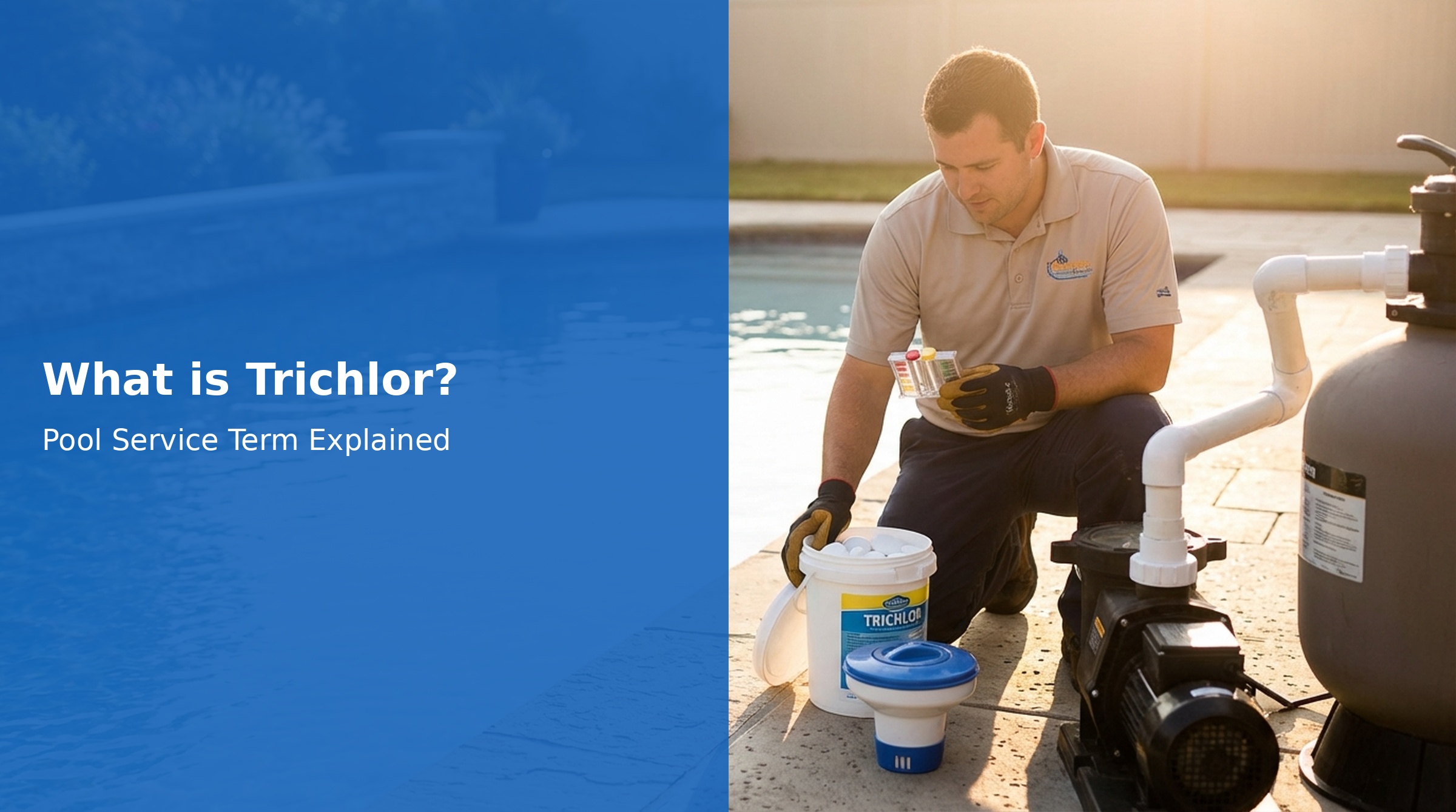
Trichlor stands as one of the most widely used chlorine compounds in the pool service industry, yet its proper application and potential pitfalls remain misunderstood by many professionals. This stabilized chlorine compound offers unique advantages for routine pool maintenance while presenting specific challenges that can impact water balance and equipment longevity. Understanding trichlor's chemistry, applications, and limitations is crucial for pool service technicians who want to deliver consistent, professional results while avoiding common water chemistry problems.
Key Takeaways
- Trichlor is a stabilized chlorine compound with a pH of 2.8-3.0, requiring careful dosing to prevent pH crashes
- Each pound of trichlor adds approximately 0.6 pounds of cyanuric acid to pool water
- Best suited for routine maintenance chlorination, not shock treatments or initial pool startup
- Available in tablet, stick, and granular forms with dissolving rates varying significantly
- Long-term use requires monitoring and management of cyanuric acid buildup
What is Trichlor?
Trichloroisocyanuric acid, commonly known as trichlor, is a stabilized chlorine compound containing approximately 90% available chlorine. This white, crystalline solid belongs to the cyanurate family of pool chemicals and serves as both a sanitizer and a source of cyanuric acid (CYA). The chemical formula C₃Cl₃N₃O₃ reveals its structure: three chlorine atoms bonded to a cyanuric acid backbone.
Unlike unstabilized chlorine products such as liquid chlorine or cal-hypo, trichlor includes built-in protection against UV degradation. This stabilization comes from the cyanuric acid component, which forms a protective reservoir around chlorine molecules, significantly extending their lifespan in outdoor pools exposed to sunlight.
Chemical Properties and Characteristics
Trichlor exhibits several distinct properties that influence its application in pool service:
- pH Level: Highly acidic at 2.8-3.0, requiring pH adjustment during regular use
- Dissolving Rate: Slow dissolution, making it ideal for continuous chlorination systems
- Calcium Content: Contains no calcium, preventing calcium hardness buildup
- Stability: Excellent shelf life when stored properly in cool, dry conditions
- Available Chlorine: Approximately 90% available chlorine by weight
Applications in Pool Service
Pool service professionals utilize trichlor primarily for routine maintenance chlorination rather than shock treatments or startup procedures. Its slow-dissolving nature makes it particularly effective in floating dispensers, automatic chlorinators, and skimmer baskets where consistent chlorine release is desired.
Optimal Use Scenarios
Trichlor performs best in specific service scenarios. Weekly maintenance routes benefit from trichlor tablets placed in skimmer baskets or floating dispensers, providing steady chlorination between service visits. Pools with automatic chlorination systems often rely on trichlor tablets or sticks for consistent feed rates. Commercial properties with high UV exposure particularly benefit from trichlor's stabilized formulation.
However, trichlor proves less suitable for certain situations. Shock treatments require faster-acting chlorine sources, making liquid chlorine or cal-hypo better choices. Pool startups and algae remediation typically demand unstabilized chlorine to avoid immediate CYA buildup. Indoor pools may not require stabilized chlorine, making trichlor an unnecessarily expensive option.
Dosing Considerations
Proper trichlor dosing requires understanding both its chlorine contribution and cyanuric acid impact. A general guideline suggests 1 ounce of trichlor per 5,000 gallons to raise free chlorine by 1 ppm, but this varies based on water temperature, pH, and existing CYA levels. More importantly, each pound of trichlor adds approximately 0.6 pounds of cyanuric acid to the pool water.
Professional pool services should utilize chemical dosage calculators to ensure accurate dosing and prevent overaddition. Regular testing becomes crucial when using trichlor, as both free chlorine and CYA levels require monitoring to maintain proper water balance.
Managing Cyanuric Acid Buildup
The most significant challenge with trichlor use involves managing the inevitable cyanuric acid accumulation. Over time, regular trichlor addition leads to CYA levels that can exceed recommended ranges, typically 30-50 ppm for residential pools and 30-100 ppm for commercial facilities.
Monitoring and Testing
Successful trichlor management requires regular CYA testing using reliable methods such as turbidity tests or photometers. Visual test strips often prove inadequate for accurate CYA measurement, leading to undetected buildup that compromises chlorine effectiveness.
Pool service professionals should implement systematic CYA tracking, documenting levels throughout the service season. CYA calculators help determine optimal addition rates and predict when dilution becomes necessary.
Addressing Excessive CYA Levels
When CYA levels exceed desired ranges, partial water replacement becomes necessary since cyanuric acid cannot be easily removed through filtration or chemical treatment. Some professionals utilize CYA reduction products, though these specialty chemicals add complexity and cost to maintenance programs.
Prevention remains the best strategy through balanced chemical programs that incorporate both stabilized and unstabilized chlorine sources. Many successful service companies use trichlor for routine maintenance while supplementing with liquid chlorine for shock treatments and CYA management.
Forms and Application Methods
Trichlor availability in multiple forms allows flexibility in application methods. Three-inch tablets dominate residential service due to their convenience and consistent dissolving rates. One-inch tablets work well in small pools or spa applications. Trichlor sticks fit certain automatic feeders and provide slower dissolution than tablets.
Granular trichlor offers rapid dissolution for immediate chlorination needs but sacrifices the controlled release advantage of solid forms. This form requires careful handling and should never be mixed with other chemicals or added directly to skimmers with other products present.
Equipment Compatibility
Trichlor's acidic nature affects equipment selection and maintenance. Automatic chlorinators require materials resistant to low pH environments, with many manufacturers specifying compatible models for trichlor use. Regular inspection of feeders, seals, and plumbing connections becomes essential when using trichlor products.
Skimmer baskets containing trichlor tablets should be monitored for corrosion, particularly around metal components. The acidic dissolving process can damage equipment not designed for such exposure, leading to costly repairs and liability issues.
Best Practices for Pool Service Professionals
Implementing trichlor effectively requires systematic approaches that address both immediate sanitization needs and long-term water balance goals. Successful professionals develop protocols that maximize trichlor's benefits while minimizing its potential drawbacks.
Regular water testing schedules should include both free chlorine and CYA measurements, with results documented for trend analysis. Understanding pool service terminology helps communicate effectively with clients about chemical programs and any necessary adjustments.
Client education proves valuable when explaining the relationship between trichlor use and periodic water replacement needs. Setting proper expectations about seasonal CYA management helps avoid surprises and maintains professional relationships.
Conclusion
Trichlor remains an invaluable tool for pool service professionals when used appropriately within comprehensive chemical programs. Its stabilized formulation provides consistent chlorination with minimal UV degradation, making it ideal for routine maintenance applications. However, successful trichlor implementation requires understanding its acidic nature, monitoring CYA accumulation, and balancing stabilized chlorine use with periodic unstabilized supplementation. By following proper protocols and maintaining regular testing schedules, pool service professionals can leverage trichlor's advantages while avoiding common pitfalls that compromise water quality and client satisfaction.