
What is VGB Act?

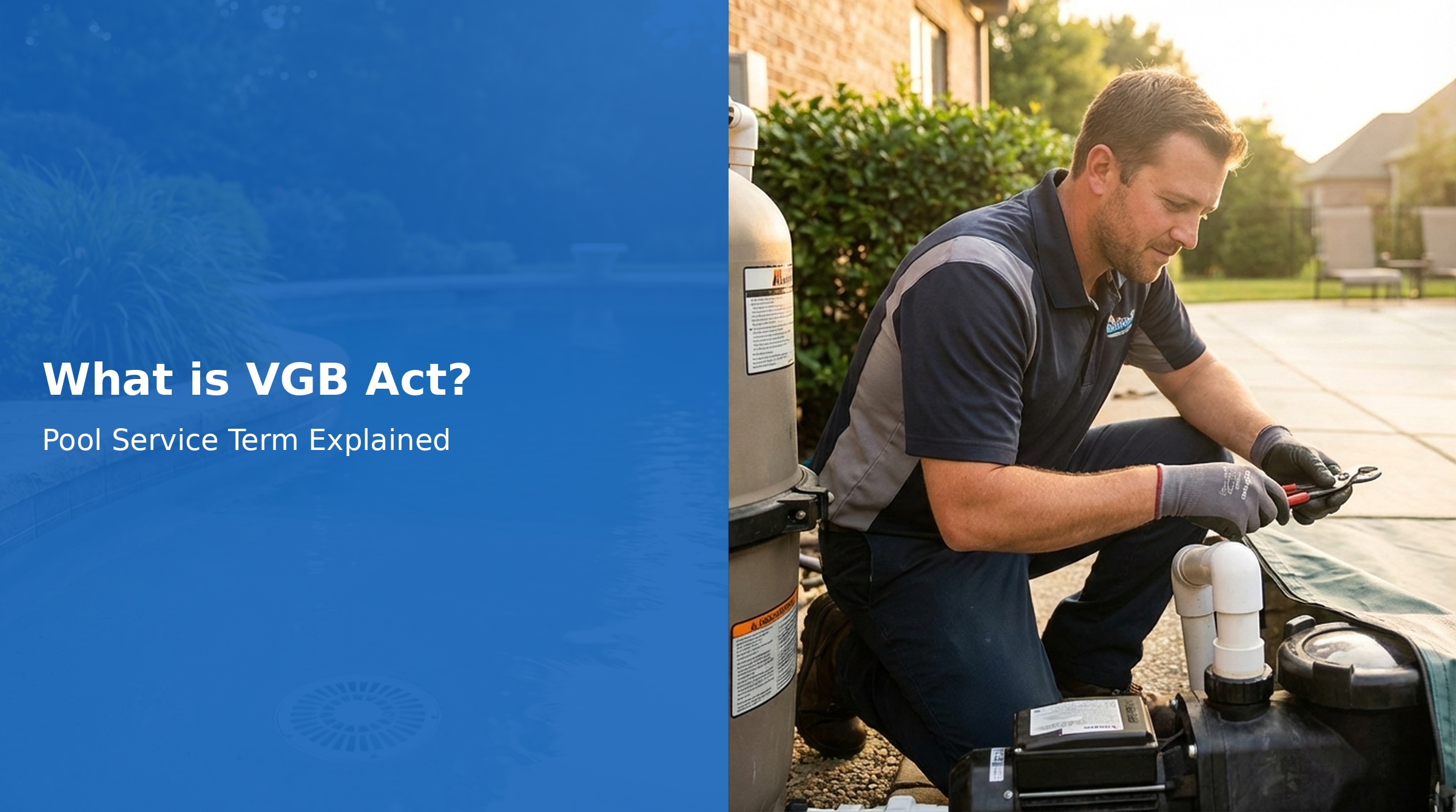
Pool safety has undergone a dramatic transformation since the implementation of federal legislation designed to prevent tragic accidents. The Virginia Graeme Baker Pool and Spa Safety Act, commonly referred to as the VGB Act, represents one of the most significant regulatory changes in the pool industry's history. For pool service professionals, understanding and implementing VGB Act requirements isn't just about compliance—it's about protecting lives and ensuring your business operates within federal safety standards.
Key Takeaways
- The VGB Act mandates specific safety equipment for all public pools and spas to prevent entrapment injuries and deaths
- Anti-entrapment drain covers must meet ASME/ANSI A112.19.8 standards and be properly installed
- Secondary safety systems are required, including dual drains, safety vacuum release systems, or automatic pump shut-offs
- Pool service professionals must regularly inspect and maintain VGB-compliant equipment
- Non-compliance can result in pool closures, fines, and serious liability issues
Understanding the VGB Act: Origins and Purpose
Named after Virginia Graeme Baker, a young girl who tragically died from drain entrapment in a spa, the Virginia Graeme Baker Pool and Spa Safety Act was signed into federal law in December 2007. This legislation addresses a critical safety issue that had claimed too many lives—suction entrapment incidents in pools and spas.
The Act applies to all public pools and spas, including those at hotels, community centers, schools, and residential complexes with shared facilities. While residential pools are generally exempt from federal VGB requirements, many states have adopted similar regulations that extend to private pools, making VGB compliance knowledge essential for all pool service professionals.
The Science Behind Entrapment Dangers
Suction entrapment occurs when a person's body or limbs become trapped by the powerful suction created by pool circulation systems. Modern pool pumps can generate tremendous suction force—enough to trap even strong swimmers underwater. The VGB Act addresses several types of entrapment:
- Body entrapment: When torso or limbs are held by suction against a drain
- Limb entrapment: Arms or legs caught in broken or poorly designed drain covers
- Hair entrapment: Long hair sucked into drain openings
- Evisceration: Internal injuries caused by sitting on unprotected suction outlets
VGB Act Requirements for Pool Service Professionals
The VGB Act establishes two primary safety requirements that work together to prevent entrapment incidents. Understanding these requirements is crucial for pool service professionals who must ensure ongoing compliance.
Anti-Entrapment Drain Covers
All suction outlets in VGB-covered facilities must be equipped with anti-entrapment drain covers that meet or exceed ASME/ANSI A112.19.8 performance standards. These covers are specifically designed and tested to prevent body entrapment and reduce suction force concentration.
Key specifications for compliant drain covers include:
- Proper flow ratings that match the pump and plumbing system
- Dome or channel designs that distribute suction across a larger surface area
- Secure mounting systems that prevent removal without tools
- Durable materials resistant to pool chemicals and UV exposure
Secondary Safety Systems
Beyond compliant drain covers, the VGB Act requires at least one additional safety system. Pool service professionals should be familiar with these options:
Multiple Drains: Installing two or more drains per pump ensures that if one drain becomes blocked, the suction force is redirected to the unblocked drain, breaking any potential entrapment.
Safety Vacuum Release Systems (SVRS): These devices automatically shut off or reverse pump flow when excessive vacuum is detected, typically within 15 seconds of blockage.
Automatic Pump Shut-Off Systems: Similar to SVRS, these systems detect blockage conditions and immediately stop pump operation.
Gravity Drainage Systems: These systems eliminate suction entirely by using gravity to move water, though they're less common in existing installations.
Implementation and Maintenance Responsibilities
For pool service professionals, VGB Act compliance extends far beyond initial installation. Regular maintenance and inspection protocols are essential for ensuring continued safety and legal compliance.
Regular Inspection Procedures
Develop a systematic approach to VGB compliance inspections during routine service visits:
- Visually inspect all drain covers for cracks, missing screws, or damage
- Verify that covers are properly seated and secure
- Test SVRS systems according to manufacturer guidelines
- Document compliance status and any maintenance performed
- Check that cover flow ratings still match current pump specifications
Maintaining detailed records of VGB compliance inspections protects both your clients and your business from liability issues. Consider integrating these inspections into your standard service protocols alongside chemical balance testing and equipment maintenance.
Common Compliance Issues
Pool service professionals frequently encounter several recurring VGB compliance challenges:
Improper Cover Selection: Using drain covers with incorrect flow ratings can create dangerous conditions even with compliant covers. Always verify that cover specifications match pump capacity and plumbing configuration.
Damaged Safety Equipment: SVRS devices and automatic shut-off systems require regular testing and maintenance to function properly. Failed safety systems leave facilities vulnerable to entrapment incidents and regulatory violations.
Retrofit Complications: Older pools may require significant modifications to achieve VGB compliance, including plumbing changes or electrical upgrades for safety systems.
Business Impact and Professional Considerations
VGB Act compliance represents both a responsibility and an opportunity for pool service professionals. Facilities that fail to meet VGB requirements face potential closure by health departments, significant liability exposure, and costly emergency retrofits.
By positioning yourself as a VGB compliance expert, you can provide valuable services to commercial clients while protecting your business from liability issues. Consider developing VGB compliance audit services as an additional revenue stream, particularly for facilities that may have incomplete or outdated safety systems.
Stay current with evolving regulations and industry standards by maintaining familiarity with broader pool service terminology and safety requirements that may impact your service area.
Ensuring Long-Term Safety and Compliance
The VGB Act has fundamentally changed how pool service professionals approach safety in aquatic facilities. By understanding the technical requirements, maintaining proper inspection protocols, and staying current with regulatory developments, you can ensure that the pools under your care provide safe, compliant recreational experiences.
Remember that VGB compliance is an ongoing responsibility, not a one-time installation requirement. Regular equipment inspections, proper maintenance documentation, and immediate response to safety system failures are essential components of professional pool service in the post-VGB era. Your expertise in these areas not only protects swimmers but also provides peace of mind for facility owners and operators who depend on your professional knowledge to maintain safe aquatic environments.