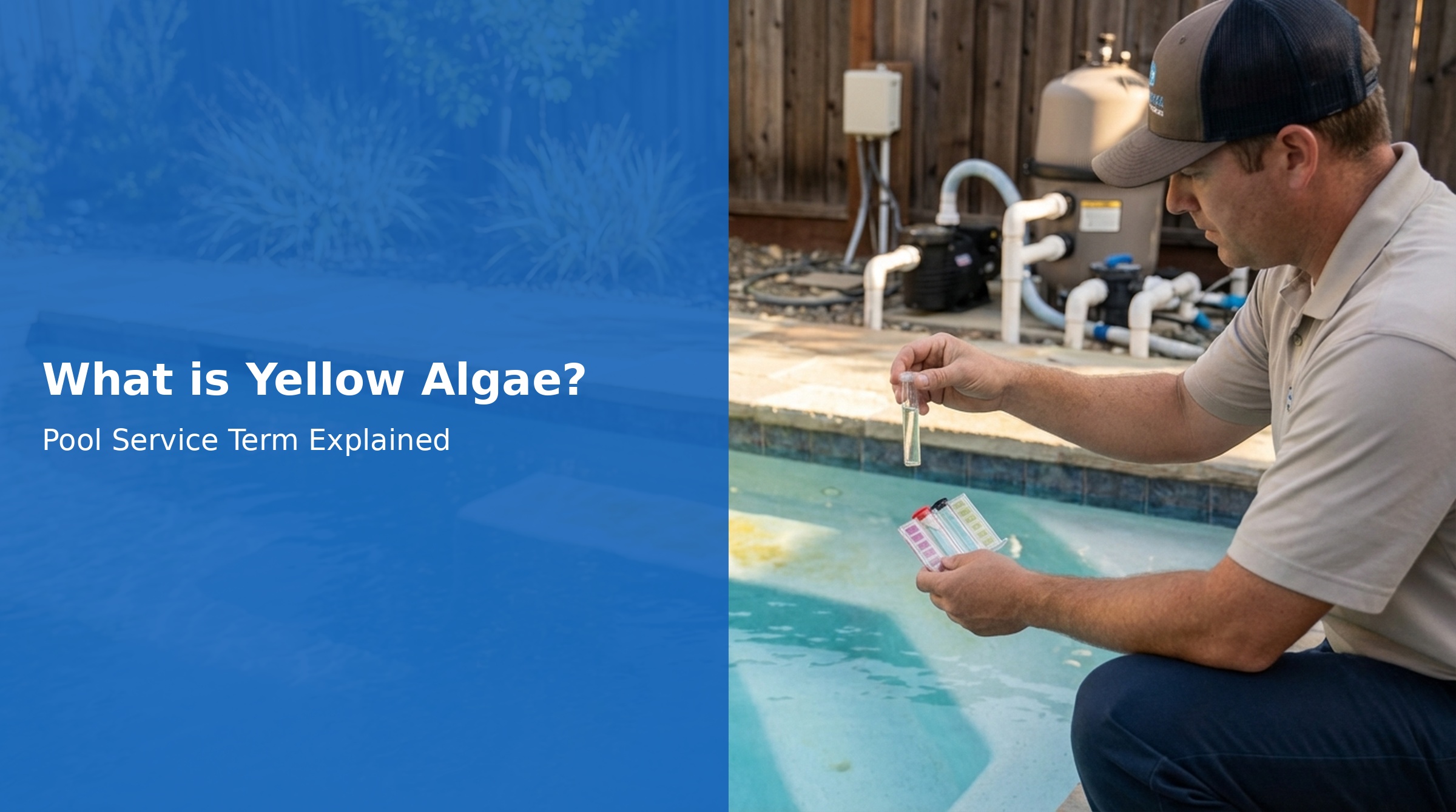
What is Yellow Algae?

When pool service professionals encounter a persistent, mustard-colored film clinging to pool surfaces, they're likely dealing with one of the most stubborn contaminants in the industry: yellow algae. Also known as mustard algae, this resilient organism poses unique challenges that distinguish it from common green algae, requiring specialized treatment protocols and prevention strategies to eliminate effectively.
Key Takeaways
- Yellow algae is chlorine-resistant and forms protective biofilms, making it harder to eliminate than green algae
- It appears as yellow-brown patches that brush off easily but return quickly without proper treatment
- Effective treatment requires shock chlorination to 20-30 ppm with extended filtration cycles
- All pool equipment and accessories must be sanitized to prevent recontamination
- Prevention focuses on maintaining proper sanitizer levels and regular brushing of problem areas
Understanding Yellow Algae Characteristics
Yellow algae, scientifically classified as a form of green algae that appears yellow-brown due to protective compounds, represents one of the most challenging biological contaminants pool professionals encounter. Unlike typical green algae that turns water cloudy and green, yellow algae forms a thin, powdery layer that adheres to pool surfaces, particularly in areas with poor circulation such as steps, corners, and behind ladders.
The organism's distinctive mustard or yellow-brown coloration comes from protective pigments that shield it from chlorine damage. This biological adaptation makes yellow algae significantly more resistant to standard sanitization protocols, often requiring chlorine levels 5-10 times higher than those needed for green algae elimination.
Visual Identification and Distribution Patterns
Professional identification of yellow algae involves recognizing its characteristic appearance and behavior patterns. The algae typically manifests as:
- Thin, dusty patches with yellow-brown coloration
- Concentrations in low-circulation areas and shaded surfaces
- Easy removal with brushing, but rapid return within 12-24 hours
- Preference for pool walls, steps, and equipment surfaces over water column suspension
Unlike green algae blooms that affect overall water clarity, yellow algae rarely causes significant water discoloration, making visual surface inspection the primary detection method.
Treatment Protocols for Yellow Algae Elimination
Effective yellow algae treatment requires aggressive chlorination combined with mechanical removal and equipment sanitization. The standard protocol involves multiple coordinated steps that address both visible algae and dormant spores.
Chemical Treatment Strategy
The foundation of yellow algae elimination centers on achieving and maintaining shock chlorination levels of 20-30 ppm free chlorine for 24-48 hours. This extended high-chlorine exposure penetrates the algae's protective biofilm and eliminates reproductive cells. Pool service professionals should utilize their chemical dosage calculator to determine precise chlorine requirements based on pool volume and current chlorine demand.
During treatment, maintain pH levels between 7.2-7.4 to optimize chlorine effectiveness. Higher pH levels reduce chlorine's killing power, potentially allowing algae survival and rapid recolonization. Cyanuric acid levels should remain below 50 ppm, as excessive stabilizer reduces chlorine potency against resistant organisms like yellow algae.
Mechanical and Equipment Protocols
Concurrent with chemical treatment, aggressive brushing of all pool surfaces proves essential for biofilm disruption. Focus particular attention on areas where algae typically concentrate, including steps, corners, behind equipment, and any textured surfaces that provide attachment points.
All removable pool equipment requires thorough sanitization to prevent recontamination. This includes:
- Pool cleaning tools and brushes
- Toys, floats, and recreational equipment
- Pool covers and storage containers
- Filtration system components
Soak all equipment in a 10% bleach solution for at least 30 minutes, or replace items that cannot be effectively sanitized.
Prevention and Maintenance Strategies
Long-term yellow algae prevention requires understanding the environmental conditions that promote its growth and implementing targeted maintenance protocols to eliminate these favorable conditions.
Water Chemistry Management
Consistent sanitizer residuals represent the primary defense against yellow algae establishment. Maintain free chlorine levels at 1-3 ppm continuously, with higher levels (3-5 ppm) during periods of heavy bather load or environmental stress. Regular water testing and adjustment prevent the sanitizer depletion that allows algae colonization.
Proper water balance supports sanitizer effectiveness and reduces algae-friendly conditions. Utilize tools like the Langelier Saturation Index calculator to maintain optimal water balance that supports both equipment longevity and biological control.
Circulation and Filtration Optimization
Yellow algae thrives in areas with poor water movement, making circulation system optimization crucial for prevention. Ensure adequate turnover rates, typically 8-12 hours for residential pools, and verify that return jets create proper circulation patterns that eliminate dead spots where algae can establish.
Regular filter maintenance supports both mechanical removal of algae cells and optimal water flow. Clean cartridge filters weekly during algae season, and consider upgrading to higher-efficiency filtration systems in pools with recurring yellow algae problems.
Professional Service Considerations
For pool service professionals, yellow algae incidents require clear client communication about treatment duration and expectations. Unlike green algae that often clears within 24-48 hours, yellow algae treatment may require 5-7 days of intensive protocols, including daily brushing and chemical adjustments.
Documentation of treatment protocols and results helps build client confidence and provides valuable reference information for future incidents. Include water test results, chemical additions, and visual assessment notes to track progress and demonstrate professional thoroughness.
Consider seasonal patterns in yellow algae occurrence, as warm water temperatures and intense sunlight create optimal growth conditions. Implement preventive measures before peak algae season, including increased sanitizer levels and enhanced circulation system maintenance.
Conclusion
Yellow algae management represents a critical skill for pool service professionals, requiring specialized knowledge of resistant organism biology and targeted treatment protocols. Success depends on aggressive initial treatment, thorough equipment sanitization, and consistent prevention strategies that address the unique characteristics that make this algae type particularly challenging. By understanding yellow algae's distinctive properties and implementing comprehensive treatment and prevention protocols, professionals can effectively manage this stubborn contaminant and maintain pristine pool conditions for their clients. For additional technical terminology and treatment protocols, consult our comprehensive pool service terminology glossary for expanded professional reference materials.