
Common Long-Term Injuries for Pool Service Technicians (And How to Prevent Them)


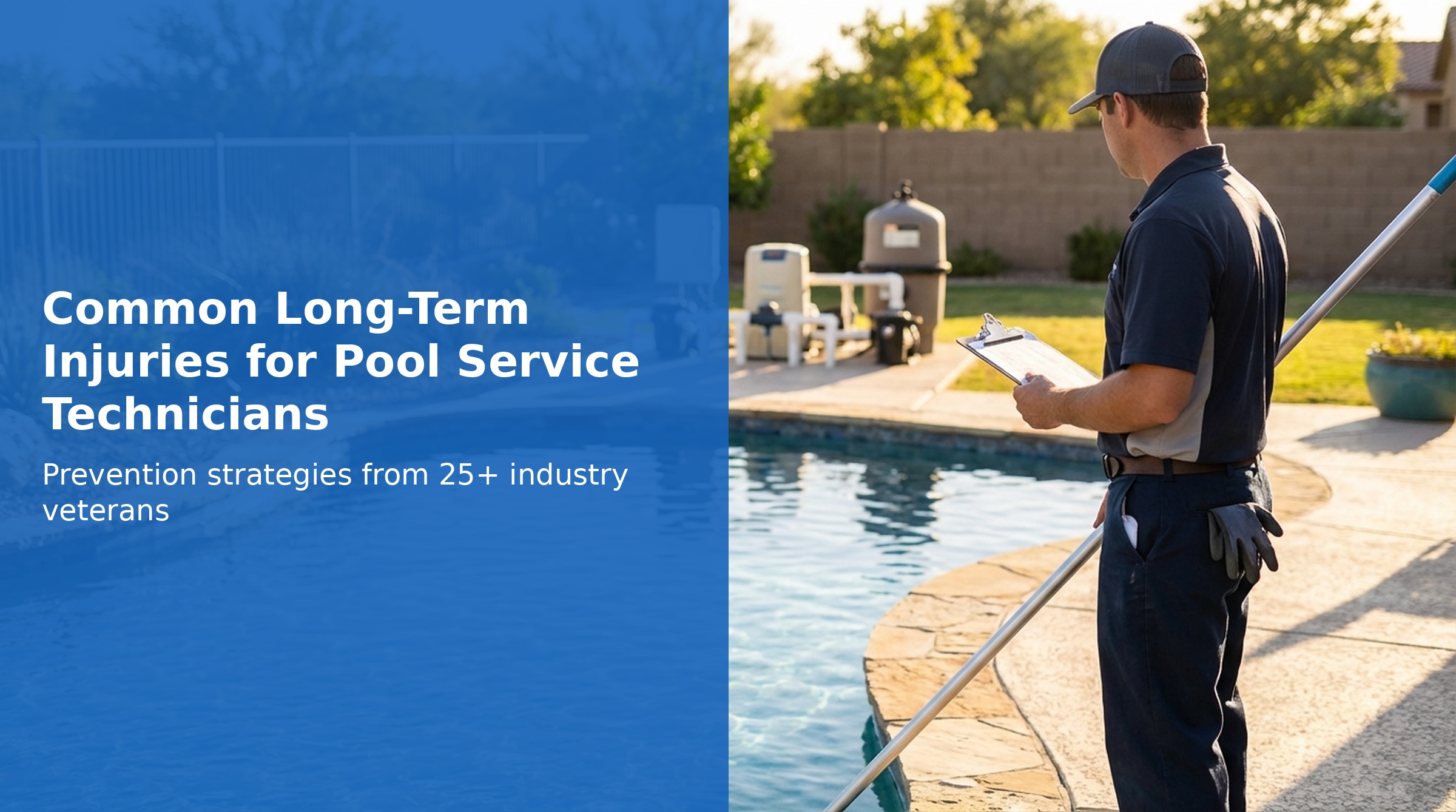
Pool service is a rewarding career—you're outside, you're active, and you're solving problems that keep families enjoying their backyard oases. But like any physical trade, the work takes a toll on your body over time.
We gathered insights from over 25 pool professionals on Reddit to understand what injuries are most common in the industry—and more importantly, what separates the technicians who stay healthy from those who end up in the surgeon's office.
Here's what we found.
Key Takeaways
- Rotator cuff injuries are the #1 concern—keep arms below shoulder level when using poles
- Good knee pads and proper lifting technique prevent the most common long-term damage
- Respiratory issues from chemical exposure are preventable with proper PPE
- Veterans who stay healthy share common habits: stretching, smart equipment choices, and healthy lifestyles
- Solo route safety matters: check-ins, two-person rules for risky work, and emergency plans can save lives
- The goal should be building a business you can eventually step back from physically
The Most Common Injuries in Pool Service
Rotator Cuff Injuries
This was the number one injury mentioned by pool pros. The repetitive overhead motion of brushing walls and using vacuum poles puts enormous strain on the shoulder joint.
One technician shared that since starting pool service, his visits to physiotherapy have become significantly more frequent due to rotator cuff problems. Tennis elbow is common too. Some techs wear compression straps on both arms just to get through the day.
"I found out very quickly doing commercial pools with lots of brushing."
— Pool pro via Reddit
The culprit? Overhead arm movement with the vac pole. Experienced techs recommend keeping your arms below shoulder level as much as possible to reduce strain.
Knee Problems and Replacements
Kneeling on pool decks, climbing in and out of pools, and squatting to access equipment adds up over the years. Multiple technicians in their 40s and beyond reported knee issues, with some requiring full replacements.
One tech with nearly four decades in the industry (since 1987) has had both knees replaced along with developing shoulder tendon issues. Another pro at 38 already has arthritis in his left knee. He knows someone who got a double knee replacement and still works in the field.
"My kneepads go on at my first job of the day and come off after my last job. I've been in this industry for close to 30 years now."
— Pool pro via Reddit
Good knee pads aren't optional. They're essential gear. Popular options include Klein compression kneepads, gel sport pads from Bodyprox, and work pants with built-in knee pad pockets like the Truewerk T2.
One tech pointed out that weak legs, tight hamstrings, and poor form cause more knee damage than the kneeling itself. Strengthening your glutes and hamstrings with exercises like RDLs and leg presses protects the knee joint.
"It's not because you're down on your knees all the time. It's because they never spent a day in the gym and everything is weak and tight."
— Pool pro via Reddit
Back Injuries
Lower back problems are endemic in pool service. The combination of carrying equipment, lifting heavy items, and the repetitive bending motion creates a perfect storm for disc and muscle injuries.
"I blew my back out lifting a waterlogged spa cover off of my truck rack. I had it over my head and twisted to toss it in the dumpster. I felt something in my lower back shift. I couldn't get out of bed the next morning. It put me out of work for 2.5 months. 15 years later and it goes out on me from time to time."
— Pool pro via Reddit
Moving heavy equipment solo is a common source of back injuries. One tech dropped a 10hp motor off a truck onto his foot. Another was unloading a heater alone when a metal tab sliced deep down his leg. More hands are always better with heavy stuff.
Carpal Tunnel Syndrome
The gripping motion required for poles, tools, and equipment handling can lead to carpal tunnel over time. This was especially common among technicians in their 40s with 15+ years in the field.
Chemical Exposure and Respiratory Issues
This one doesn't get talked about enough. Breathing muriatic acid and chlorine fumes over years can lead to chronic respiratory problems. It's especially bad during acid washes or in enclosed equipment rooms.
"Don't use liquid acids without a respirator. I switched all my trucks to nothing but dry chemicals outside of liquid chlorine."
— Pool pro via Reddit
Even dry chemicals aren't safe. The dust you can't see gets into your lungs. Silicosis from plaster dust and tile dust during demolition work is another serious risk. And older pools may contain asbestos in the plaster.
Joint replacements exist. Reliable lung replacements don't. Wear a respirator.
Hernias
Less discussed but still common. The combination of lifting, twisting, and carrying heavy equipment creates hernia risk, particularly when proper lifting technique isn't used.
Rotator Cuff
Overhead pole work strains shoulder joints. Keep arms below shoulder level when possible.
Knees
Kneeling on decks and squatting accumulates damage. Quality knee pads are essential.
Lower Back
Lifting, bending, and carrying equipment. Use hand trucks and proper technique.
Respiratory
Chemical fumes cause lasting damage. Always use respirators for acid work.
Acute Injuries: The Ones That Happen in a Split Second
Long-term wear is one thing. But pool service also has sudden, violent injuries that can change your life in an instant.
Medical Emergencies on Route
Not every scary moment comes from a tool, a filter lid, or a chemical spill. Sometimes the danger is a medical emergency that happens while a tech is standing next to water, working in heat, or alone in a customer's backyard.
One PoolPros thread described a filter-cleaning job that turned into a rescue:
"I heard a splash. My intial thought was my co-worker slipped into the pool. But I saw that he wasn’t making any effort to get out the water . He was still and not moving.. i realized he was having a seizure underwater."
— Pool pro via Reddit, March 2025
The tech got his coworker out of the water and called 911. The detail that matters for service owners is simple: there were two people on that job. Another pro said the quiet part out loud:
"This is why it’s hard to send my techs out alone. Could one guy get a weekly service done? Sure. But it’s dangerous being out in the heat all day and a lot of times you don’t realize there’s a problem until it’s too late"
— Pool pro via Reddit
That does not mean every weekly stop needs two people. It does mean owners should stop treating solo work as risk-free. Heat, dehydration, seizures, fainting, strokes, falls, electrical exposure, and chemical exposure are all harder to survive when nobody knows a tech is in trouble.
Route emergency basics
- Use check-ins for solo techs. Require a start/end route check-in and a midday check-in during hot months.
- Make high-risk work two-person work. Heavy equipment moves, filter tear-downs, confined equipment rooms, acid washes, and jobs around deep water deserve backup.
- Keep emergency contacts current. Supervisors should know who to call if a tech stops responding.
- Train for the first five minutes. Calling 911, getting someone out of water, shutting off equipment, and giving the address matter before management arrives.
- Price safety into the job. If a job needs two people, quote it that way instead of pretending one tech should absorb the risk.
Routing software can help here if it is used correctly. GPS, timestamps, and work-order status are not just productivity tools. They tell the office when someone has been at a stop too long, skipped a check-in, or stopped moving on an extreme-heat day. If you run multiple techs, use your GPS tracking and work orders as safety signals, not just dispatch data.
Skimmers and Wet Hands
Routine tasks can hide acute hazards. A Fort Worth technician found a juvenile copperhead inside a skimmer:
"Went to empty a skimmer and this guy was in there. Juvenile Broad Banded Copperhead. Could have quickly turned my easy day into a bad one. Be careful!"
— Pool pro via Reddit
Pause before putting a bare hand into any dark basket, lid recess, equipment cavity, or debris pile. Look first, use the right removal tool, keep the work area visible, and leave wildlife handling to trained local resources when needed.
Repeated water and chemical exposure is slower but just as operationally real. One returning technician reported cracked skin and nails that began fraying within three days. Select gloves from the chemical safety data and task, not from toughness alone. Replace damaged gloves, wash and dry hands between wet tasks, and do not reuse a contaminated glove for unrelated work.
Filter Lid Explosions
This is the most dangerous acute injury in pool service. Filter tank lids under pressure can launch with enough force to kill. One tech was hit in the head by a filter lid and died on site. Others have been hospitalized with shattered noses, lost teeth, and concussions.
"I blew a pump lid into my face one time. Shattered my nose."
— Pool pro via Reddit
Always open the air relief valve before removing a filter lid. Never put your face directly above equipment that could blow upward. And never rush through reassembly. A filter put back together wrong with the pump at 3,450 RPM is a bomb.
Foot Injuries
Broken glass, exposed rebar, rusty nails, and sharp pool deck edges are everywhere. One tech stepped on a broken drinking glass that left a six-inch spike sticking straight up. Six stitches and a tetanus shot.
"I no longer wear tennis shoes to work."
— Pool pro via Reddit
Boots or closed-toe shoes with thick soles are the minimum. Check out our pool service footwear guide for what the pros actually wear.
Skin Cancer and Sun Damage
Skin cancer is the slow-burn injury that every outdoor worker faces. Pool techs are in direct sun 6-10 hours a day, often without adequate protection. Melanoma from years of sun exposure is a real and documented risk in the trade.
"Sun poisoning is a thing, so consider a UPF shirt to be PPE."
— Pool pro via Reddit
Wear a UPF-rated long-sleeve shirt. Use sunscreen on exposed skin. Wear a wide-brim hat. These aren't optional. One tech left a pool company after two weeks because the owner wouldn't let him wear a hooded UPF shirt. That's a company not worth working for.
What Separates Healthy Veterans from Injured Ones
Here's what was striking about the responses: not everyone with 20+ years in the industry was broken down. Some 33-year-old owners claimed to outpace their younger employees, while some technicians were facing surgeries in their 40s.
The difference came down to a few key factors.
Consistent Stretching and Exercise
Every healthy veteran emphasized stretching—before work, after work, and sometimes during. Several specifically mentioned that their back problems improved after committing to core-strengthening exercises.
One technician explained that when he first started, his back was terrible. But after focusing on stretching and exercises to strengthen his back and core, his chronic pain became manageable.
Using the Right Equipment
Smart techs use hand trucks and rolling carts instead of carrying everything. One veteran switched to a Milwaukee rolling toolbox that eliminated countless trips back and forth while being far easier on his back and knees.
The investment in a quality foldable hand truck pays for itself in reduced physical strain.
Lifestyle Factors
Multiple technicians pointed to alcohol consumption as a major factor in how well their bodies held up. Heavy drinking impairs recovery, increases inflammation, and accelerates the breakdown that physical labor causes.
One owner who stays in excellent shape mentioned not drinking alcohol, along with working out 4-6 times per week and maintaining a healthy diet, as key factors in his longevity.
Proper PPE Usage
Respirators during acid washes, boots (not sandals), quality hats, and consistent sunscreen application aren't afterthoughts for healthy veterans. They're non-negotiables.
"Almost everything in this industry is avoidable with PPE or just doing things smartly. It is not hard to take care of your body."
— Pool pro via Reddit
Working Smarter, Not Harder
Experienced technicians emphasized that it's not just what you do—it's how you do it. Proper technique, using equipment designed to reduce strain, and knowing when to ask for help all contribute to career longevity.
Daily Stretching
Before work, after work, and during breaks. Core exercises prevent back problems.
Rolling Equipment
Hand trucks and rolling toolboxes eliminate unnecessary carrying and strain.
Healthy Lifestyle
Limiting alcohol, regular exercise, and good nutrition support recovery.
Consistent PPE
Respirators, knee pads, sun protection—every day, not just sometimes.
The Goal: Build a Business, Not Just a Route
Perhaps the most important advice came from a 15-year veteran who encouraged newer technicians to think beyond just cleaning pools forever. A proper business can eventually run without requiring the owner to be in the field every day.
The goal isn't to clean pools for 20 years and destroy your body—it's to scale up so you can step back from the physical labor while the business continues growing.
That said, many veterans mentioned they'd keep a handful of pools to service personally even in retirement. When approached correctly, pool service can be good exercise that works muscles you wouldn't otherwise use.
The Bottom Line
Pool service is a physically demanding profession, but it doesn't have to end your career early. The technicians who stay healthy share common habits: they stretch religiously, use proper equipment, wear appropriate PPE, maintain healthy lifestyles outside of work, and think about the long game.
If you're considering pool service as a career—or you're already in it—invest in your body the same way you invest in your business. The habits you build now will determine whether you're still going strong decades from now, or counting down to your next surgery.
For more resources on building a sustainable pool service career, check out our guides on starting a pool service business and growing through the stages of business development.