
How to Price Your Pool Service Business: A Step-by-Step Guide Using Real Market Data


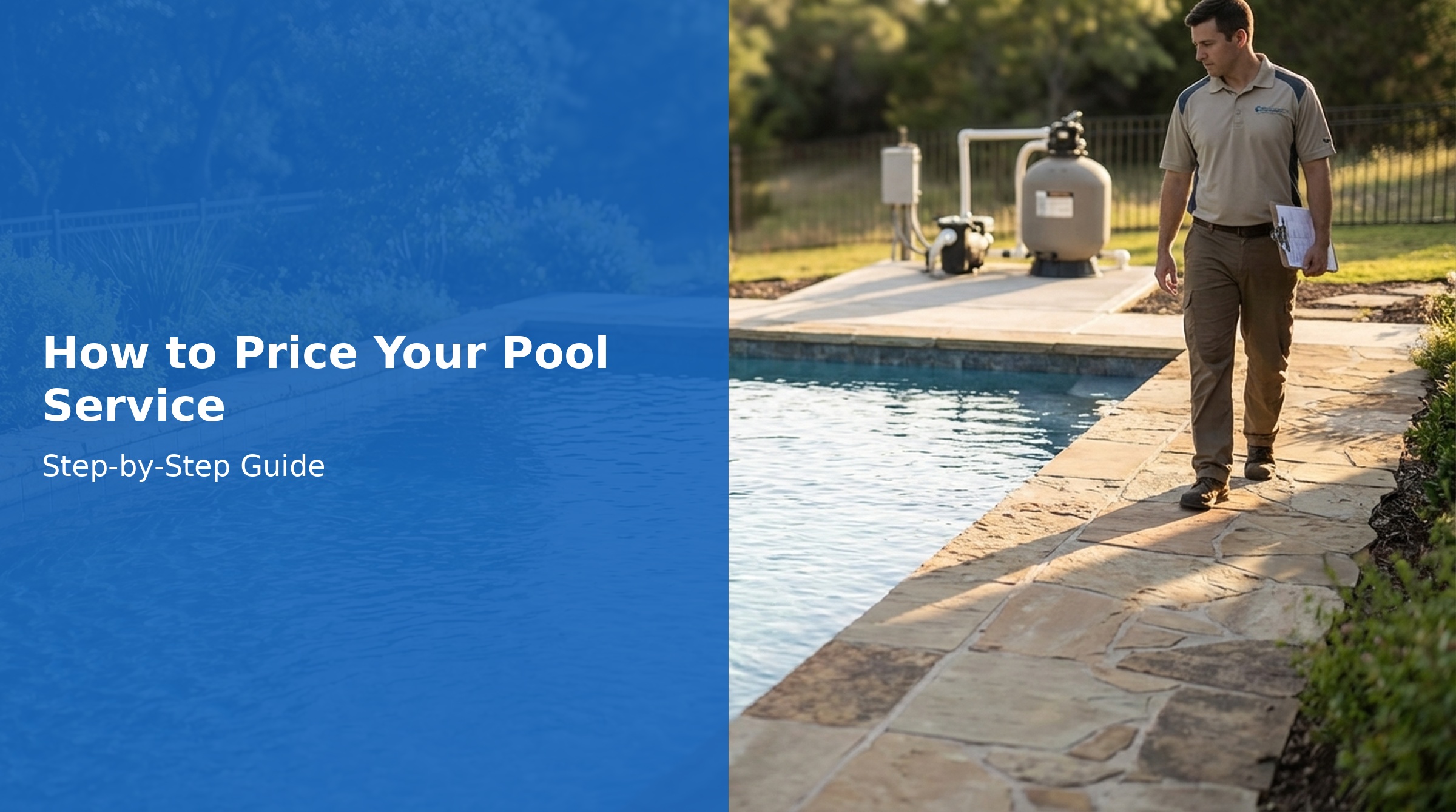
Pricing is one of the most critical decisions you'll make for your pool service business. Price too high and you'll struggle to acquire customers. Price too low and you'll work yourself to exhaustion for minimal profit.
This guide walks you through a systematic approach to pricing your services using real market data as your foundation.
What You'll Learn
- How to determine your service model (monthly vs. per-stop)
- How to find and interpret market rates for your area
- How to calculate your true costs per pool
- How to set prices that ensure profitability
- When and how to raise your prices
Determine Your Service Model
Before setting prices, decide how you'll bill customers:
- Flat Monthly: Same price every month, regardless of number of visits. Simpler to manage, predictable income.
- Per-Stop: Charge for each visit. More complex billing, but you're paid for every service performed.
- Hybrid: Monthly base with per-visit extras for services like filter cleans.
Learn more: Per-Stop vs. Monthly Pricing: Which Model Earns More? | How Often Should You Bill Pool Customers?
Research Your State's Market Rates
Check our state guides to understand what professionals in your area charge:
- Florida: $139–$145/month with chemicals
- Arizona: $136–$142/month with chemicals
- California: $126–$132/month with chemicals
- Texas: $130–$160/month (regional estimate)
- All States: Complete national data
This gives you the range — now you need to determine where you fit within it.
Factor in Chemicals Pricing
Decide whether to include chemicals or bill them separately:
- Chemicals included: Simplicity for customers, you absorb price volatility
- Chemicals separate: Protects your margin, customers pay for what they use
Learn more: Pool Service Pricing With Chemicals vs. Without
Cost Per Pool Calculator
Calculate your true cost to service each pool, including labor, chemicals, fuel, and overhead.
Calculate Your Costs
You can't price profitably without knowing your costs. Track these for at least 3 months:
Direct Costs (per pool)
- Chemicals: $30–$80/month per pool (varies by pool and region)
- Time: 20–40 minutes per service including travel
- Fuel: Calculate based on your route efficiency
Overhead (monthly)
- Insurance: $100–$300/month
- Vehicle payment/maintenance
- Software and tools
- Phone and communication
- Marketing
Divide monthly overhead by number of pools to get overhead per pool. Add to direct costs for total cost per pool.
Set Your Price
With market rates and costs known, set your price using one of these strategies:
Cost-Plus Pricing
Calculate your cost per pool and add your desired profit margin:
- Cost per pool: $60/month
- Desired margin: 50%
- Price: $60 × 1.5 = $90/month
Market-Based Pricing
Position yourself within the market range based on your experience and value proposition:
- New operator: Start at or slightly below market average to build customer base
- Experienced operator: Price at or above market average based on reputation
- Premium operator: Price at top of range with differentiated service
Example for Florida: If market rates are $139–$145/month and your costs are $70/month, you have $69–$75 gross margin — around 50%, which is healthy for pool service. If your costs are $100/month, you'd only have $39–$45 margin (28–32%), which is too tight.
Test and Adjust
Your initial pricing is a hypothesis. Test and refine:
- Track close rate: If you're closing 80%+ of leads, you may be priced too low
- Track profitability: Monitor actual margins per pool monthly — see our guide on measuring pool route profitability
- Get feedback: Ask customers and lost leads about pricing perception
- Compare to goals: Are you hitting your income targets at current pricing?
When to Raise Your Prices
Don't set it and forget it. Raise prices when — and track whether increases are actually improving your bottom line with our guide on pool business revenue tracking:
- Costs increase: Chemical prices, fuel, insurance all rise over time
- You're at capacity: If you can't take more customers, raise prices to improve margins
- Experience grows: Your skills and reputation justify higher rates
- Annually: Many operators raise prices 3–5% every year to keep up with inflation
Common Pricing Mistakes to Avoid:
- Pricing based only on what competitors charge (without knowing their costs)
- Not accounting for drive time between pools
- Underestimating chemical costs in hot climates
- Forgetting to include overhead in cost calculations
- Raising prices too much at once instead of gradual increases
Pricing for Different Customer Types
Residential Pools
- Standard weekly service: Market rates from this guide
- Bi-weekly service: 60–70% of weekly rate
- Premium service (weekly brushing, salt cell cleaning): +15–25%
Commercial Pools
- Typically 2–4× residential rates depending on size
- Factor in multiple visits per week if required
- Include liability considerations in pricing
Vacation Rentals
- Premium pricing for reliability and responsiveness
- Consider on-call or same-day service fees
- Property management companies may negotiate volume discounts
Related Resources
Pricing Data by State
- Complete Pool Service Pricing Guide 2026
- Florida Pool Service Rates
- Arizona Pool Service Rates
- Texas Pool Service Rates
- California Pool Service Rates
Pricing Strategy Guides
Ready to Streamline Your Pool Business?
PoolDial helps you manage routes, track customers, and grow your business with AI-powered tools.
Start Your Free Trial