


Pool maintenance costs are rising in 2026, driven by industrial metal price increases that have pushed up the cost of pumps, heaters, and automation systems. This article breaks down exactly what pool owners spend annually, backed by SEC filings and industry data.
Key Statistics
- $900/year — Average homeowner spend on chemicals, equipment, and parts[1]
- +289% — Silver price increase since 2020, affecting automation and electronics[5]
- +114% — Copper price increase since 2020, affecting pumps, heaters, and wiring[5]
- 1-2 years — Variable speed pump payback period through energy savings[3]
Average Annual Pool Maintenance Cost
According to Leslie's SEC filings, the average homeowner spends approximately $900 per year on pool chemicals, equipment, and replacement parts.[1]Leslie's, Inc. 10-KFiscal year ended September 28, 2024SEC Filing
Source: Leslie's 10-K, 2024 and Pool Corp Q4 2025 Earnings Call
This $900 baseline represents non-discretionary spending—chemicals, filter media, and small replacement parts that pool owners must purchase regardless of economic conditions. Distribution partners realized a 2% net pricing benefit in 2025 to offset vendor cost increases, suggesting the 2026 adjusted annual spend is approximately $918.[4]Pool Corp Q4 2025 Earnings CallFebruary 2026Transcript
The Hidden Cost Driver: Industrial Metal Inflation
The hidden driver of 2026 maintenance costs is the surge in industrial metals. Since 2020, critical metals used in pool equipment have seen dramatic price increases:[5]Pool MagazineMetal price analysis, 2026Article
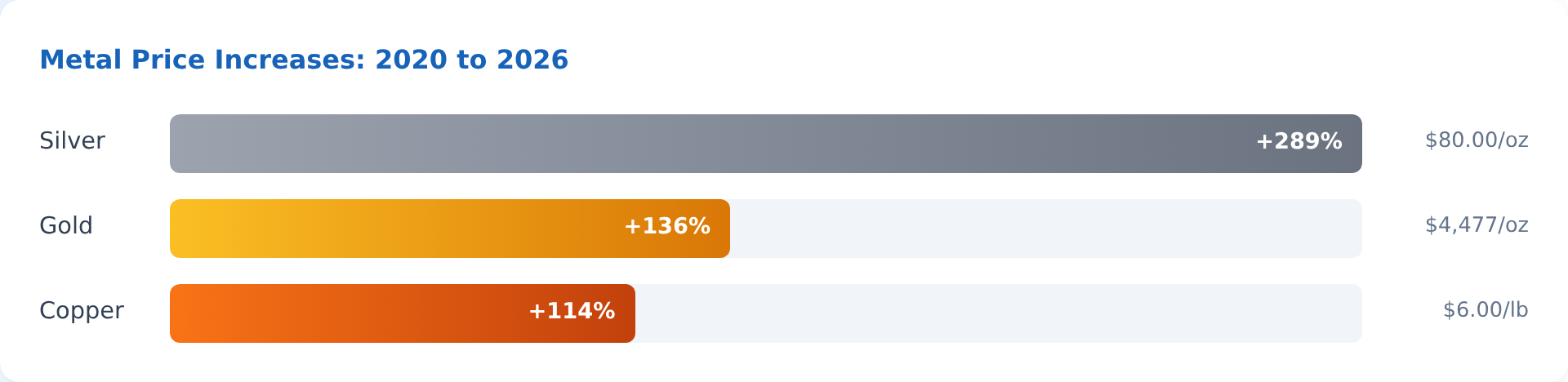
These metal increases directly impact pool equipment costs:
| Metal | Equipment Affected | Price Impact |
|---|---|---|
| Silver | Circuit boards, automation panels, control systems | +289% |
| Gold | Electronic connectors, sensors | +136% |
| Copper | Motors, wiring, heat exchangers, pumps | +114% |
Mineral sanitizers and ionization systems are most directly impacted by these price increases, as they rely on copper and silver for their sanitization mechanism.[5]Pool MagazineMetal price analysis, 2026Article
Energy Savings Offset Equipment Costs
While equipment costs are rising, variable speed pumps offer significant long-term savings. According to Hayward's SEC filings, the average payback period for upgrading to a variable speed pump is one to two years through energy savings.[3]Hayward Holdings 10-KFiscal year ended December 31, 2024SEC Filing
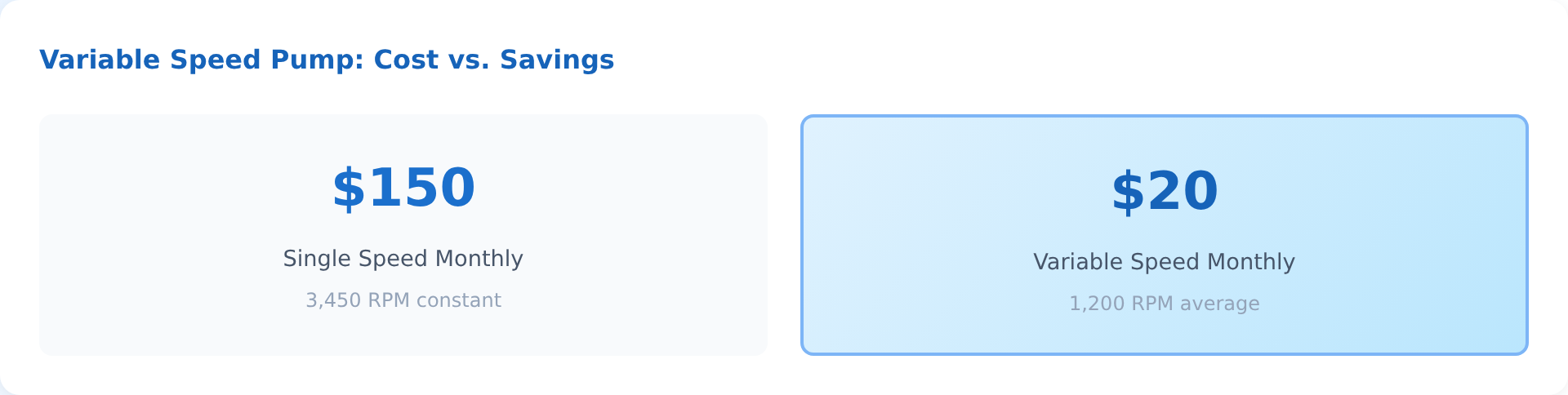
This $130/month savings ($1,560/year) means that despite higher upfront equipment costs, pool owners can recover the investment quickly while also benefiting from DOE-mandated variable speed pump requirements.
What's Included in Annual Maintenance Costs
The $900 annual average breaks down across three main categories:

Maintenance and minor repair products represent roughly 64% of total pool product sales, making this the most stable, non-discretionary segment of the industry.[4]Pool Corp Q4 2025 Earnings CallFebruary 2026Transcript
Professional Service Costs
For pool owners who hire professional service, costs increase significantly. Pool care professionals spend more than 25 times as much on supplies as DIY residential consumers, reflecting the volume of products used across multiple client pools.[2]Leslie's, Inc. 10-KFiscal year ended September 30, 2023SEC Filing
"Do-It-For-Me" (DIFM) professional services account for 30% of total residential spending in the pool care market, representing a $2.52 billion direct service market.[1]Leslie's, Inc. 10-KFiscal year ended September 28, 2024SEC Filing
| Service Type | Typical Monthly Cost | Annual Cost |
|---|---|---|
| DIY Maintenance Only | $75 | $900 |
| Weekly Service (Chemical Only) | $100-150 | $1,200-1,800 |
| Full Service (Cleaning + Chemicals) | $150-250 | $1,800-3,000 |
| Premium Service (+ Equipment Checks) | $200-350 | $2,400-4,200 |
Regional Cost Variations
Pool maintenance costs vary significantly by region. In the Sunbelt states (Florida, California, Texas, Arizona), pools operate year-round, increasing annual chemical consumption. These four states represent 54% of all net sales for the industry's largest distributor.[6]Pool Corporation 10-KFiscal year ended December 31, 2024SEC Filing
Almost 88% of pools in the Sunbelt are within 10 miles of a Leslie's store, reflecting the concentration of pool infrastructure in these high-density markets.[7]Leslie's Q4 2024 Earnings CallNovember 26, 2024Transcript
2026 Pricing Outlook
Looking ahead, pool owners should expect continued cost pressure from industrial metals and inflationary pass-throughs. The 2% wholesale pricing increase in 2025 suggests similar adjustments in 2026 as manufacturers manage rising input costs.[4]Pool Corp Q4 2025 Earnings CallFebruary 2026Transcript
However, the 1-2 year payback on variable speed pumps and the overall stability of the maintenance market (64% non-discretionary) means pool ownership remains economically predictable for most homeowners.
For more industry data, see our complete 2026 pool industry statistics or average pool service business revenue.
Sources
- [1] Leslie's, Inc. Annual Report (Form 10-K) — Fiscal year ended September 28, 2024. SEC Filing
- [2] Leslie's, Inc. Annual Report (Form 10-K) — Fiscal year ended September 30, 2023. SEC Filing
- [3] Hayward Holdings, Inc. Annual Report (Form 10-K) — Fiscal year ended December 31, 2024. SEC Filing
- [4] Pool Corp Q4 2025 Earnings Call Transcript — February 2026. Transcript
- [5] Pool Magazine — PHTA 2024 Business Operations Survey Report. Article
- [6] Pool Corporation Annual Report (Form 10-K) — Fiscal year ended December 31, 2024. SEC Filing
- [7] Leslie's, Inc. Q4 2024 Earnings Call Transcript — November 26, 2024. Transcript