


Key Takeaways
- Air gets in on the suction side, which is the piping between the pool and the pump. That side is under vacuum, so a leak there pulls air in and does not drip water out.
- Ask what changed before you test anything. A new pump means new joints in the pipe, and any joint can let air in.
- List every way air could get in, then start with the cheapest check: the skimmer, a pulse test, and one suction line at a time.
- Never open the pump lid while the pump is running. Pick the smallest fix that works, then prove it with two clean starts.
A customer calls. The pool returns are spitting bubbles, and the pump is louder than it used to be. Last week another company replaced the pump. The customer wants to know if the new pump is bad.
That is an easy guess to make, and on this call it is wrong. This guide walks one service call from start to finish so you can see how to find where the air gets in.
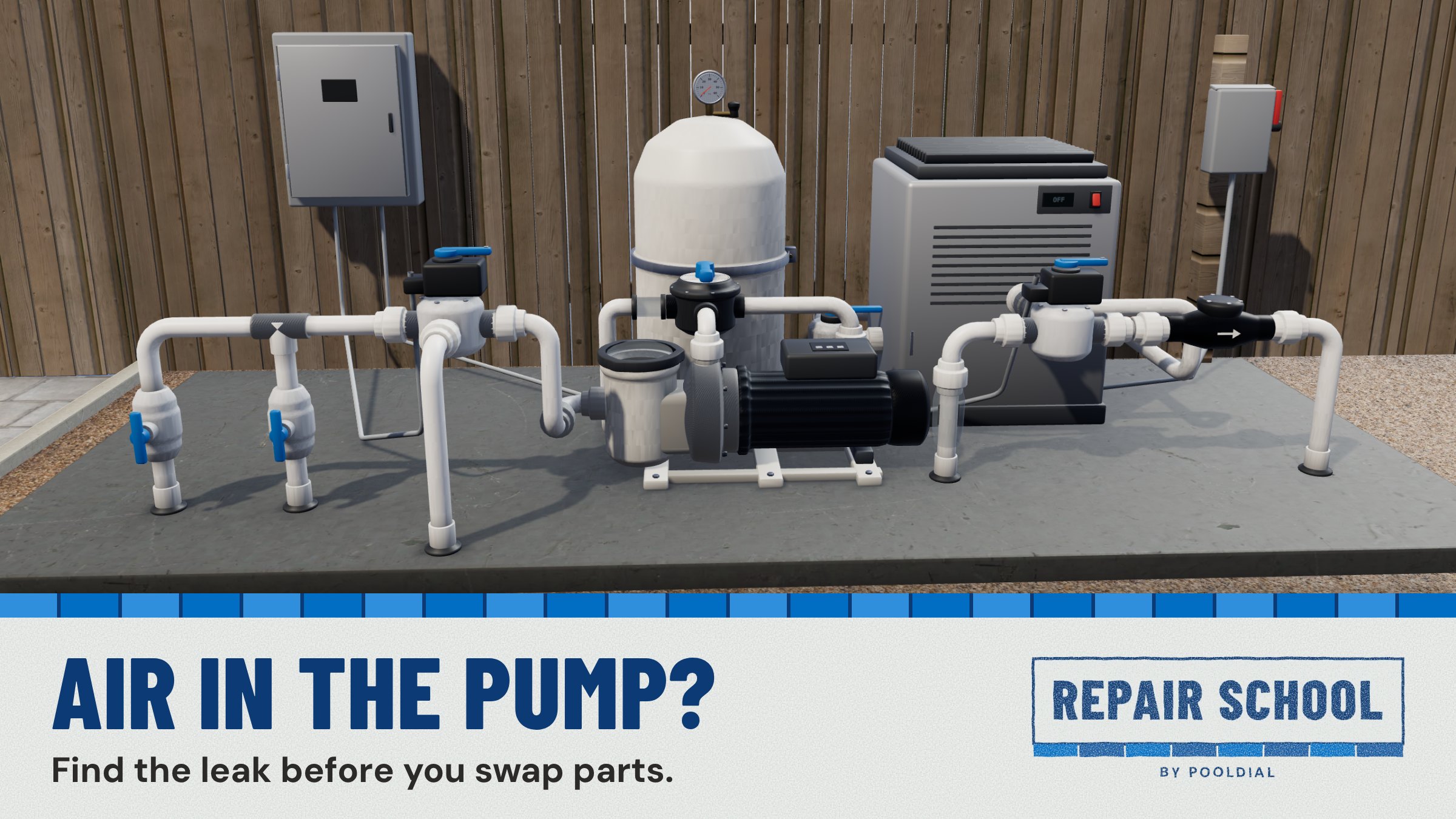
The pictures come from PoolDial Repair School, our free 3D repair simulator. They show one worked example on one equipment pad. Your pad will look different, and your cause may be different. The order of the steps is what carries over.
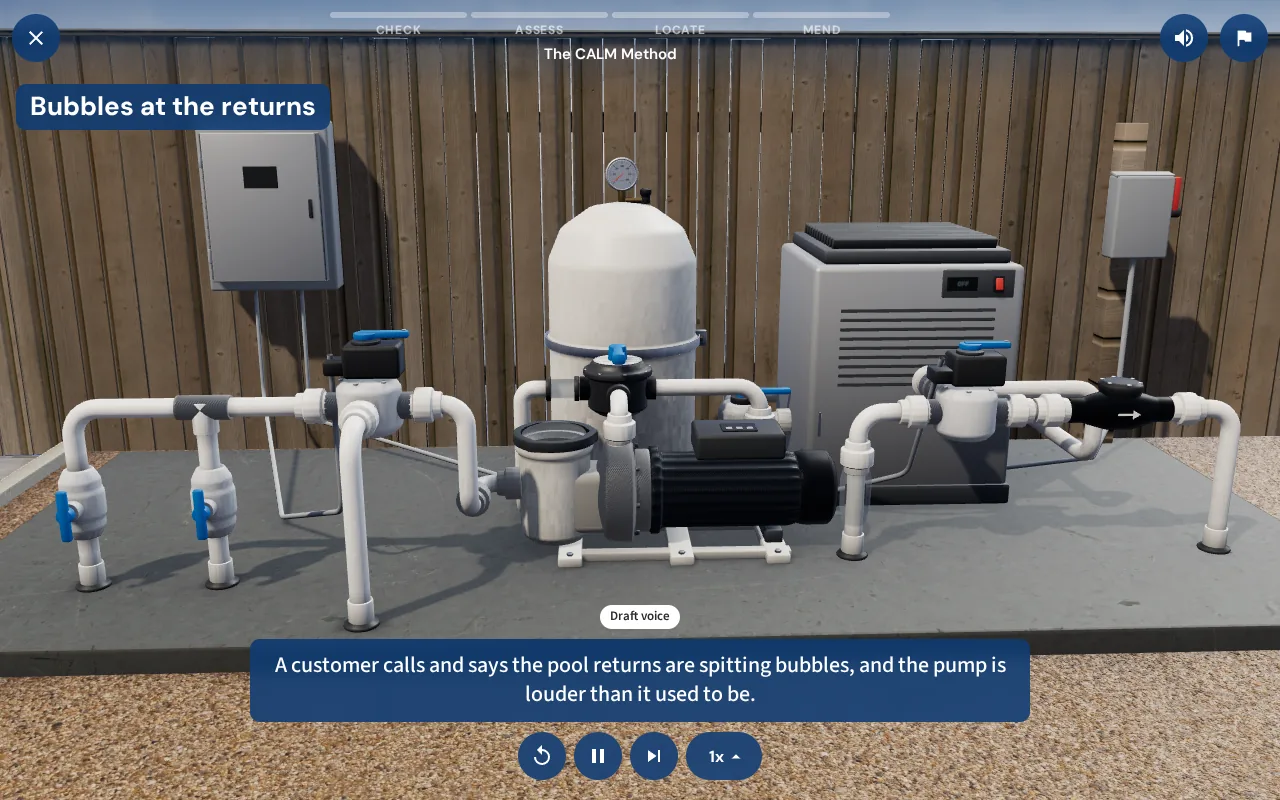
We work every call the same way. We call it the CALM Method: Check, Assess, Locate, Mend. It keeps you from skipping to a fix before you know the cause.
Step 1. Check: Make the Pad Safe
A pump has a basket under a clear lid. When you see air in that basket, it is tempting to pop the lid open right away and look inside. Do not do that while the pump is running.
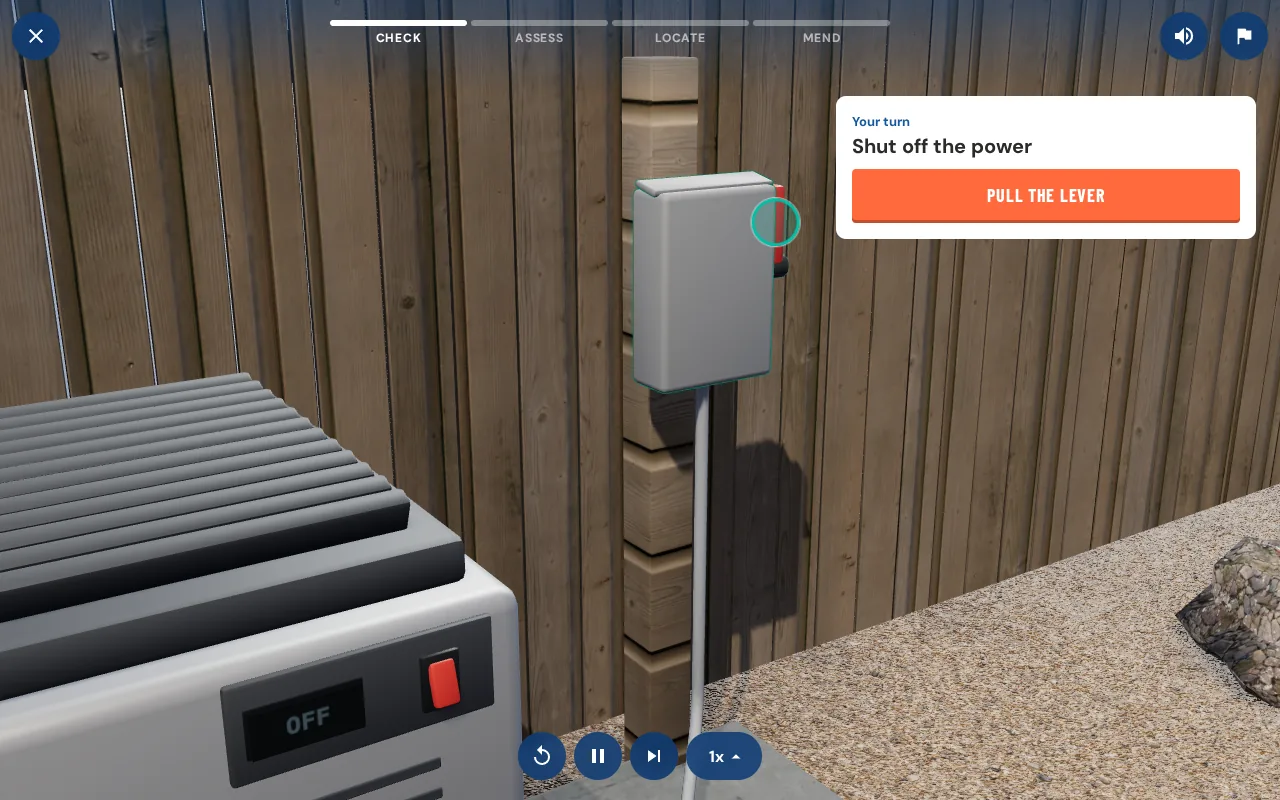
The pump is pulling hard on that basket, and the filter side is under pressure. The lid can blow off or spray you. Turn the pump off first. Then shut off its power at the switch by the pump, and try to start it from the panel. If nothing happens, the pump cannot start while your hands are near it.
The pump manuals we checked give the same warning in stronger words. They say that when any part of the system is serviced, air can get in and become pressurized, and that pressurized air can make a pump cover or filter lid come off with force. They also say not to open the pump basket if the pump failed to prime or ran with no water in it, because the water inside can be scalding hot. Wait until the pot is cool to the touch.
Step 2. Assess: What Should Happen, and What Does?
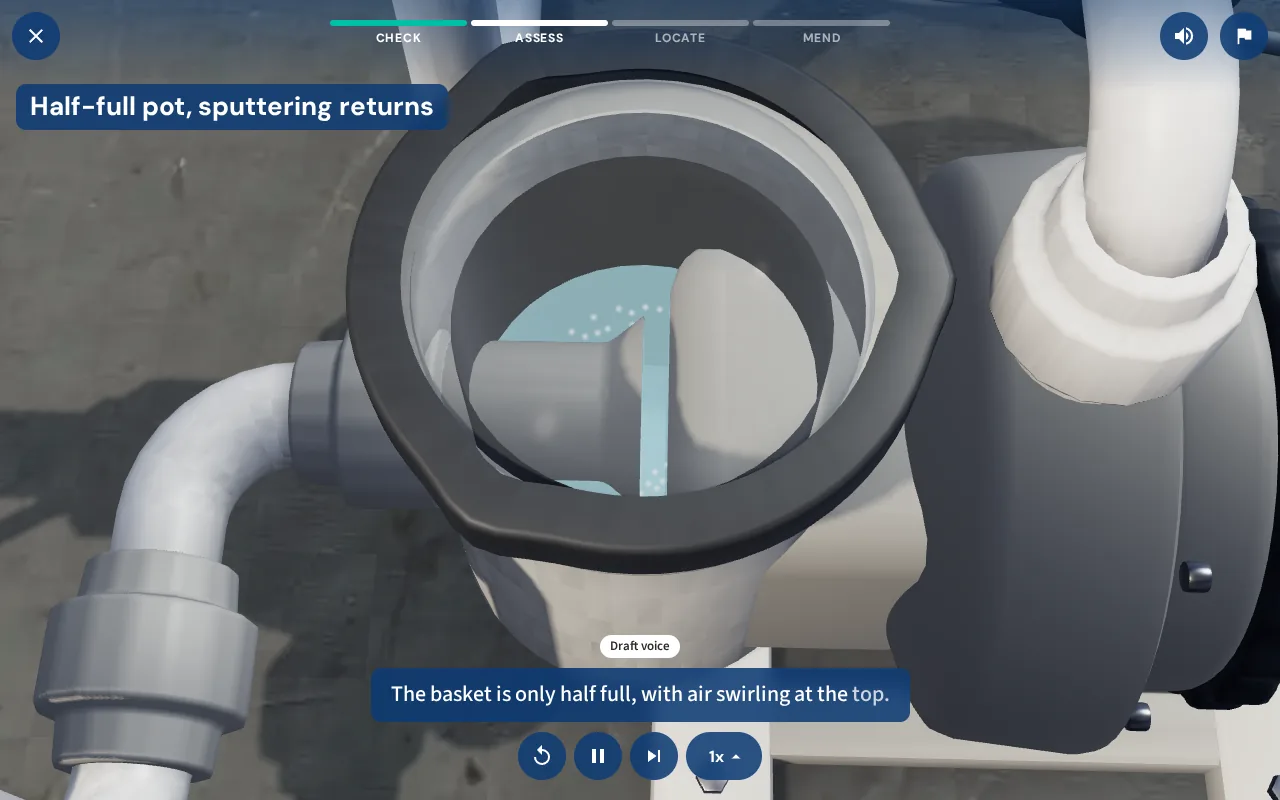
Start by saying what a healthy pump looks like. When this pump runs, the basket under the clear lid should stay full of water. The returns in the pool should push out a steady stream with no bubbles.
Now turn the power back on and watch for a few seconds. On this call the basket is only half full, with air swirling at the top. The returns sputter, and the return closest to the pad is the worst.
When Does the Air Show Up?
Bubbles do not all mean the same thing. Watch the basket from the moment the pump starts, and note when the air shows up and where the bubbles come out.
| What you see | What it points to | What you do |
|---|---|---|
| Air in the basket from the first second. The returns sputter. | A joint at the pad is letting air in, such as a loose lid or a loose union. | List the ways air can get in and test them one at a time. |
| The basket is full at first. Air comes in fast a few minutes later. | Something changes after the pump starts. Low water or a stuck skimmer flap can do this. | Check the water level and the flap at the skimmer. |
| The basket is full. Fine fizz comes from only the nearest return, on a salt pool. | It can be gas from the salt cell, and not a leak at all. | Look at the basket before you hunt for a leak. |
This basket is half full from the start, and the returns sputter. So we treat it as air getting in before the pump.
Ask What Changed
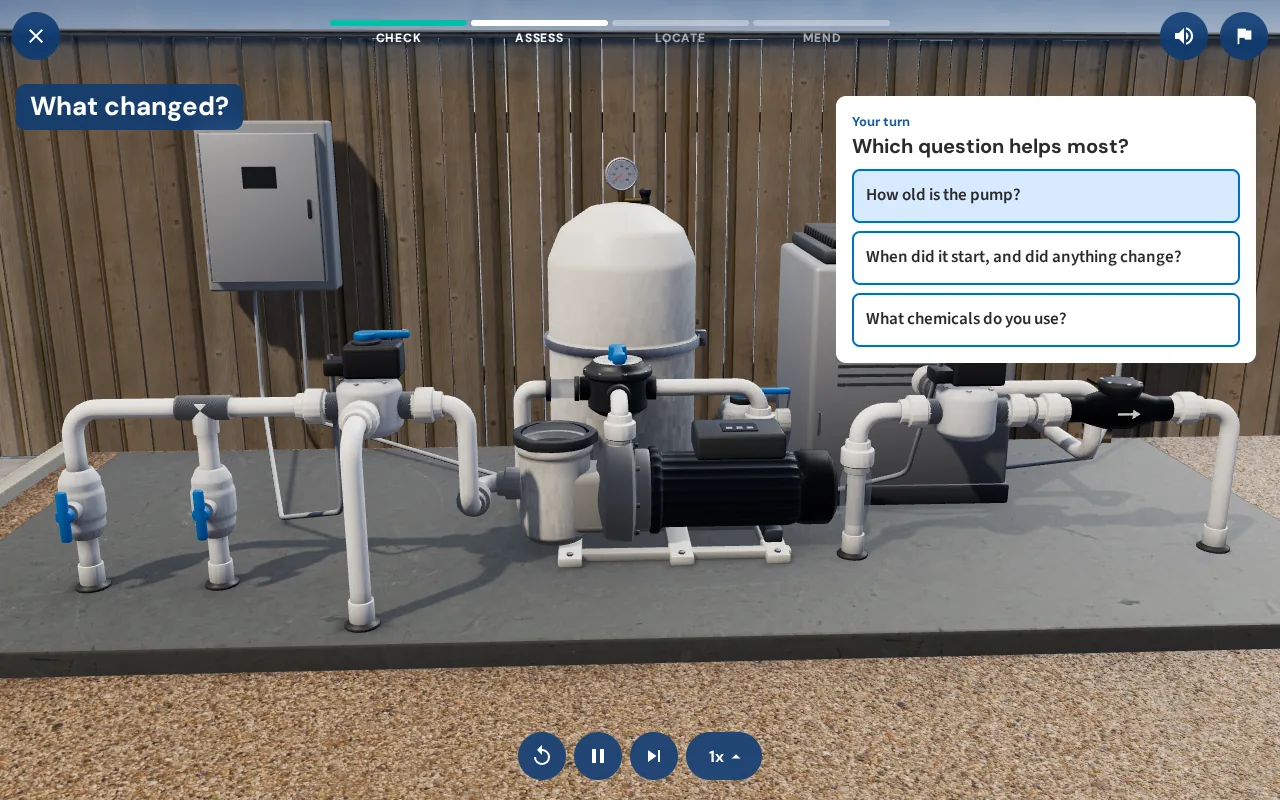
Next, ask the customer when it started and whether anything changed. The pump's age does not help here, because the pump is new. The chemicals they use do not pull air into a pump.
The customer says the trouble started right after the new pump went in. That is a big clue. A new pump means new joints in the pipe, and any joint can let air in.
Step 3. Locate: Find Where the Air Gets In
Air gets in on the suction side, which is the piping between the pool and the pump. That side is under vacuum while the pump runs. A small leak there pulls air in and does not drip water out. That is why you often cannot see the leak at all.
Before you test anything, list every way air could be getting in. These are the usual ones:
- The lid ring. Air can sneak past the rubber ring under the pump lid.
- Threads and unions. A union is the screw-together joint in the pipe. Air can come through its threads or the pump's threads.
- A suction valve.
- The skimmer. It can suck air if the water is low or its flap is stuck.
- The main drain line.
- A cracked pump housing.
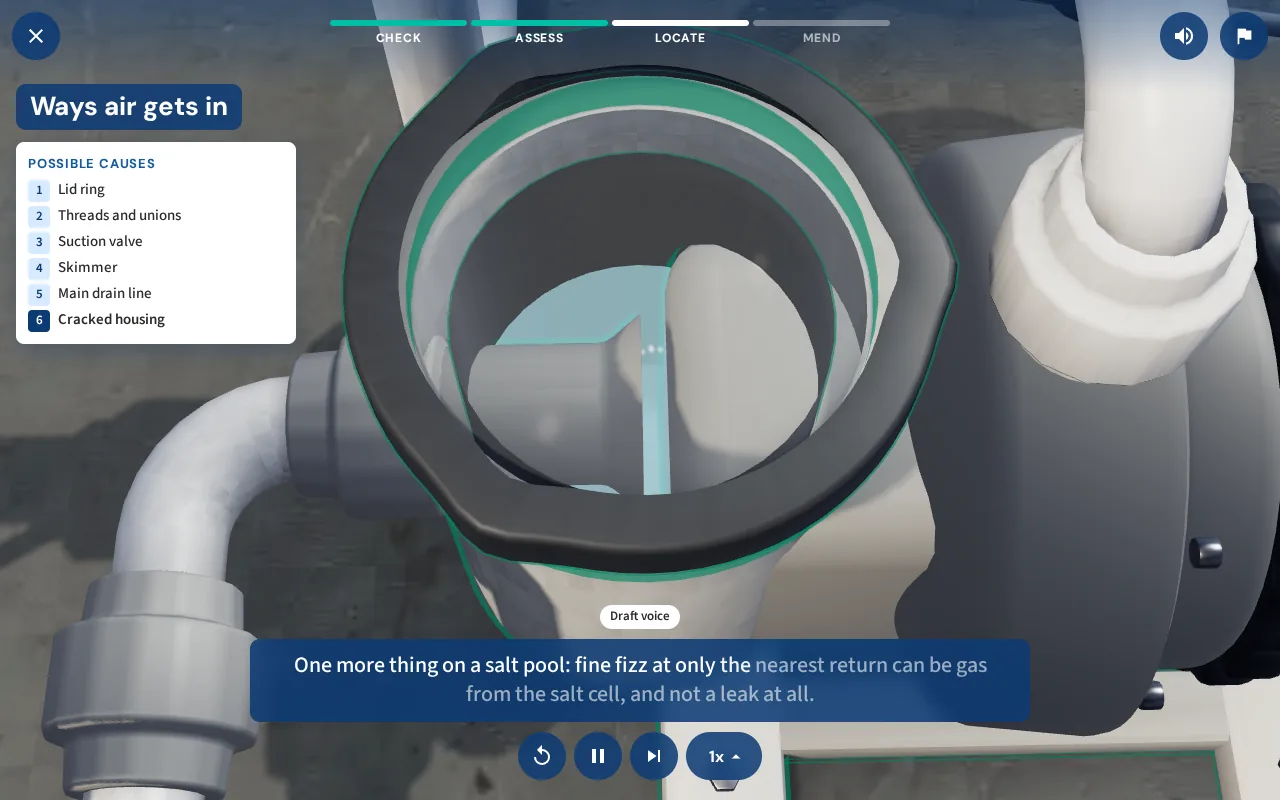
One more thing belongs on the list for a salt pool. Fine fizz at only the nearest return can be gas from the salt cell. One pool pro gave this quick check when someone asked about air coming out of a jet:
On this call the basket is half full, so the air is getting in before the pump. We keep going down the list.
Start With the Cheapest Check
The cheapest check is the skimmer. Look at where the water sits in the opening, and check that the flap moves freely. Here the water sits halfway up the opening and the flap moves freely. The water level is fine, so the skimmer comes off the list.
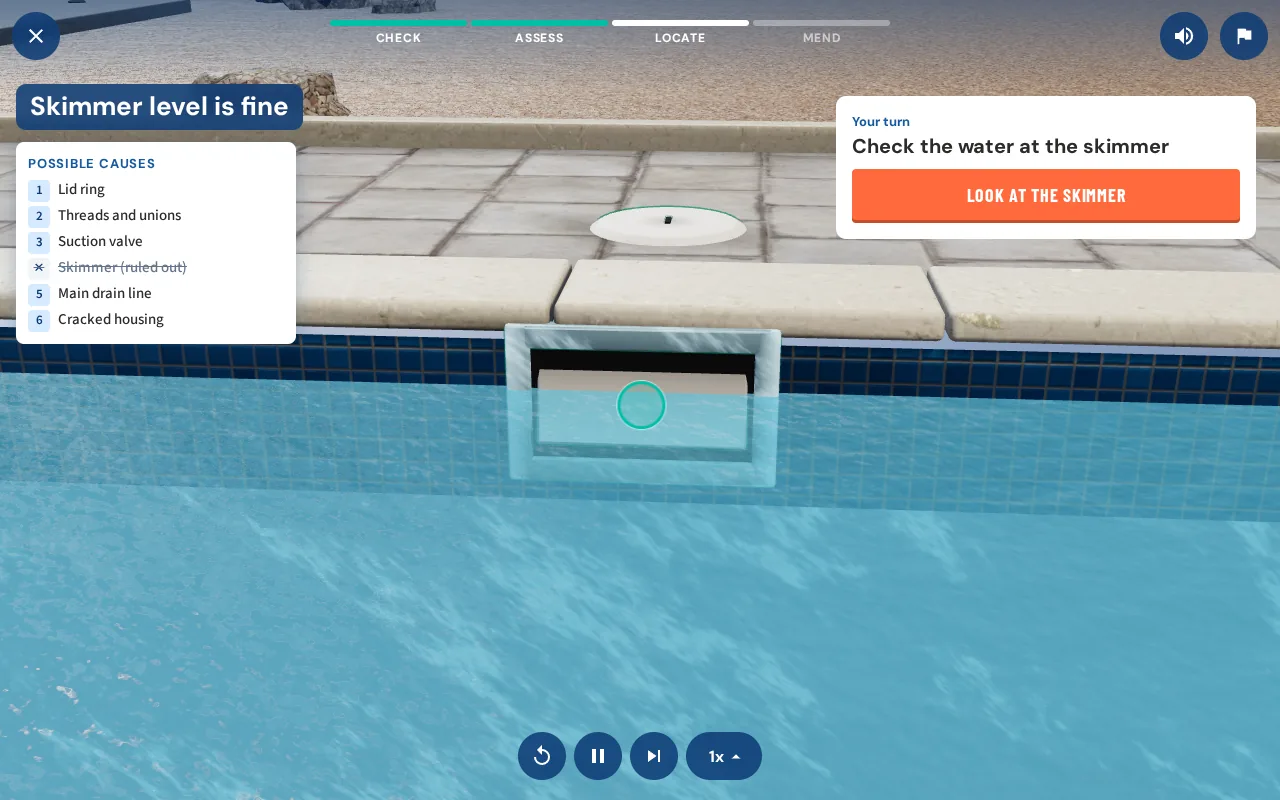
Pump manuals start in the same place. The ones we checked say to keep the water halfway up the skimmer opening. If the water drops below the opening, the pump draws air through the skimmer and loses its prime.
Try a Pulse Test
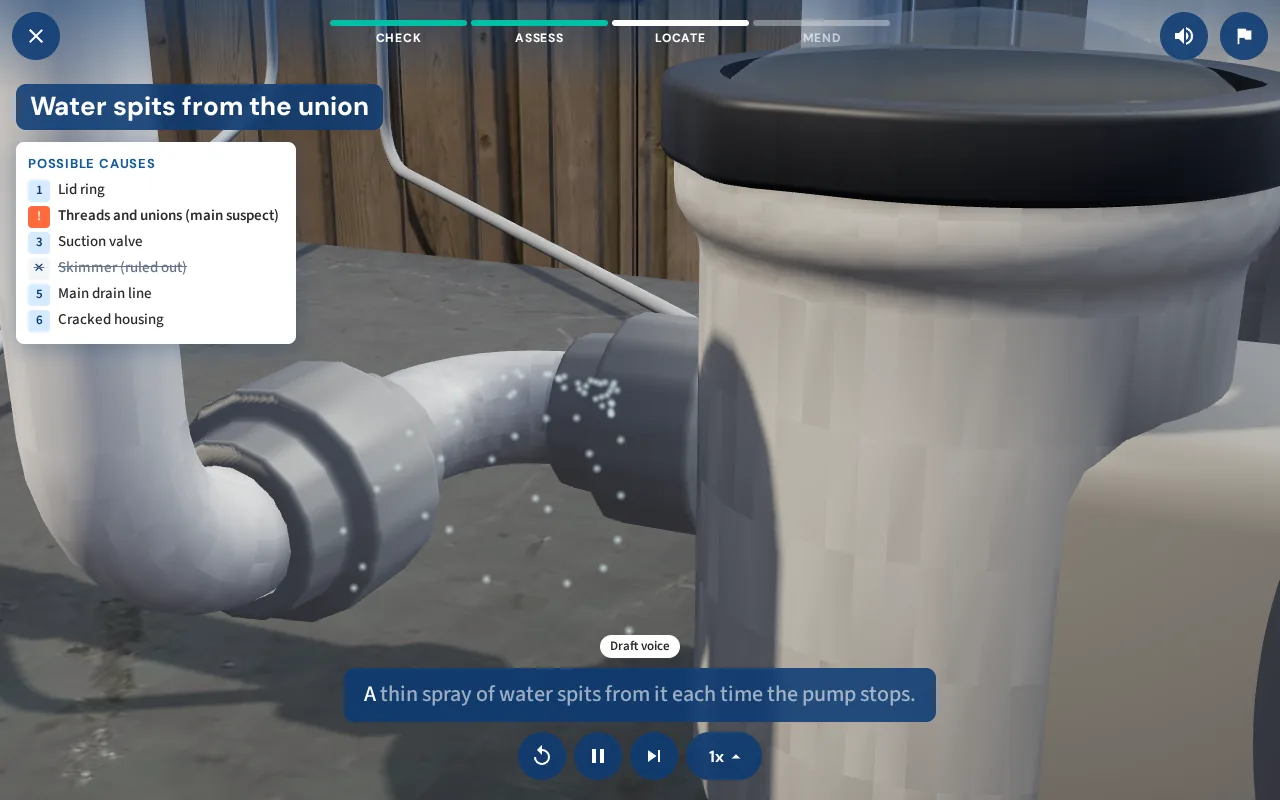
Next, try a pulse test. Start the pump, let it run a few seconds, then stop it. Watch the joints on the suction side as it stops. Where air was being pulled in, a little water often spits back out when the pump stops.
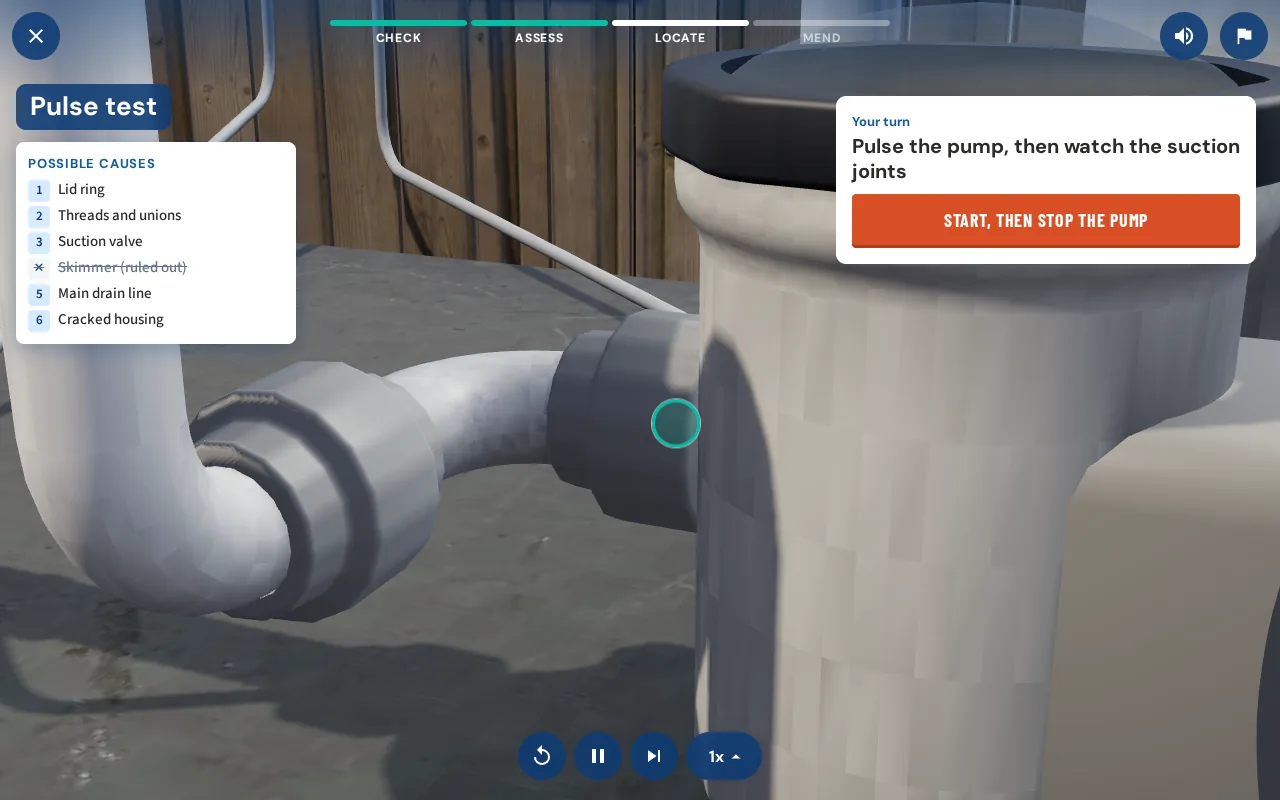
Look at the union where the pipe joins the front of the new pump. A thin spray of water spits from it each time the pump stops. That union is now the strongest suspect.
A garden hose is another way to find a leak like this. Run water over a joint. The bubbles stop while the water covers the leak.
Run One Suction Line at a Time
Before you replace anything, prove it. Close the main drain line and run the pump on the skimmer alone. Then switch, and run it on the main drain alone.
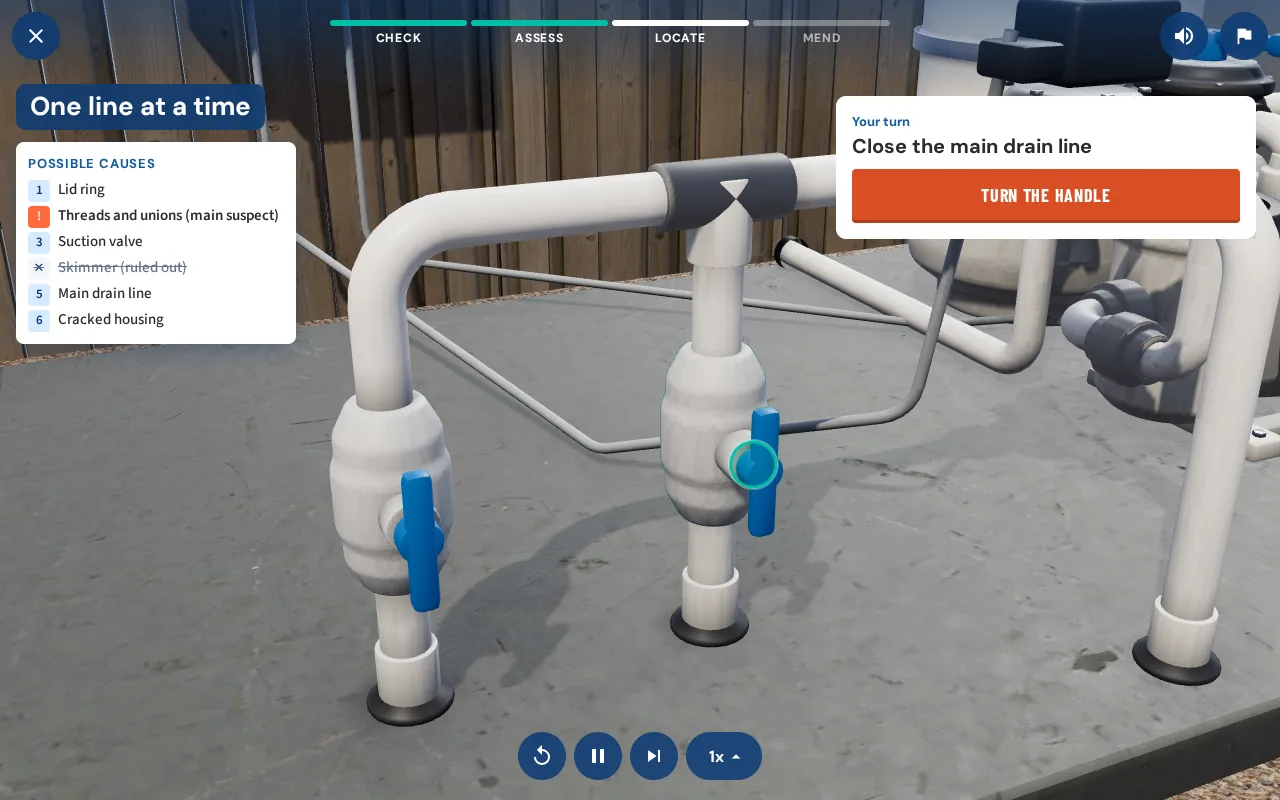
On this call the air shows up on both lines. Both lines pass through that union before they reach the pump. So the result fits a leak at the union, and it rules out the main drain line by itself.
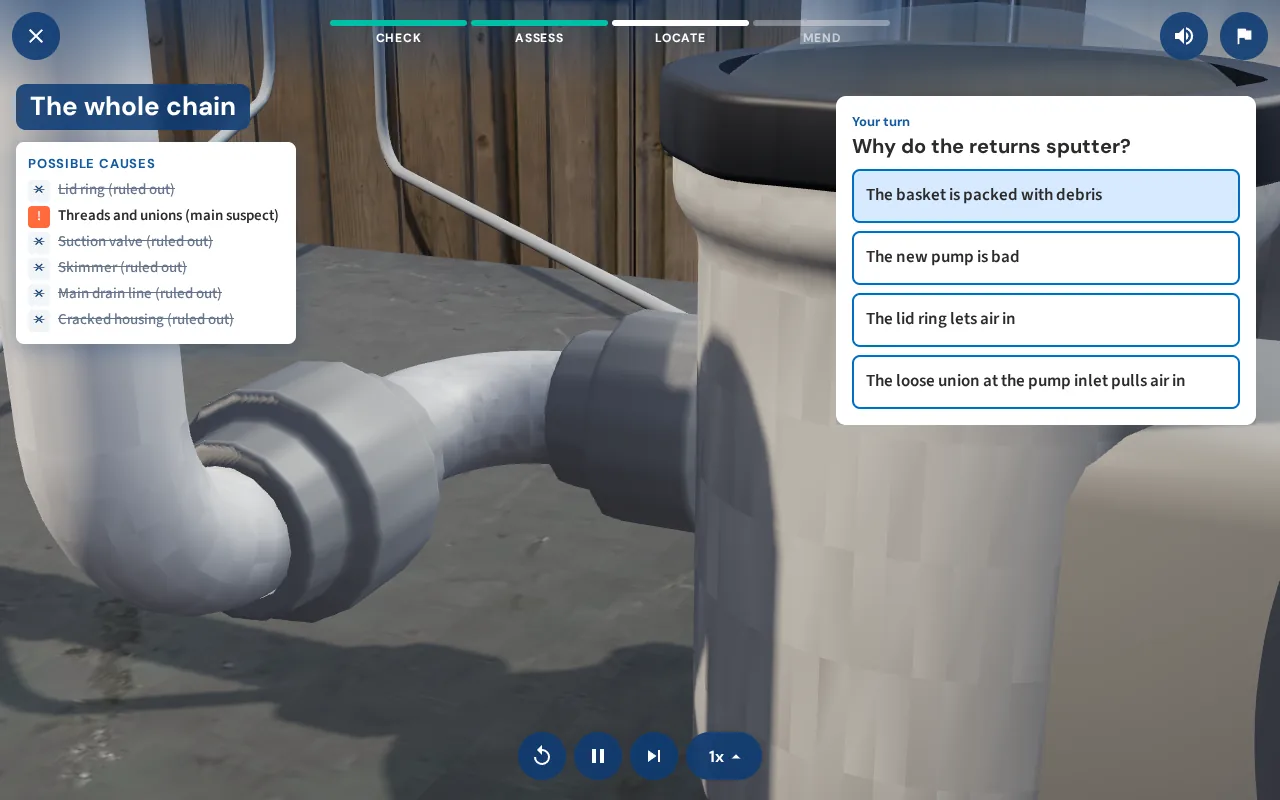
Now you can say the whole chain out loud. The union at the front of the pump was reconnected when the new pump went in, and it was never fully tightened. The pump pulls air through it, so the basket cannot stay full and the returns sputter. Nothing in the pump itself is broken.
Step 4. Mend: Pick the Smallest Fix That Works
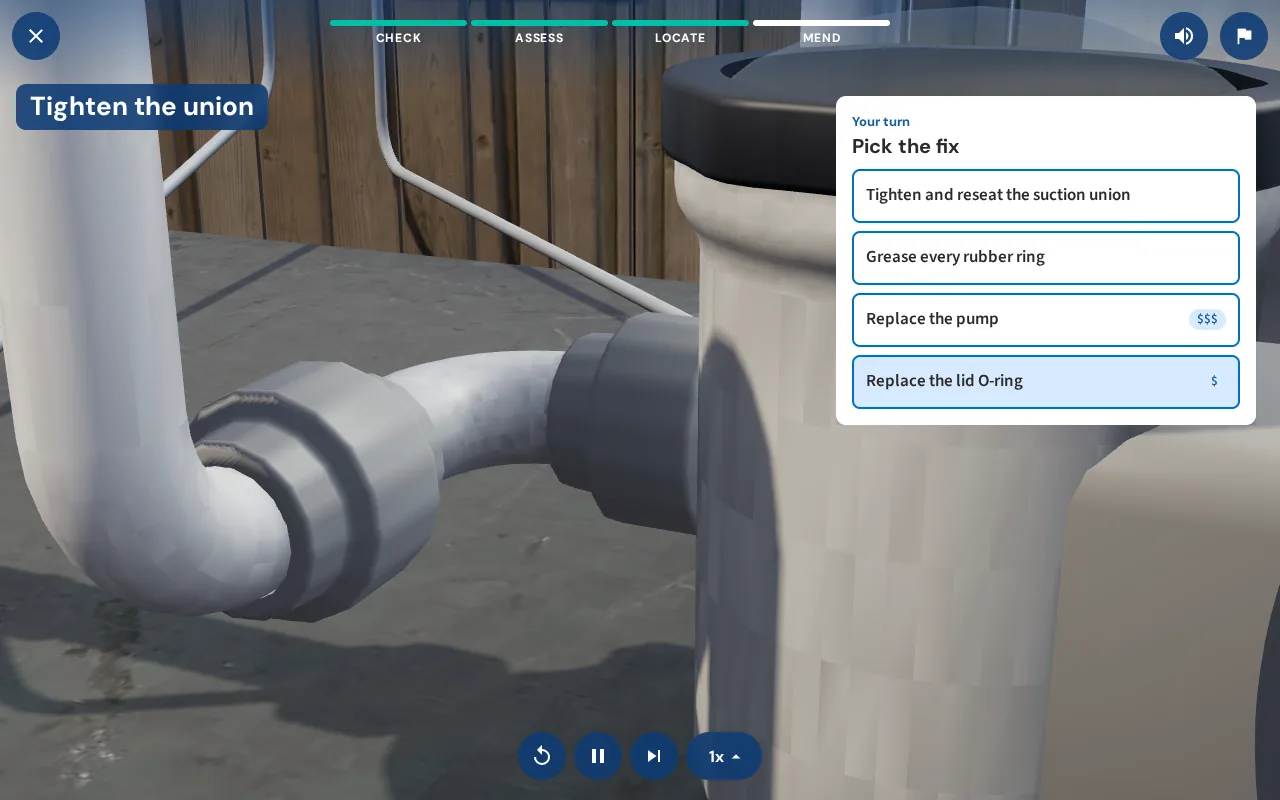
You do not need a new pump, a new lid or new valves. The lid was not pulling air. The union was.
Turn the pump off and shut off its power again. Check the union's rubber ring and the seat it sits in. Then tighten the union by hand until it is snug. If the threads leak, redo them with the right tape or sealant.
Prove It, Twice
A fix is not done until you prove it. Run the pump for a full cycle. The basket stays full, the returns run clear, and no water spits from the union when the pump stops.
One good run is not enough. Stop the pump and start it once more. A second clean start tells you the first one was not luck.
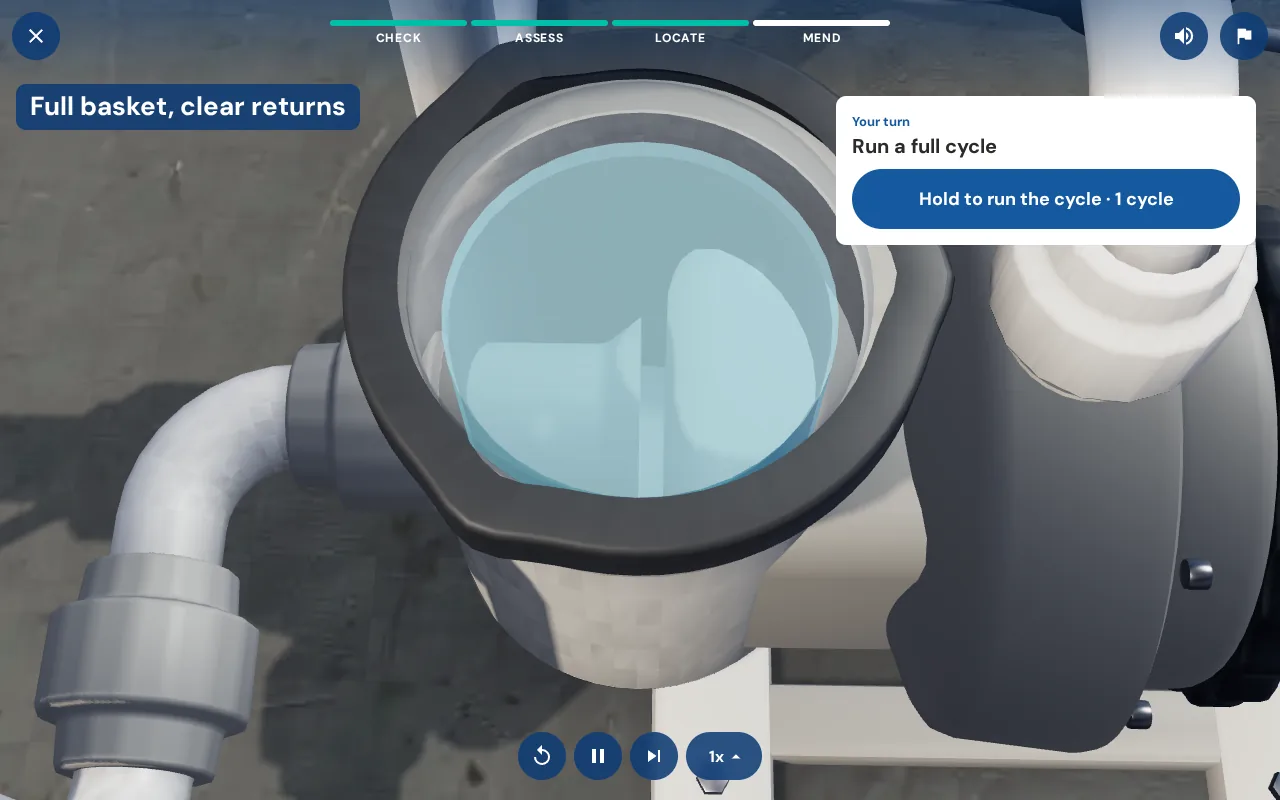
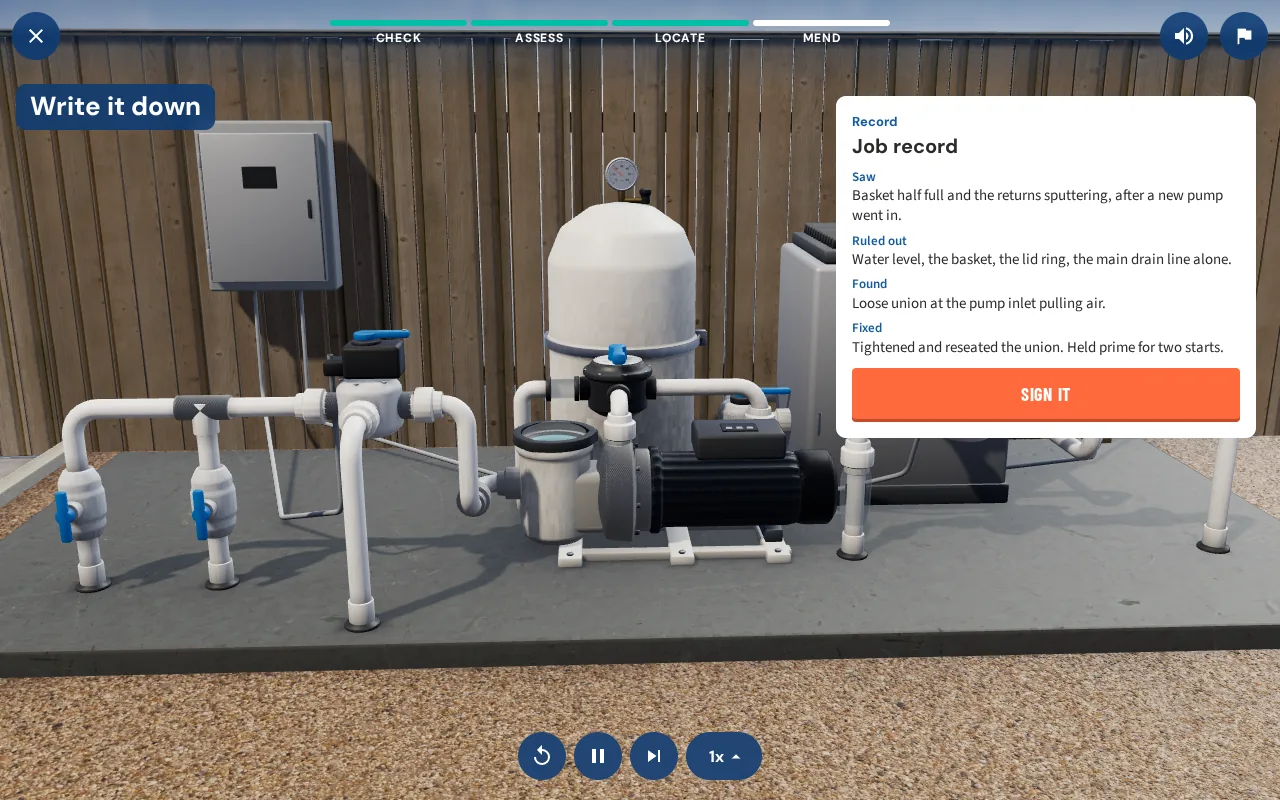
Last, write it down. Note what you saw, what you ruled out, the union you tightened, and that the pump held its prime for two starts. The next tech on this pad can start where you left off.
Wrong Moves That Cost Money or Get People Hurt
- Opening the lid while the pump runs. The lid can blow off or spray you. Pump off and power off first.
- Blaming the new pump. The pump is new and it works. The air comes from a joint on the suction side.
- Swapping parts one after another. A new lid ring or a new valve changes nothing if the air comes in somewhere else.
- Greasing every rubber ring. The lid was not the leak, and the wrong grease can damage rubber rings.
- Hunting for a leak that is not there. On a salt pool, a full basket with fine fizz at one return can be gas from the salt cell.
- Leaving it for next week. Pump manuals warn that a pump that draws air can lose its prime and run dry, and that running dry damages the seal.
- Calling it fixed after one start. Start it twice and watch the basket both times.
When to Stop and Call a Pro
This call ends with a fix a pool tech can make by hand. Not every pump call does. Stop and refer the job when the next step means any of these:
- A live electrical test, or any work on the motor's wiring. That belongs to a licensed electrician.
- Gas work on a heater.
- Opening a pump that failed to prime or ran with no water, while the pot is still hot. The manuals warn that the water inside can be scalding.
The pump manuals we checked say the same about electricity. They warn that troubleshooting can put you close to live electrical parts, and they send that work to a licensed or qualified professional.
Try This Call Yourself
Reading the steps is one thing. Making the choices yourself is how they stick. The lesson behind this guide is free, and it takes about 8 minutes.
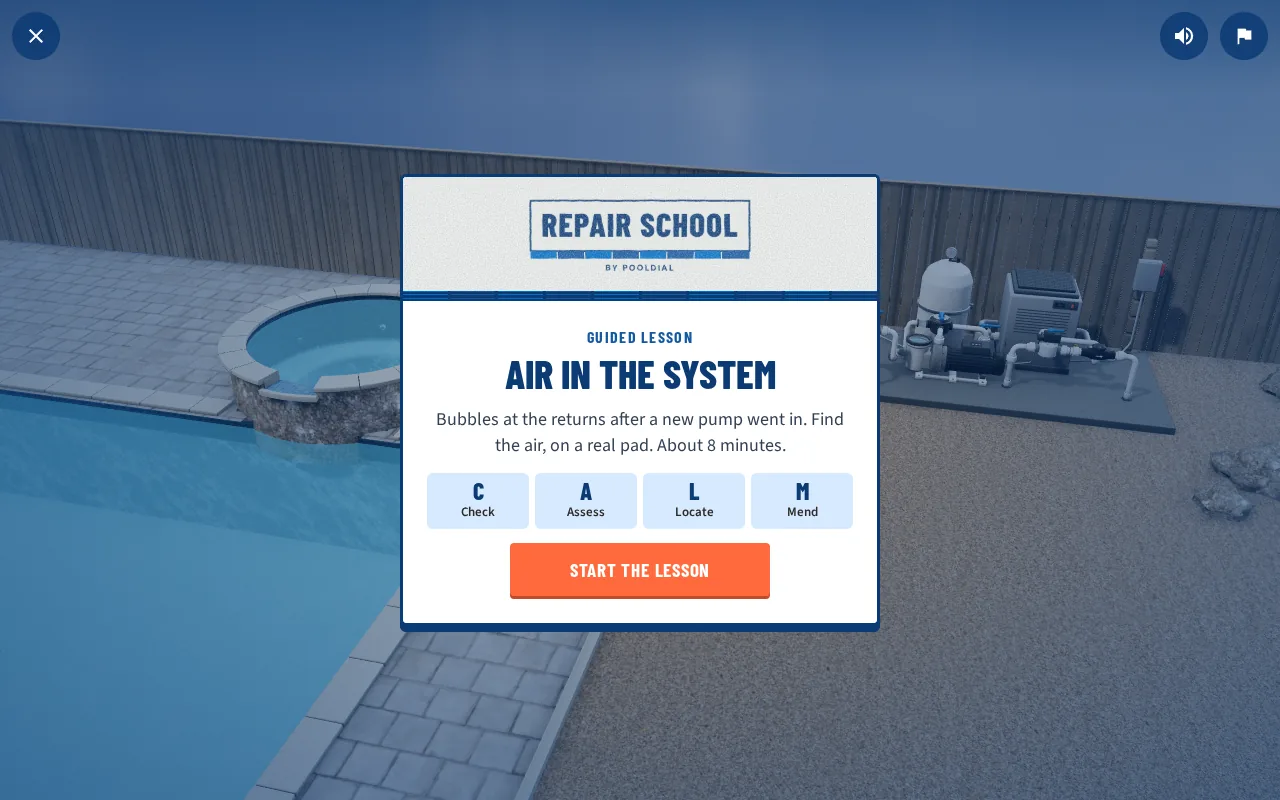
Air in the system: a loose suction union
Work this exact call in a 3D equipment pad. Free, with a sign-in. The lessons are drafts and have not been checked by an outside expert yet.
Try this call in the simulatorRelated Pool Pump Guides and Tools
To see what prime means and what is inside the pump, read how a pool pump works. If the pump will not come on at all, follow the pool pump not turning on guide. For one model's own priming faults, see the Pentair SuperFlo VS priming failure and Pentair WhisperFlo VST priming failure guides. More brands are in the equipment troubleshooting guides.
Once the basket stays full, the pump run time calculator helps you set the pump's schedule, and the pump energy cost calculator shows what that schedule costs.
Frequently Asked Questions
Why is there air in my pool pump basket?
Air in the pump basket usually means air is getting in on the suction side, which is the piping between the pool and the pump. The usual ways in are the rubber ring under the pump lid, the threads of the pump or a union, a suction valve, a skimmer with low water or a stuck flap, the main drain line, and a cracked pump housing.
Why are there bubbles coming out of my pool returns?
Bubbles at the returns usually mean the pump is pulling in air before the pump. Look at the basket under the clear lid. If it is not full of water, look for the leak on the suction side. On a salt pool, fine fizz at only the nearest return with a full basket can be gas from the salt cell.
Why can't I see a suction-side air leak?
The suction side is under vacuum while the pump runs. A small leak there pulls air in and does not drip water out. A pulse test can show it: start the pump, stop it after a few seconds, and watch the suction joints for a little water spitting out.
Is it safe to open the pump lid to look?
Not while the pump is running. The lid can blow off or spray you. Turn the pump off and shut off its power at the switch first. If the pump failed to prime or ran with no water, the manuals warn the water inside can be scalding, so wait until the pot is cool.
Do I need a new pump if it is sucking air?
Not on that sign alone. On this call the pump was new and worked fine. A union at the pump inlet was left loose, and tightening it by hand fixed the air. Find where the air gets in before you replace anything.
This guide follows one PoolDial Repair School lesson. The call is a teaching example built from what pool pros commonly report, not a record of one job. The lessons are drafts and have not yet been reviewed by an outside pool professional. The equipment manual and your local codes control any real repair.
- Pentair, SuperFlo VS and WhisperFlo VST installation and user's guides: the pressure and hot water warnings, the dry-run caution on water level at the skimmer, and the troubleshooting warning about electricity.
- r/PoolPros, quoted above.