
Iron Well Water in Pools: Treatment Guide


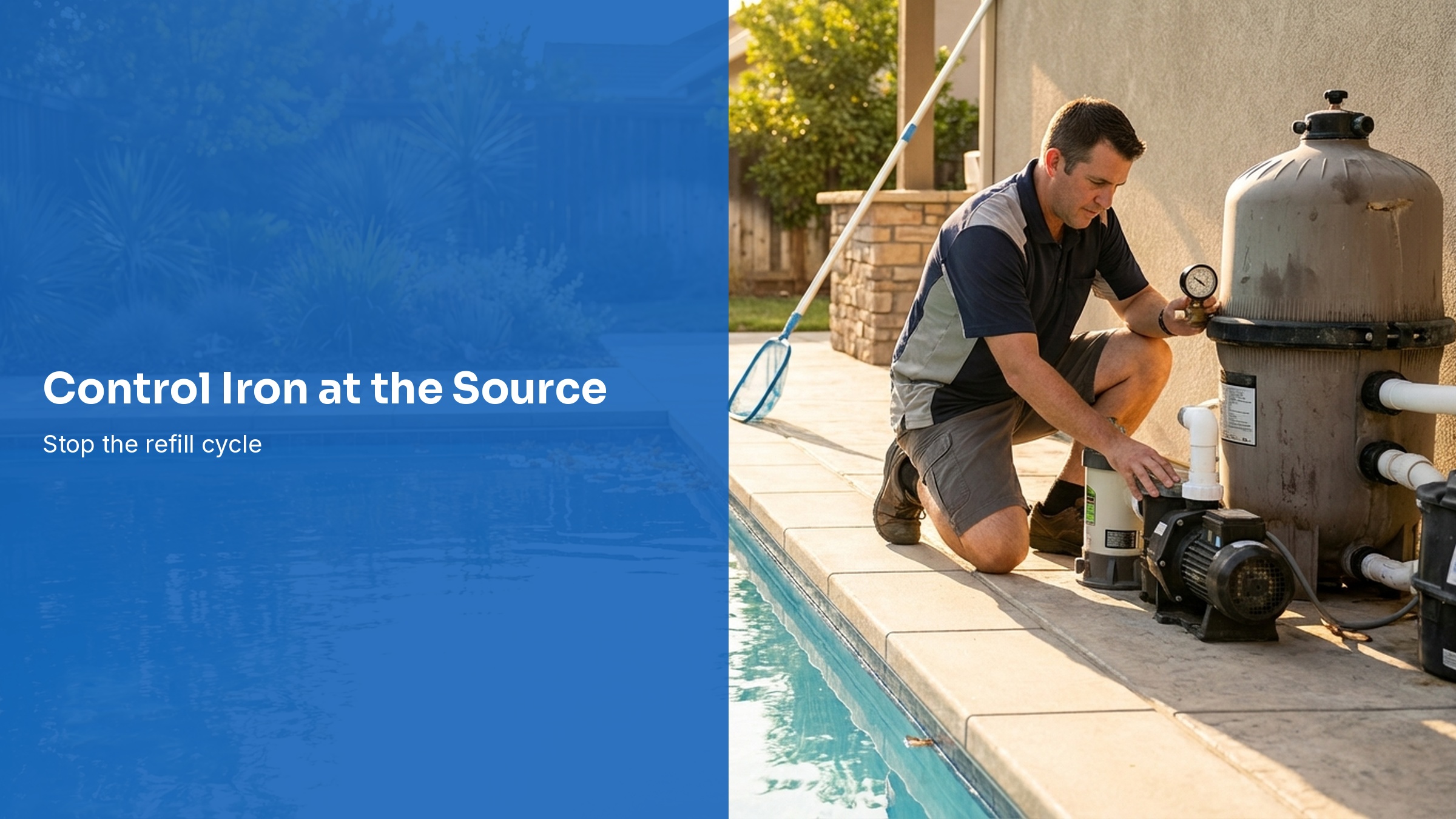
A pool filled or topped off with iron-rich well water is not a one-time stain-removal job. It is a source-water problem that keeps reloading the pool. The treatment plan must account for every gallon added, every gallon sent to waste, and what happens to the iron after a chemical binds or oxidizes it.
A recent r/PoolPros case described fill water testing around 1.3 to 1.4 ppm iron after a new finish. For context, the EPA's secondary drinking-water guideline for iron is 0.3 mg/L because higher concentrations can cause rusty color, sediment, and reddish-orange staining. That EPA value is an aesthetic drinking-water guideline, not a pool standard, but it shows why 1.3 ppm source water is an unusually heavy stain load.
The right field approach is source first: confirm the result, reduce the iron entering the pool, decide whether the goal is temporary control or physical removal, then price the ongoing work honestly.
Key Takeaways
- Test the fill water separately. A pool sample alone cannot tell you how much iron arrives with each refill.
- Control is not removal. Many metal products hold iron in solution; a filter, capture media, water replacement, or source treatment is still needed to reduce total iron.
- Stop the refill loop. Vacuuming or backwashing to waste can make the job worse when the replacement water carries a high iron concentration.
- Use one compatible product plan. Follow current labels and manufacturer instructions instead of combining forum recipes.
- Separate weekly service from remediation. Extra testing, capture media, water, chemicals, and return visits need their own scope and price.
Why the Iron Keeps Coming Back
Iron can remain dissolved and hard to see, then become visible as colored water, sediment, or stains when water conditions change. Oxidizers such as chlorine and higher pH can help convert dissolved iron into an insoluble form. That can make filtration possible, but it can also deposit iron on a new finish. A clear pool is not proof that the iron is gone.
This is the central mass-balance problem. If a 20,000-gallon pool loses 500 gallons during cleanup and those 500 gallons return with 1.3 ppm iron, the account receives another iron dose. Frequent waste cycles may remove oxidized particles while simultaneously adding more dissolved iron. Measure both sides of the exchange before promising a finish date.
Start With a Source-Water Record
Test a fresh sample directly from the well or hose, then test the pool. A current Taylor color-wheel kit measures iron from 0 to 2 ppm. At higher readings, or when results do not fit the visible condition, use a qualified water lab that can report total iron and other relevant constituents. Record whether the sample was filtered, when it was collected, and any well-treatment equipment it passed through.
| Record | Why it matters |
|---|---|
| Fill-water total iron | Establishes the incoming load and lets you compare treatment options. |
| Pool iron before and after work | Shows whether the plan is controlling appearance or actually lowering iron. |
| pH, alkalinity, hardness, temperature, and sanitizer | Helps explain precipitation risk and protects the surface while chemistry changes. |
| Gallons added or removed | Turns refill water into a measurable operating input. |
| Filter pressure and media condition | Shows when captured solids are loading the filter and when service is required. |
| Photos from the same locations | Creates a defensible record of color, sediment, and surface changes. |
Do not identify iron from water color alone. Copper, manganese, algae, suspended dirt, and finish conditions can overlap visually. If a fresh surface is involved, save the applicator's startup instructions and document the condition before changing the chemistry. Our pool plaster guide explains why early finish care needs extra caution.
Control, Capture, and Removal Are Different Jobs
Control
A sequestrant or chelant binds iron so it is less likely to oxidize, color the water, or stain. It does not automatically reduce the amount of iron present.
Capture
Compatible metal-capture media or filtration holds iron so the loaded media can leave the system. Capacity and flow placement matter.
Removal
Iron leaves through spent capture media, filtered solids, correctly handled waste water, or replacement with lower-iron water.
Orenda states plainly that its SC-1000 chelant holds metals in solution but does not remove them. CuLator describes its capture bags as binding metal inside removable media and publishes rated capacity by pool volume. Those are manufacturer claims for different jobs, not proof that either product fits every pool. Check the current label, capacity, compatibility, temperature limits, and filter arrangement before choosing a system.
Phosphate-based sequestrants can also conflict with a phosphate-removal program. Do not pour a phosphate remover into the same plan because a forum comment mentioned phosphates. Manufacturer guidance should establish whether products can be used together and in what order.
Fix the Water Entering the Pool
The best place to remove recurring iron is before it reaches the pool. Options may include trucked water for a major fill, a properly sized whole-property or dedicated source-water treatment system, a verified prefilter with published capacity, or another tested lower-iron source. A small hose cartridge can be useful only when its iron capacity, flow rate, and replacement interval match the job.
That experience points to capacity exhaustion. Do a controlled before-and-after test on the source filter and track gallons treated. If iron breaks through quickly, replacing small cartridges without a capacity calculation is not source control. Ask a qualified water-treatment provider to size the system from a current laboratory report and the pool's expected makeup-water demand.
A Safer Field Workflow
- Define the condition. Record source iron, pool iron, full balance, finish, volume, filter type, and visible symptoms.
- Protect the source. Stop automatic filling until the incoming water route is understood. Never let the pool drop below a safe operating level.
- Choose one manufacturer-backed method. Decide whether the immediate goal is stain prevention, stain lifting, particle filtration, metal capture, or water replacement.
- Run a limited trial. Use the current product label for a known water volume. Record dose, time, pressure, color, and iron results.
- Remove what was captured. Clean or replace media as directed. Handle waste water under local discharge rules.
- Re-test before repeating. Do not assume a clearer pool justifies another dose.
- Set the maintenance plan. Price future source filters, control products, testing, and extra visits separately from ordinary weekly care.
A separate vacuum system can keep a heavy settled load out of the client's filter, but it does not solve discharge or refill water. Before sending water to waste, verify where it may legally go, whether the pool can tolerate the water loss, and what water will replace it.
Use the PoolDial chemical dosage calculator only after the treatment target is established from a label or qualified plan. A calculator reduces arithmetic mistakes; it does not decide which chemistry is appropriate.
Price the Problem, Not Just the Weekly Visit
Recurring iron can consume bags, cartridges, sequestrant, test reagents, water, filter cleanings, and return trips. It also creates finish risk that normal weekly service pricing does not cover. Write two scopes: routine maintenance and metal remediation. State what success means, what the customer must change, and which costs are variable.
Walking away is not the first technical step, but it can be the correct business decision when the customer rejects source control, refuses a remediation price, expects a stain-free guarantee, or blames the service company for water it cannot control. A clear pool service agreement should exclude pre-existing finish damage and define extra work. If the relationship is no longer workable, follow a documented process for ending pool service professionally.
PoolDial's custom inspections can capture source-water results, treatment lot numbers, gallons exchanged, filter pressure, photos, and customer approvals on every iron-remediation visit.
Common Questions
Will sequestrant remove iron from the pool?
Usually no. A sequestrant or chelant is primarily a control step. Physical capture, filtration of precipitated material, suitable water replacement, or source treatment is needed to lower the total iron. Read the exact manufacturer's claim for the product being used.
Should you shock an iron-heavy pool?
The pool still needs an effective sanitizer program, but a large oxidation event can make iron visible or deposit it on surfaces. Do not abandon sanitation or hold chlorine at an arbitrary low number indefinitely. Build a treatment sequence that protects water safety and manages the metals, then follow the product labels and applicable public-health requirements.
Can a hose prefilter solve 1.3 ppm iron?
Only if verified capacity and treated volume support that result. Test the water before and after the filter and keep a gallon count. A cartridge that works for a few hundred gallons may be exhausted long before a pool fill or a season of evaporation replacement is complete.
When is trucked water worth it?
It is most compelling for a new finish or major refill when the available well water carries a large confirmed metal load. Test the delivered water too, confirm delivery logistics and pool structure requirements, and compare the full delivered-water cost with repeated chemical remediation.
The Bottom Line
Recurring iron is controlled by managing the source, not by chasing color after every refill. Test the well and pool separately, distinguish chemical control from physical removal, verify capture capacity, and document every gallon and treatment.
If the customer will not address the incoming water, price the account as a continuing high-metal service or decline it. A weekly pool-service fee should not silently absorb an open-ended water-treatment project.
Document Every High-Metal Pool Visit
PoolDial keeps source tests, photos, treatment notes, approvals, and extra charges attached to the customer record.
Start Your Free Trial