


Children ages 1-4 die from drowning more than any other cause of death in the United States.[1]Centers for Disease Control and PreventionDrowning Facts, Leading cause of death datacdc.gov This sobering statistic makes age the single most important factor in understanding pool drowning risk.
For pool service professionals, knowing which age groups face the greatest danger helps inform safety conversations with homeowners—especially those with toddlers and young children.
Key Statistics at a Glance
- 68% — Pool/spa fatalities involving children ages 1-3 (toddlers) [2]CPSC 2025 Submersion ReportAge breakdown of reported fatalitiescpsc.gov
- 79% — Fatalities occurring in children under 5 years old [2]CPSC 2025 Submersion Report281 of 357 average annual deathscpsc.gov
- 57% — ED-treated injuries involving children ages 1-3 [2]CPSC 2025 Submersion ReportAge breakdown of nonfatal injuriescpsc.gov
- 281 — Average annual fatalities for children under 5 (2020-2022) [2]CPSC 2025 Submersion Report3-year average 2020-2022cpsc.gov
- #2 cause — Drowning rank among unintentional injury deaths for ages 5-14 [1]Centers for Disease Control and PreventionBehind motor vehicle crashescdc.gov
Fatalities by Age Group
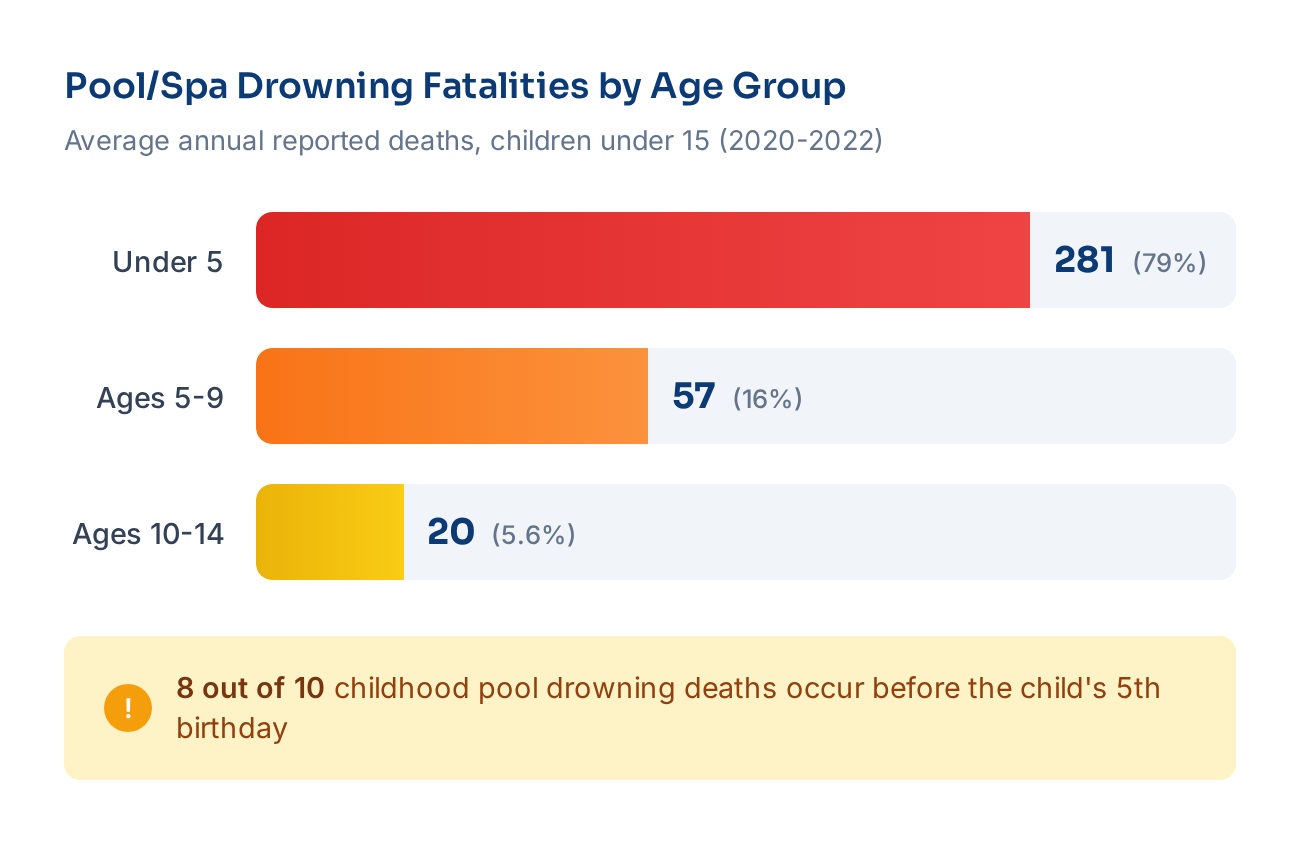
The CPSC tracks drowning fatalities across three primary age categories for children under 15. The data reveals a stark concentration of deaths in the youngest age groups.[2]CPSC 2025 Submersion ReportFatality data by age group, 2020-2022 averagecpsc.gov
Under 5 Years (79%)
Ages 5-9 (16%)
Ages 10-14 (5.6%)
Source: CPSC 2025 Submersion Report (2020-2022 average)
Nearly 8 out of every 10 childhood pool drowning deaths occur before the child's fifth birthday. This concentration makes the under-5 age group the overwhelming priority for prevention efforts.
The Toddler Peak: Ages 1-3
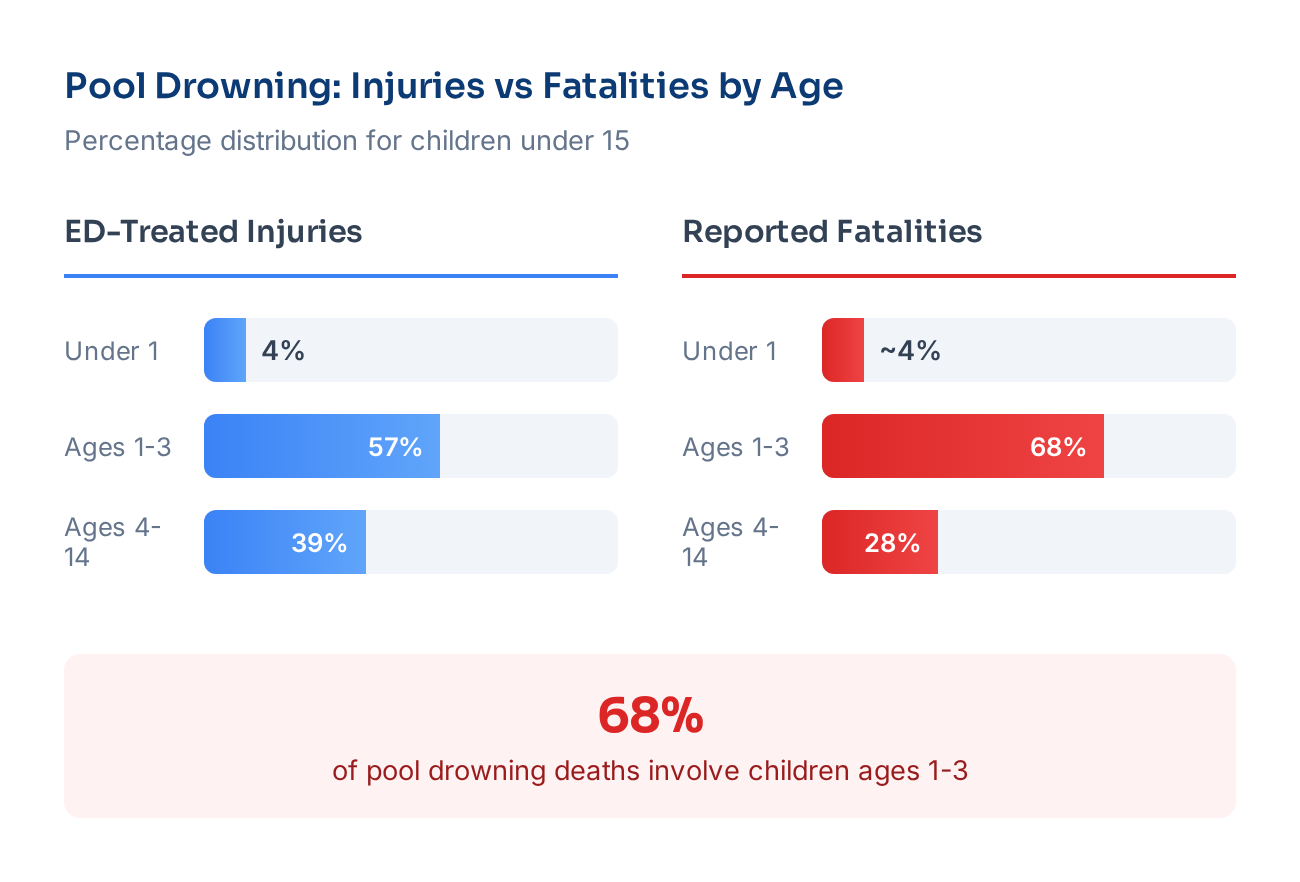
Within the under-5 category, children between 12 and 47 months old (ages 1-3) face the highest risk. This age group accounts for 68% of all reported pool and spa drowning fatalities among children under 15.[2]CPSC 2025 Submersion ReportAge 1-3 fatality concentrationcpsc.gov
Why ages 1-3? Toddlers combine dangerous traits: they're mobile enough to reach water but lack the cognitive development to understand danger, the motor skills to self-rescue, or the strength to climb out of a pool. A momentary lapse in supervision can be fatal.
For nonfatal injuries requiring emergency department treatment, the pattern is similar: children ages 1-3 comprise 57% of all ED-treated drowning injuries for children under 15.[2]CPSC 2025 Submersion ReportAge breakdown of nonfatal injuriescpsc.gov
Infant Drowning Data (Under 1 Year)
Children younger than 1 year old account for 4% of estimated nonfatal drowning injuries treated in emergency departments.[2]CPSC 2025 Submersion ReportInfant injury datacpsc.gov
While this percentage is lower than toddlers, it's important context: infants are generally less mobile and more closely supervised. The 4% figure likely reflects incidents in bathtubs and wading pools as much as traditional swimming pools.
School-Age Children: Ages 5-14
For children ages 5-14, drowning remains the second leading cause of unintentional injury death, behind only motor vehicle crashes.[1]Centers for Disease Control and PreventionDrowning Facts, cause of death rankingcdc.gov
The data shows a notable decline in risk as children age:
- Ages 5-9: 57 average annual fatalities (16% of total)
- Ages 10-14: 20 average annual fatalities (5.6% of total)
This decline reflects several factors: older children are more likely to have swimming skills, better understand water dangers, and have developed the physical ability to self-rescue in some situations. However, the risk never disappears entirely—and older children may face dangers in deeper water or open-water settings that younger children don't encounter.
Data gap: CPSC data focuses on children under 15. Drowning rates for teenagers ages 15-17 require separate CDC data sources and include more incidents in natural water bodies (lakes, rivers, oceans) rather than pools.
Why Age Matters for Pool Safety
The concentration of drowning risk in ages 1-4 has direct implications for residential pool safety:
- Barrier requirements: Many state laws specifically trigger pool fence requirements when a child under a certain age (often 6) resides at the property[3]CDC Risk FactorsDrowning prevention recommendationscdc.gov
- Supervision standards: Toddlers require constant, undistracted supervision—not just "being present" but active watching
- Learn-to-swim timing: Research suggests formal swimming lessons can help reduce drowning risk for children ages 1-4[3]CDC Risk FactorsSwimming skill as protective factorcdc.gov
- Home-based risk: The majority of toddler drownings occur at the child's own home or at the home of family/friends
What This Means for Pool Service Professionals
For pool service companies, age-based drowning data provides concrete talking points when discussing safety with customers:
- New parent conversations: When you learn a customer has a toddler or is expecting, it's an opportunity to discuss barrier options and supervision practices
- Grandparent homes: Pools at grandparents' homes represent significant risk since children visit but don't live there—barriers may not be in place
- Documentation value: Recording safety equipment status (fences, alarms, covers) in your service notes creates a record and reminder for both you and the customer
Sources
- [1] Centers for Disease Control and Prevention, "Drowning Facts," 2024. cdc.gov
- [2] U.S. Consumer Product Safety Commission, "Pool or Spa Submersions: Estimated Nonfatal and Reported Fatal Drownings, 2025 Report." cpsc.gov
- [3] Centers for Disease Control and Prevention, "Risk Factors for Drowning," 2024. cdc.gov