
What's Included in a Pool Inspection?


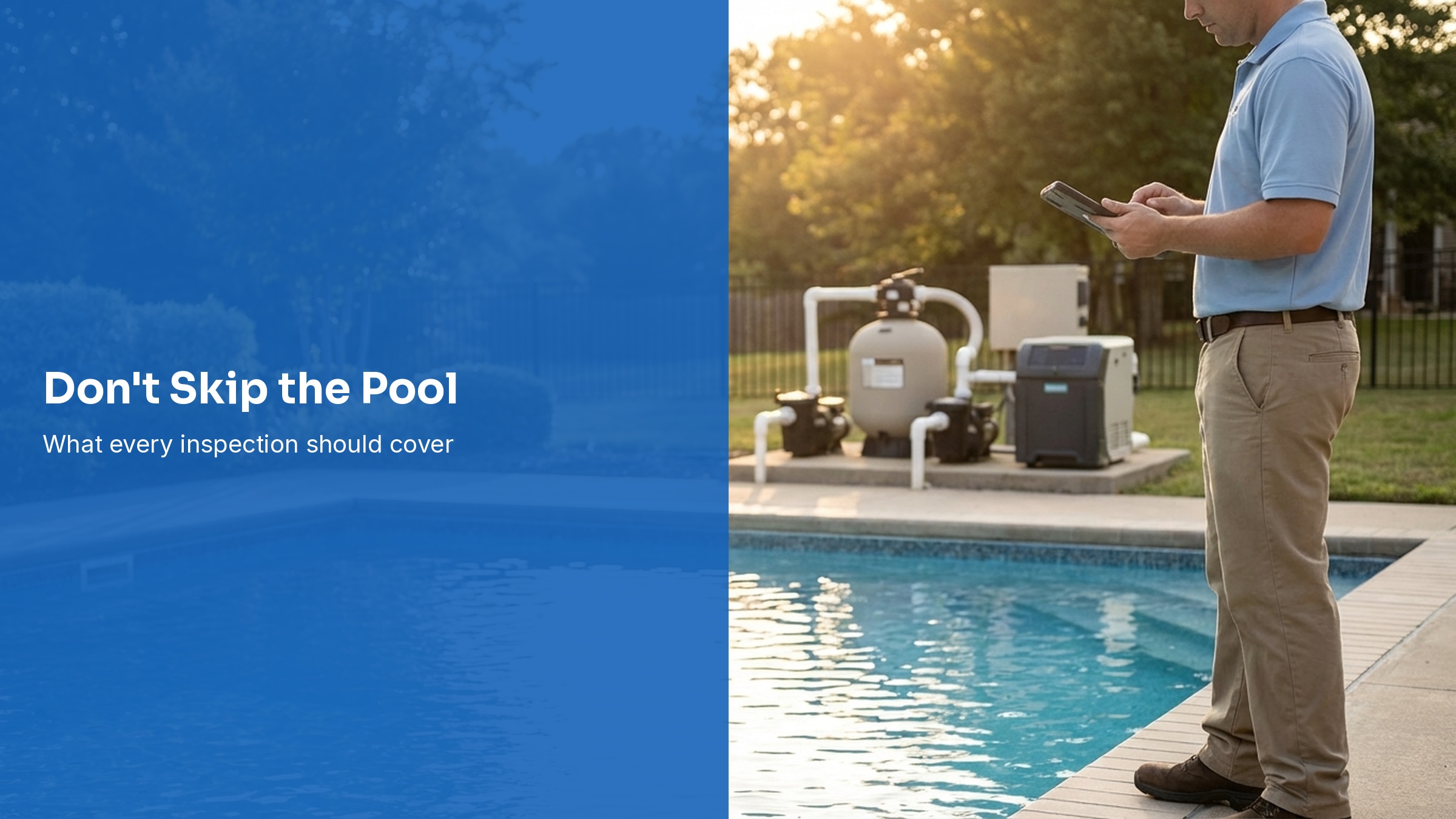
A bad pool can cost a homebuyer thousands of dollars. Cracked shells, corroded heaters, leaking filters, broken lights. These problems hide in plain sight until someone writes a check.
That is why pool inspections matter. A trained pool pro walks the property, tests every system, and documents what works and what does not. The buyer gets a clear picture. The seller avoids surprises at closing. And the inspector earns a new revenue stream.
This guide breaks down everything a professional pool inspection covers, section by section. Whether you are a pool pro thinking about offering inspections or a homeowner who wants to know what to expect, here is the full checklist.
Key Takeaways
- A pool inspection is visual. Inspectors check every visible component but do not take anything apart or dig underground.
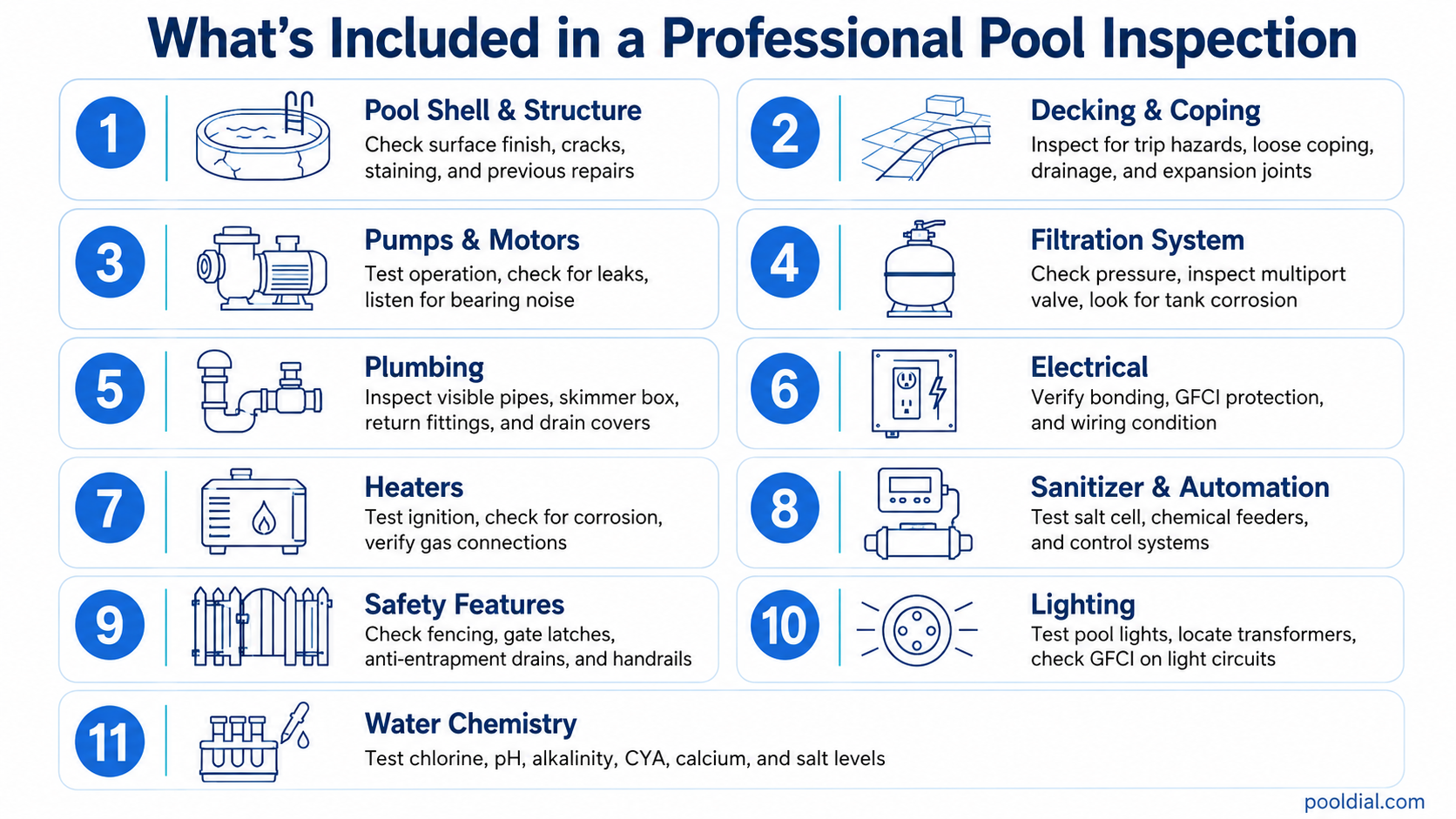
- 10 major areas are covered: structure, decking, pumps, filtration, plumbing, electrical, heaters, automation, safety barriers, and water chemistry.
- Inspections protect both sides. Buyers avoid costly surprises. Sellers avoid price negotiations after the fact.
- Pool pros are better inspectors than home inspectors. A home inspector spends about two hours on pool training. Pool pros have years of hands-on experience.
- It is a revenue stream. Inspections lead to equipment sales, new service accounts, and relationships with real estate agents.
Why Pool Inspections Matter
A home inspector covers the house, the roof, the plumbing, and the electrical. But when it comes to the pool, most home inspectors check whether it has water and whether the pump is there. That is about it.
A professional pool inspection goes much deeper. It covers the shell, the equipment, the electrical, the safety barriers, and the water. Every component gets tested, photographed, and documented.
Without an inspection, buyers take on hidden costs. One pool pro described a couple who bought a house with a fiberglass pool that had osmosis so bad it needed a full resurface, costing $10,000 to $15,000. A $150 inspection would have caught it.
1. Pool Shell and Structure
The inspector starts with the pool itself. They look at the interior surface for signs of damage, wear, or poor repairs.
What gets checked:
- Surface finish condition (plaster, fiberglass, vinyl, or pebble)
- Horizontal and vertical cracking
- Staining, discoloration, or etching
- Previous patch jobs or repairs (epoxy putty, silicone)
- Water clarity (can signal filtration or circulation problems)
- Tile line condition along the waterline
- Signs of structural movement or settling
Fiberglass pools get special attention. Inspectors look for bulges, cracks, and osmosis blisters. One inspector found a fiberglass pool with an entire edge that had "completely twisted and warped" with a crack forming. He tagged it for an engineer and cabled the gate shut. That is the kind of thing a visual inspection catches.
For concrete pools, the inspector checks for delamination in the plaster and cracks that could signal movement in the bond beam. Vinyl liner pools get checked for tears, wrinkles, and bead track condition.
2. Decking and Coping
The area around the pool matters as much as the pool itself. Trip hazards and poor drainage can create liability issues for the property owner.
What gets checked:
- Deck surface condition (cracks, heaving, settling)
- Trip and fall hazards from uneven surfaces
- Coping stones (loose, cracked, or missing)
- Flexible joint between coping and decking
- Drainage and grading away from the pool
- Expansion joints
The joint between the coping and the deck is a detail many people miss. A flexible sealant joint should separate the two. If it is rigid or missing, deck movement can damage the pool shell over time.
3. Pumps and Motors
The pump is the heart of the pool system. The inspector runs it and checks for problems that could mean an expensive replacement is coming.
What gets checked:
- Pump make, model, and approximate age
- Leaks at the inlet or outlet unions
- Pump lid seal condition
- Hair and lint pot (strainer basket) condition
- Drain plug integrity
- Motor noise (bearing sounds, buzzing, vibration)
- Suction and discharge plumbing connections
- Whether the pump is DOE-compliant (variable speed)
Rust around the pump, burnt-out capacitors, and DIY silicone patches are all red flags. One inspector described finding a pump where "the capacitors had basically burnt out" and the seller had no idea. The pump looked fine from a distance but was dead on arrival.
Use the pump energy cost calculator to show buyers what a new variable speed pump could save them each month.
4. Filtration System
Whether the pool uses a cartridge filter, sand filter, or DE filter, the inspector checks that it is working and not a hazard.
What gets checked:
- Filter type, make, model, and age
- Pressure gauge reading (high pressure means dirty or clogged)
- Leaks at the tank, clamp band, or unions
- Multiport valve (MPV) operation and spider gasket condition
- Water trickling out the waste port during filter mode
- Cartridge element condition (if accessible)
- Tank hardware (bolts, nuts, threaded rods)
Leaking spider gaskets in multiport valves are one of the most common findings. Water trickling out the waste port when the valve is set to "filter" means the gasket is worn. It is a cheap fix, but it signals the filter has not been maintained.
A corroded filter is more than a maintenance issue. Under pressure, a compromised tank or valve can fail violently. Inspectors flag this as a safety concern.
5. Plumbing
Pool plumbing runs underground, so inspectors can only check what is visible. But visible plumbing tells a lot about how the pool was installed and maintained.
What gets checked:
- Suction and return line connections at the equipment pad
- Skimmer box condition, basket, and weir door
- Return inlets and fittings in the pool wall
- Main drain covers (anti-entrapment compliance)
- Visible pipe condition above ground
- Flexible couplings (rubber connectors are a red flag)
- Signs of leaks (wet spots, erosion, settling near pipes)
Important: pool inspections are visual. Inspectors do not dig up pipes or pressure-test underground lines. If there are signs of a leak, they note it in the report and recommend a dedicated leak detection service.
6. Electrical
Electrical problems around pools are dangerous. Water and electricity do not mix, and faulty bonding or grounding can create shock hazards.
What gets checked:
- Equipment bonding (pump, heater, filter, handrails, ladders)
- GFCI protection on pool equipment circuits
- Timer or automation panel condition
- Exposed or damaged wiring
- Junction boxes and conduit condition
- Disconnect switch accessibility
Bonding is a common problem on older pools. Every metal component within five feet of the pool must be bonded to a common ground. If the heater was replaced and nobody reconnected the bonding wire, that is a code violation and a safety hazard.
When an inspector finds an electrical hazard, they flag it clearly in the report. Some inspectors use a lightning bolt icon to indicate "electrical hazard exists" and note that it "could cause injury or death." This is not an area where you hedge your language.
7. Heaters
Pool heaters are expensive to replace. Gas heaters run $2,000 to $5,000 installed. Heat pumps can cost even more. The inspector checks whether the heater works now and how much life it has left.
What gets checked:
- Heater type (gas, heat pump, electric, solar), make, model, and age
- Signs of corrosion or rust (especially the heat exchanger cabinet)
- Proper ignition and heating during test
- Gas line connections (visual only)
- Bonding wire connection
- Exhaust and ventilation clearances
- Error codes on the display
One inspector shared a story where a seller was told their corroded gas heater needed replacement. The seller ignored the advice. When the buyer's inspector flagged the same heater, the seller was forced to discount the sale price by thousands of dollars. A few hundred dollars to disconnect and remove the heater would have solved the problem before listing.
Use the pool heater calculator to estimate heating costs for the buyer based on the pool size and heater type.
8. Sanitizer and Automation
Modern pools often have salt chlorine generators, UV systems, ozone generators, or chemical feeders. The inspector tests what is installed and whether it is working.
What gets checked:
- Salt chlorinator cell and control box (if equipped)
- Chemical feeder condition (chlorine or acid)
- Automation system (brand, model, functionality)
- Remote controls and connectivity
- Timer settings and programming
- Valve actuators (do they turn?)
Salt chlorinators are a common finding. The cell may be scaled, the flow sensor may be dirty, or the cell may be past its lifespan. A chlorinator that is not producing chlorine is a problem the buyer needs to know about before closing.
9. Safety Features
Safety is where pool inspections overlap with code compliance. The inspector checks whether the pool area meets basic safety requirements.
What gets checked:
- Perimeter fencing height and condition
- Gate self-closing and self-latching mechanisms
- Gate swing direction (must open away from pool)
- Fence spacing (gaps that a child could pass through)
- Anti-entrapment drain covers (VGBA compliance)
- Diving board and slide placement relative to pool depth
- Handrails, ladders, and step condition
- Pool alarms (if required by local code)
Fencing is a code requirement in every state. But many older pools have gates that no longer latch, fences with gaps, or barriers that have deteriorated over time. The pool inspector notes these issues. For a formal fencing certification, the buyer should contact their local building department or a licensed certifier.
10. Lighting
Pool lights are one of the most neglected parts of a swimming pool. They burn out, get disconnected, and nobody fixes them because the pool still works without them.
What gets checked:
- Pool light operation (does it turn on?)
- Light fixture and lens condition
- Transformer location and function
- Wiring and junction box condition
- GFCI protection on the light circuit
- Landscape and deck lighting around the pool area
The problem with lights is that you never know if the issue is the fixture, the cable, or the transformer until you test each one. Good inspectors note this in their report and recommend an electrician test the wiring before the buyer commits to a replacement.
11. Water Chemistry
A water test during the inspection is a snapshot, not a history. But it tells the inspector a lot about how the pool has been maintained.
What gets checked:
- Free chlorine and combined chlorine levels
- pH level
- Total alkalinity
- Cyanuric acid (stabilizer) level
- Calcium hardness
- Salt level (for salt pools)
- Total dissolved solids (TDS)
- Langelier Saturation Index (LSI) balance
High CYA levels (above 100 ppm) suggest years of tablet use without draining. Low calcium hardness in a plaster pool suggests the water is etching the surface. These chemistry clues help the inspector tell a bigger story about pool maintenance history.
Use the chemical dosage calculator to show what adjustments would be needed to bring the water into balance.
Common Extras and Add-Ons
Some inspections include additional services that go beyond the standard visual check.
- Leak detection. Using listening devices, dye testing, or pressure testing to find leaks in the shell or plumbing. This is usually a separate service.
- Structural assessment. If the inspector suspects serious structural problems, they refer to a licensed engineer. Pool inspectors do not certify structures.
- Spa inspection. If the property has a spa or hot tub, the inspector checks the jets, blower, heater, and controls separately.
- Equipment pad photography. Full photo documentation of every component for the report file.
Most inspectors charge a flat fee or hourly rate plus travel. The inspection itself takes one to two hours. The report takes additional time to write, especially if there are many findings.
After the Inspection: The Report
The inspection report is the deliverable. It is the document the buyer uses to negotiate, the seller uses to prepare, and the inspector uses to protect themselves.
A good report includes photos of every component, clear descriptions of condition, and color-coded ratings so the reader knows what is urgent. Professional inspectors go beyond a single-page checklist.
The report should include a disclaimer noting that the inspection is visual only, does not cover underground conditions, and does not constitute a structural assessment. This protects the inspector from liability on things they cannot see.
Define the Inspection Product Before You Sell It
A North Carolina pool pro considering inspections as a realtor-referred add-on asked about price, depth, liability, insurance, and certification. Those are not afterthoughts. They are the product definition.
"How deep are you going on equipment vs just identifying obvious issues?"
— Pool pro via Reddit
State whether the inspection is visual and operational or includes disassembly, pressure testing, leak detection, code review, or specialty diagnostics. List inaccessible and excluded systems. Confirm licensing, certification, insurance, and report-language requirements for the actual jurisdiction with qualified local advisers. A separate question about adding liner leak detection shows why the boundary matters: buying a tool does not automatically make subsurface leak detection part of a standard home-sale inspection.
Use one report template, photo requirements, severity labels, and a repair-referral policy. The report should describe observed conditions and next steps without promising that every concealed defect has been found.
Why Pool Pros Should Offer Inspections
If you are a pool service professional, inspections are one of the best services you can add. They are low cost to start, they generate equipment sales, and they build relationships with real estate agents who send repeat business.
Here is what inspections lead to:
- New service accounts. The buyer needs someone to maintain the pool. You just proved your expertise.
- Equipment sales. Every inspection finds something that needs replacing. Pumps, filters, heaters, lights, chlorinators.
- Real estate referrals. Agents remember the pro who saved their deal. They send more inspections your way.
- Legal protection. When you document the pool's condition at takeover, you have proof of what you inherited.
You can offer inspections for sellers (before listing) and for buyers (before closing). Both sides benefit, and both sides pay. To learn more about starting or expanding a pool service business, check out our full guide.
Track Inspections with PoolDial
PoolDial's inspection feature lets you build inspection reports right from your phone. Walk the property, check items off, snap photos, and generate a professional PDF to send to the client. Every inspection is saved to the customer record so you have a complete history.
Pair it with equipment tracking to log every piece of equipment on the property, including make, model, serial number, and install date. When the buyer asks "how old is the heater?" you have the answer in your pocket.
Start Offering Professional Pool Inspections
PoolDial gives you inspection checklists, photo documentation, PDF reports, and equipment tracking. All at $2/pool.
Start Your Free Trial