
Summer Workwear for Pool Service: What Pros Wear to Beat the Heat

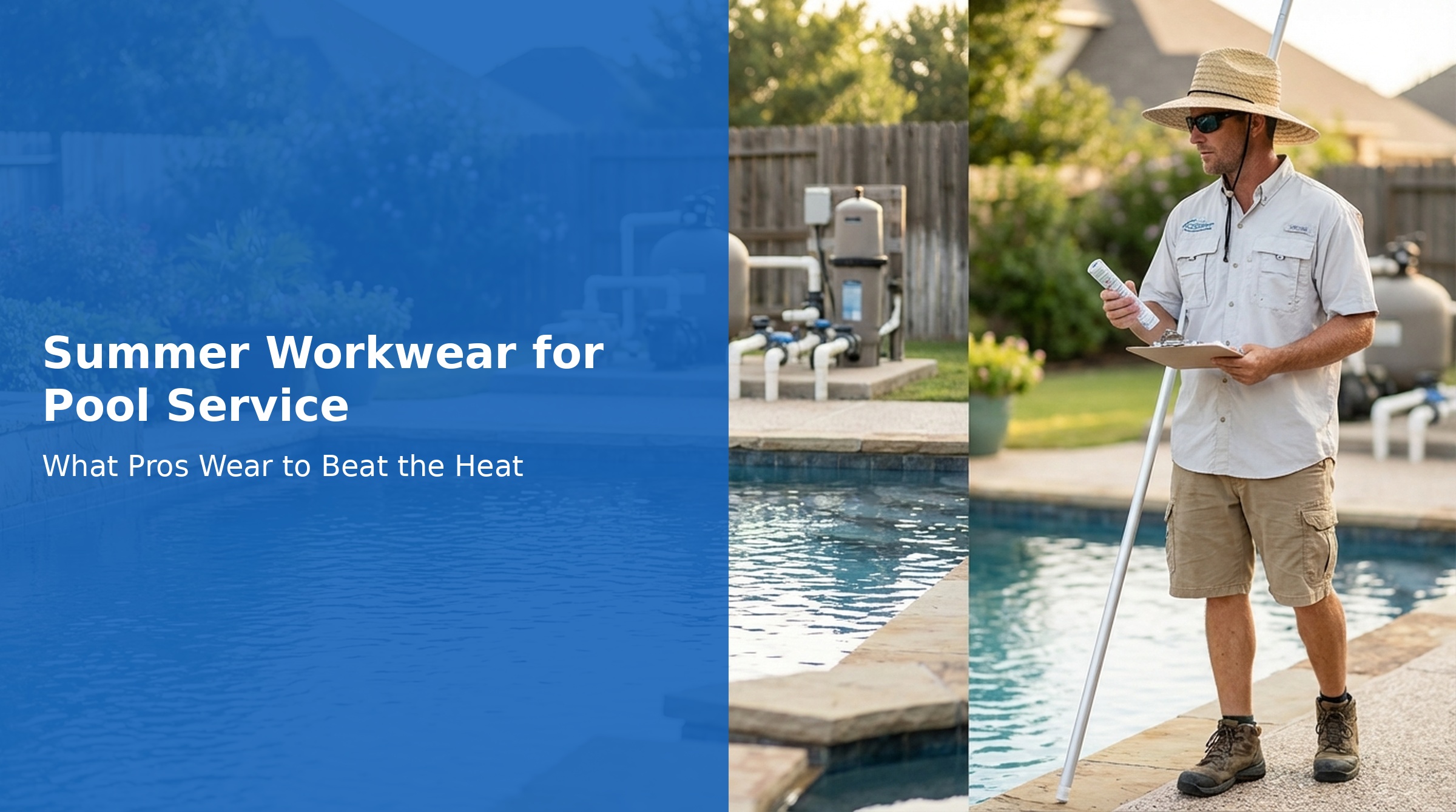
When you service pools in Arizona, Texas, Florida, or California, the summer months test your endurance as much as your technical skills. Deck temperatures can exceed 140 degrees. The heat index pushes past 110. And you still have a full route to run, equipment to repair, and customers who expect you to show up looking like you know what you are doing.
A recent conversation among pool service professionals covered everything from shirts and shorts to cooling towels and the ever-controversial question of whether Crocs are acceptable field footwear. The insights below come directly from techs who have spent years figuring out what actually works when the thermometer stops making sense.
Key Takeaways
- Long sleeves beat short sleeves in extreme heat — UPF-rated fishing shirts keep you cooler than bare skin
- Wide-brim hats are non-negotiable for sun protection, even if they look "goofy"
- Quick-dry fabrics outperform cotton in every measurable way for pool service
- Cooling towels and ice water are survival gear, not luxuries
- Professional appearance affects how customers perceive and pay for your work
The Counterintuitive Truth About Long Sleeves
Ask someone who has never worked outdoors what to wear in 115-degree heat and they will say shorts and a tank top. Ask someone who has done it for a decade and you get the opposite answer: long sleeves, long pants, and as much skin coverage as possible.
The reasoning is straightforward. Direct sun exposure heats your skin faster than ambient air temperature. A lightweight, breathable long-sleeve shirt creates a barrier that blocks UV rays while allowing sweat to evaporate. The result is counterintuitive but consistent: you stay cooler covered up than you would with bare arms.
UPF-rated fishing shirts have become the standard for pool service techs in hot climates. Brands like Columbia, Eddie Bauer, and Huk make shirts specifically designed for all-day sun exposure on the water. The same properties that keep anglers comfortable work perfectly for pool service. Look for UPF 50+ ratings, quick-dry polyester blends, and ventilation features like mesh-lined vents.
Eddie Bauer Hooded UPF Shirt
Available at Costco seasonally. The hood provides neck protection without a separate neck gaiter. Quick-dry fabric feels cooler when wet.
$25-35Columbia PFG Long Sleeve
The industry standard for fishing shirts. Vented back panel and UPF 40 protection. Widely available in multiple colors.
$40-55Milwaukee WorkSkin Base Layer
Compression fit wicks sweat effectively. Works as a standalone or under a button-up work shirt for a professional look.
$30-40Under Armour Tech Tee
Lightweight moisture-wicking fabric. Works well as a base layer under a work shirt. Multiple color options for company branding.
$25-35One experienced tech described his approach: a compression base layer for moisture wicking, a short-sleeve button-up work shirt over it, and compression sleeves on his arms. The button-up displays his company name professionally, the base layer handles sweat, and the sleeves provide sun protection without the heat of full long sleeves. At 140 degrees on deck, he reports this combination outperforms anything else he has tried.
If you wear short sleeves, add compression arm sleeves. They provide UV protection, prevent fiberglass from work on filter tanks from getting through to your skin, and actually help with temperature regulation. Multiple techs reported these as essential gear after a skin cancer scare.
Hats: Function Over Fashion
The running joke among pool techs is that their sun hat doubles as "birth control" because of how ridiculous it looks. But skin cancer on the neck, ears, and face is no joke, and experienced professionals universally agree: wear the biggest hat you can tolerate.
Wide-brim straw hats are the most common choice. They provide excellent coverage, breathe better than fabric hats, and can be dunked in the pool or a cooler for instant cooling. Some techs reported buying the same $15 straw hat repeatedly because dunking it eventually destroys the shape, but the cooling effect makes replacement worth it.
For a more polished look, outdoor brands make wide-brim hats with neck flaps that provide similar coverage in more durable materials. These hold up better to repeated wetting and look slightly more professional, though the price jumps to $30-50.
"It's not big enough until you look goofy. If you're worried about how you look, you're not wearing enough hat."
— Pool tech with 10+ years in Southern USA
Ball caps provide minimal protection. The back of your neck, your ears, and the sides of your face all remain exposed. If you insist on a ball cap for branding reasons, add a neck gaiter or cape attachment to cover what the cap misses. Several techs reported using a bandana wrapped around the neck that they dip in ice water throughout the day for both sun protection and cooling.
Shorts, Pants, and the Dickies Debate
Dickies work shorts have become almost a uniform for pool service. They are durable, affordable, have useful cargo pockets, and dry reasonably well when splashed. The brand recognition is so strong that "Dickies shorts" came up in nearly every workwear discussion.
But not everyone agrees shorts are the right choice. Several techs in extreme heat climates reported switching to lightweight long pants for the same reason they switched to long sleeves: the sun protection actually keeps you cooler. Quick-dry fishing pants and the Wrangler ATG tech pants (also available at Costco) were mentioned as good options that breathe well enough for summer service.
Dickies Cargo Shorts
The pool service standard. Durable, affordable, and available everywhere. Multiple pockets handle tools and phone.
$25-35Wrangler ATG Pants
Quick-dry material rated for outdoor work. Water-resistant and comfortable. Available at Costco seasonally.
$20-30Quick-Dry Fishing Pants
Lightweight, sun-protective, and designed for wet environments. Multiple brands available at outdoor retailers.
$40-60Swim Trunks with Liner
Some techs prefer board shorts with compression liners for hot days with frequent pool entry. Professional appearance varies.
$30-50Whatever you choose for bottoms, consider adding soft knee pads. Service work involves constant kneeling on pool decks, equipment pads, and concrete. Built-in knee pad pockets (available on many work pants) or strap-on pads protect your knees from the cumulative damage that ends careers early. One tech reported putting on knee pads at his first stop and not taking them off until he gets home.
Cooling Strategies That Actually Work
Beyond clothing choices, experienced techs have developed cooling strategies for surviving extreme heat days. These range from simple hydration habits to specific gear investments.
Cooling Towels
Cooling towels are chemical-free cloths that stay cold when wet. You dunk them in a cooler or pool, snap them to activate evaporative cooling, and wear them around your neck. The effect is immediate and can last 30-60 minutes depending on humidity. Multiple techs reported these as essential summer gear, keeping one in the truck and rotating it through each stop.
Ice Cooler System
A 2-liter insulated water bottle and a cooler with ice are baseline requirements. Some techs add Liquid IV or Pedialyte packets to their water for electrolyte replacement on particularly brutal days. The midday Pedialyte break was mentioned multiple times as a recovery strategy that makes the afternoon route survivable.
Dip Everything
This sounds unprofessional until you try it. In extreme heat, dunking your hat in the pool or cooler provides instant relief. The same goes for your shirt if you are between stops. The evaporation pulls heat away from your body faster than any fabric technology. One Arizona tech reported that on 120-degree days, he dips his straw hat at every pool and lets it dry on the drive to the next stop.
Strategic Scheduling
When heat becomes dangerous, some techs restructure their day: early morning route from 5-11 AM, rest during peak heat, then finish from 5-8 PM. This is not always possible with customer schedules, but when it is, it makes extreme heat days manageable instead of miserable.
Arizona / Desert Southwest
- Long sleeve UPF hooded shirts
- Wide-brim straw hat (dip in pool)
- Compression arm sleeves if short sleeve
- Cooling towel in ice cooler
- Start route before 6 AM
Florida / Gulf Coast
- Quick-dry everything (humidity)
- UPF long sleeve fishing shirt
- Waterproof everything below the waist
- Extra change of clothes in truck
- Account for afternoon storms
Texas
- PFG or similar fishing shirt
- Lightweight cargo pants or shorts
- Large straw hat
- Steel toe optional (depends on work type)
- Hydration packets mandatory
Southern California
- Hybrid shorts or quick-dry pants
- UPF long sleeve shirt
- Side-brim hat for professional look
- Lighter colors for coastal areas
- Compression base layer optional
Footwear: The Professionalism Debate
Footwear choices generate more controversy than any other workwear topic. The debate essentially comes down to comfort versus professional appearance, with valid arguments on both sides.
Crocs, sandals, and flip-flops are undeniably comfortable in extreme heat. They dry instantly, breathe completely, and cost almost nothing to replace. A significant number of techs wear them daily, particularly those who service pools in Arizona and Nevada where temperatures routinely exceed 115 degrees.
But the counterargument is equally compelling. Professional appearance affects how customers perceive your work and what they are willing to pay for it. When a homeowner sees a uniformed tech step out of a wrapped vehicle in proper work boots, their mental frame shifts. This is a professional. When they see flip-flops and a tank top, the perception changes regardless of actual skill level.
"We gotta stop wearing Crocs and start looking more professional. It makes our industry look bad. I'm not saying wear steel toe boots, but Crocs or flip flops don't look good in any professional industry."
— Experienced pool service professional
The middle ground most professionals settle on: proper shoes for customer-facing service, with Crocs or sandals available in the truck for specific situations. If you need to step on a tanning ledge or wade into a pool, swap your shoes. Then switch back before the next stop.
For detailed footwear recommendations, see our complete guide to pool service footwear, which covers waterproof boots, hiking shoes, steel toe options, and the full crocs-versus-boots analysis.
The Professional Appearance Question
The professionalism debate extends beyond footwear. Your complete appearance — shirt, shorts, shoes, truck, and communication style — shapes how customers perceive the value of pool service.
Pool service technicians are experts in gas appliances, electrical systems, plumbing, water chemistry, and mechanical repair. These are specialized skills that overlap significantly with union trades commanding $80 or more per hour. Yet average pool service rates are dramatically lower. Part of the gap is perception. The general public often views pool service as unskilled labor rather than the technical trade it actually is.
Every customer touchpoint either reinforces or challenges that perception. A company polo, clean truck, itemized invoices, and professional communication all signal expertise. Swim trunks, a graphic tee, and flip-flops signal the opposite, regardless of how skilled the technician actually is.
This is not about discomfort for its own sake. It is about positioning your business. If you are building a premium service company with premium rates, your appearance should match. If you are competing on price in a budget market, the calculation changes. Either approach can work, but the workwear choices should be intentional rather than accidental.
For business owners considering how appearance fits into their overall strategy, see our guide on starting a pool service business and use our cost-per-pool calculator to make sure your rates cover the full cost of operating professionally.
Building Your Summer Kit
Based on the collective experience of pool professionals working in extreme heat, here is a practical summer workwear kit:
- 2-3 UPF long-sleeve fishing shirts — rotate daily, wash weekly
- Compression base layer — optional, helps with moisture management under work shirt
- Compression arm sleeves — if wearing short sleeves, provides UV and fiberglass protection
- Wide-brim hat — straw for dunking, or outdoor brand for durability
- Neck gaiter or bandana — sun protection and cooling when wet
- Quick-dry shorts or pants — Dickies, Wrangler ATG, or fishing pants
- Soft knee pads — essential for daily kneeling on decks
- Waterproof work shoes — primary footwear for customer-facing service
- Backup sandals or Crocs — for pool entry situations only
- Cooling towel — keep in ice cooler, use at every stop
- Insulated water bottle (2L) — refill constantly
- Electrolyte packets — Liquid IV, Pedialyte, or similar
- SPF 50+ sunscreen — reapply every two hours
- Quality polarized sunglasses — protects eyes and helps you see into pools
The total investment for a complete summer kit runs $200-400 depending on brand choices. Treat it as business equipment that wears out annually and factor replacement costs into your service pricing.
Heat-related illness is a real risk in pool service. Know the signs of heat exhaustion (heavy sweating, weakness, cold/clammy skin, nausea) and heat stroke (high body temperature, confusion, no sweating). See our technician injury prevention guide for detailed safety protocols.
Final Thoughts
Summer workwear for pool service is about survival, not fashion. The techs who thrive in extreme heat have figured out that covering up beats exposing skin, that hydration is not optional, and that professional appearance affects both customer perception and personal pride in the work.
The specific brands and products matter less than the principles: UPF-rated fabrics, quick-dry materials, maximum sun coverage, and active cooling strategies. Find the combination that works for your climate, your route, and your business positioning. Then treat your workwear as the business expense it is, replacing items before they compromise your comfort or appearance.
Your gear choices will not make summer routes easy. Nothing makes 120 degrees easy. But the right setup makes extreme heat survivable, and that is what keeps you in business long enough to appreciate the mild months when they return.
Track every stop, optimize every route
PoolDial helps pool service professionals manage routes, track customers, and run their business efficiently.
Start Your Free Trial