
Pentair WhisperFlo Priming Failure


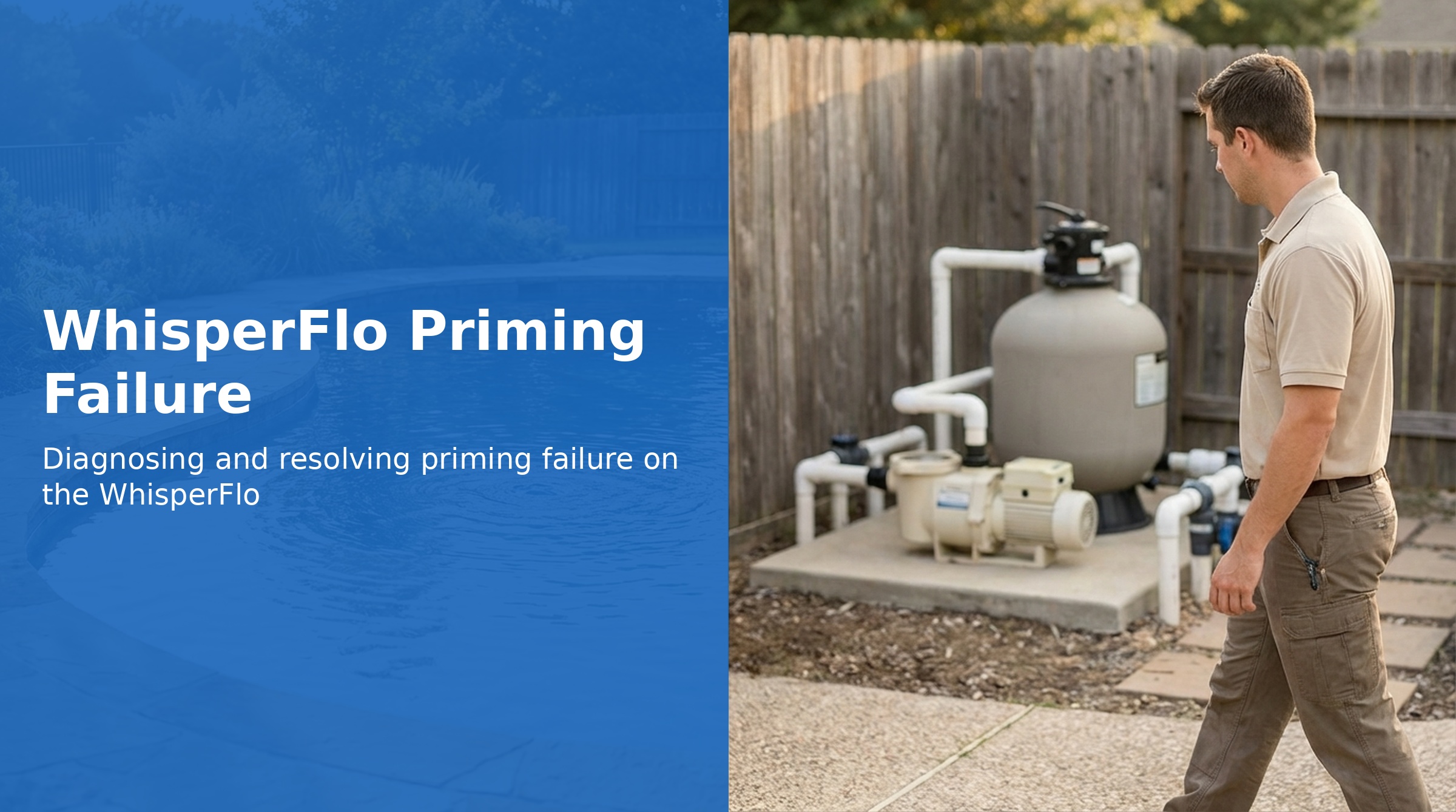
Priming failure on the WhisperFlo means the pump cannot build enough suction to draw water from the pool. Unlike variable speed pumps, the WhisperFlo has no electronic priming mode or self-diagnosis — if it fails to prime, it will run dry until manually stopped. Diagnosing the cause before restarting is essential to avoid damaging the mechanical seal.
The WhisperFlo manual identifies two primary causes of priming failure: air in the suction line and insufficient water. Each has a specific corrective action.
Causes of Priming Failure
Too Much Air in the Suction Line
Air entering the suction side of the pump prevents it from building the vacuum needed to draw water. The pump spins freely but moves no water — this is the dry-running condition that damages the mechanical seal.
Common sources of air infiltration:
- Lid O-ring worn or dirty: The most common cause — the O-ring under the strainer pot lid (P/N 350013) is compressed, cracked, or has debris preventing a seal
- Lid not fully clamped: Lid clamp (P/N 357199) must be fully engaged for the lid to seal
- Cracked lid: Inspect lid for hairline cracks — replace if damaged (P/N 357151 clear, P/N 357156 chemical resistant)
- Loose union connections on suction line: Check all unions between skimmer and pump for tightness
- Valve gland leaks on suction gate valves: Worn valve stem O-rings allow air in under negative pressure even if no water leaks out when the pump is off
- Low pool water level: If water drops below the skimmer opening, the skimmer draws air rather than water
- Cracked suction piping: Inspect exposed PVC for cracks or gaps at joints
Not Enough Water
The pump and all suction-side components must be full of water before the pump can establish flow:
- Suction lines, pump body, strainer pot, and volute must all contain water
- The suction valve must be fully open and functioning
- Water level in the pool must be high enough to supply the skimmer continuously
Step-by-Step Troubleshooting
Step 1: Check Pool Water Level
Pool water must be at least halfway up the skimmer opening. If the water level is too low, the skimmer draws air. Add water to the pool before proceeding.
Step 2: Inspect the Lid and O-Ring
- Stop pump and turn off power at the circuit breaker
- Rotate lid clamp (P/N 357199) counter-clockwise to release
- Remove lid and inspect the O-ring (P/N 350013) for cracks, flat spots, or embedded debris
- Wipe O-ring and seating groove clean
- Lubricate O-ring with silicone lubricant — do not use petroleum-based products
- Inspect lid for cracks — replace if damaged
- Reinstall lid and secure clamp firmly
Step 3: Fill the Strainer Pot
- Remove lid clamp and lid
- Fill strainer pot completely with water — ensure strainer basket (P/N 070387) is in place and clean
- Reinstall lid and tighten clamp
- Open the air release valve on the filter
- Stand clear of the filter and start the pump
- Close the air release valve when water flows out steadily without sputtering
Step 4: Verify Suction Valve is Fully Open
A partially closed suction valve prevents priming even with a full strainer pot. Confirm all suction-side valves are fully open. Check that valves are functioning — a valve that appears open may have a broken stem inside.
Step 5: Inspect for Air Leaks While Running
With the pump running and the clear lid installed, observe:
- Air bubbles visible inside the strainer pot through the clear lid indicate an active suction-side air leak
- Steady bubbling that does not diminish after 30–60 seconds indicates a persistent leak that must be located and repaired
- Water spraying from unions or fittings (may only show under pressure on discharge side)
- Hissing sounds near suction connections indicate air being drawn in
Step 6: Check Valve Glands on Suction Gate Valves
Gate valves on the suction line have packing or O-ring glands around the valve stem. Under the negative pressure of a running pump, worn glands draw in air even if they do not leak water when the pump is off. Tighten the packing nut or replace gland O-rings as needed.
Step 7: Inspect Suction Piping
Walk the full suction line from pool to pump looking for:
- Cracked or broken PVC — particularly at fittings and elbows
- Joints that have pulled apart
- Flexible hose that has collapsed or kinked
Priming Procedure (Standard)
- Remove lid clamp and lid from strainer pot
- Fill strainer pot completely with water
- Reinstall lid and secure clamp
- Open air release valve on filter and stand clear
- Start the pump
- Close air release valve when water flows out steadily
If the pump fails to prime after 1–2 minutes, stop it immediately to avoid seal damage. Do not allow the pump to run dry while troubleshooting.
When to Replace Components
| Part | Part Number | Replace When |
|---|---|---|
| Lid O-Ring | 350013 | Cracked, deformed, or does not seal after cleaning and lubrication |
| Lid, Clear | 357151 | Cracked or warped |
| Lid, Chemical Resistant | 357156 | Cracked or warped (use in high-chemical environments) |
| Lid Clamp | 357199 | Will not hold lid securely |
| Strainer Basket | 070387 | Cracked or heavily degraded |
| Mechanical Seal PA-7 | 071734S | Pump leaks between volute and motor after dry-run event |
| Mechanical Seal A7 | 071728 | Alternate seal — confirm correct type before ordering |