
The Cost of Pool Safety Compliance: Insurance, Liability, and Requirements


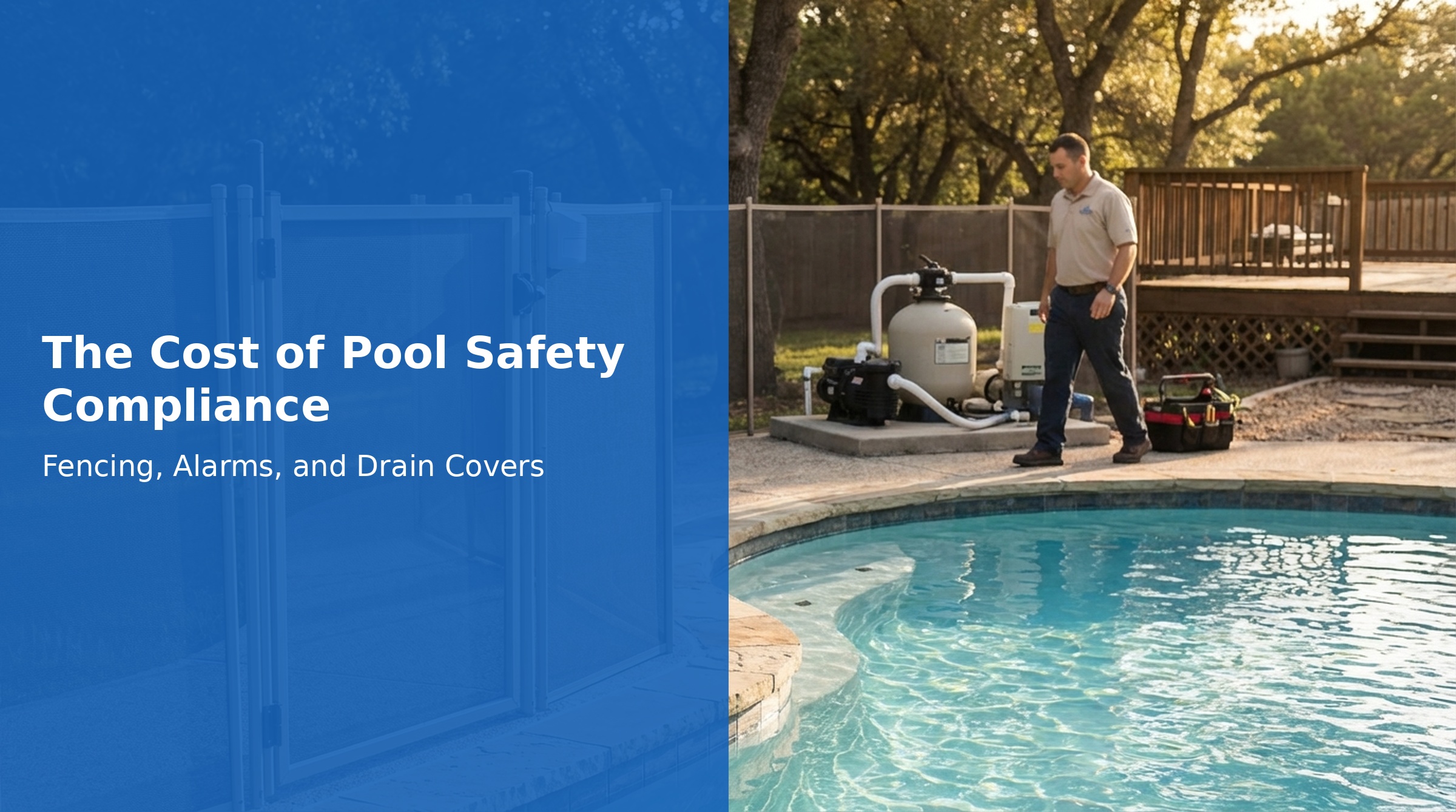
Pool safety compliance involves real costs—but the alternative is far more expensive. Beyond the moral imperative, non-compliance can mean denied insurance, permit violations, and catastrophic liability. This article covers the documented costs of insurance, liability coverage, and compliance-related expenses from government and industry sources.
Key Findings
- $50-$100/year — Cost of a $1 million umbrella policy (10x protection for ~$4/month) [1]Signs.com State GuideInsurance recommendationssigns.com
- $2.5+ million — CPSC "Pool Safely" grants awarded for enforcement and education [2]Pool Safely (CPSC)Federal grant fundingpoolsafely.gov
- Insurance prerequisite — Many insurers refuse policies for unfenced pools [1]Signs.com State GuideInsurance requirementssigns.com
- Free recall repairs — Manufacturers provide free repair kits for recalled equipment [3]CPSC RecallsManufacturer repair programscpsc.gov
Insurance and Liability Coverage Costs
Pool ownership significantly impacts homeowners insurance. Many insurers have specific requirements—and some will refuse to issue a policy if a pool isn't properly fenced.[1]Signs.com State GuideInsurance requirements for poolssigns.com
liability coverage
liability coverage
policy cost
Source: Signs.com insurance recommendations
The math is compelling: a $1 million umbrella policy costs approximately $50-$100 per year—providing 10x the protection for roughly $4 per month.[1]Signs.com State GuideUmbrella policy cost estimatessigns.com Given the catastrophic liability exposure of pool ownership, this is widely considered essential coverage.
| Coverage Type | Amount |
|---|---|
| Standard liability (base) | $100,000 |
| Recommended liability | $300,000-$500,000 |
| Umbrella policy ($1M coverage) | $50-$100/year |
Insurance denial risk: If your pool doesn't meet your insurer's fence requirements, they may deny coverage entirely, cancel your policy, or refuse to pay claims related to the pool. Most insurers require a 4-foot minimum fence.[1]Signs.com State GuideFence requirements for insurancesigns.com Always verify requirements with your specific carrier.
Permit and Compliance Bond Costs
Local jurisdictions set their own fee schedules for pool permits and inspections.[4]ICC CodeNotes2021 ISPSC permit guidelinesiccsafe.org While specific permit costs vary widely by location, some jurisdictions offer flexibility for phased construction.
Washoe County, Nevada allows a $1,000 completion bond if the barrier is incomplete before inspection—providing flexibility for phased construction projects.[5]Washoe County HandoutPool barrier requirementswashoecounty.gov
| Item | Cost |
|---|---|
| Completion bond (Washoe County, NV) | $1,000 |
| Recall repairs | Free (manufacturer) |
Free Recall Repairs
When pool equipment is recalled, manufacturers are required to provide free repair kits. For example, manufacturers like Evajoy have provided free repair kits for recalled above-ground pools.[3]CPSC RecallsFree manufacturer repairscpsc.gov
Pool owners should regularly check the CPSC recalls database for any equipment that may be affected. Recalled items include:
- Above-ground pools with structural issues
- Pool drain covers that don't meet VGB Act requirements
- Pool ladders and steps with defects
- Pool pumps and electrical equipment
Federal Safety Grants
The CPSC has awarded over $2.5 million in "Pool Safely" grants for enforcement and education programs.[2]Pool Safely (CPSC)Federal grant fundingpoolsafely.gov These funds support local programs that may help offset compliance costs for some homeowners through educational initiatives and enforcement programs.
State and local programs: Some jurisdictions use federal grant money to subsidize pool safety improvements. Contact your local building department or health department to ask about available programs.
Barrier Requirements That Affect Insurance
Insurance companies typically require pools to meet basic barrier standards. Most insurers require a 4-foot minimum fence height—the same standard recommended by CPSC and required in many state codes.[1]Signs.com State GuideInsurance and fence requirementssigns.com
Common insurance requirements include:
- 4-foot minimum fence height
- Self-closing, self-latching gates
- No gaps larger than 4 inches
- Non-climbable fence design
Pools that meet or exceed these standards may qualify for better insurance rates, though specific savings vary by carrier.[1]Signs.com State GuideInsurance savings potentialsigns.com
What This Means for Pool Service Professionals
Pool service professionals should understand compliance costs to:
- Advise customers: Help homeowners understand insurance requirements and liability coverage needs
- Document conditions: Note fence, alarm, and drain cover status during service visits
- Check recalls: Review CPSC recall database for equipment on customer pools
- Maintain liability coverage: Ensure your own business insurance addresses pool service risks
Sources
- [1] Signs.com, "State-by-State Guide to Pool Signage and Fencing Requirements" — Insurance requirements, liability recommendations, and fence standards for pool owners. signs.com
- [2] Pool Safely (CPSC), Federal pool safety initiative — Grant funding and education programs. poolsafely.gov
- [3] U.S. Consumer Product Safety Commission, "Recalls" — Manufacturer recall programs and free repair information. cpsc.gov
- [4] ICC Building Safety Journal, "CodeNotes: 2021 ISPSC Residential Swimming Pool and Spa Permit Plan Guidelines" — Permit and inspection requirements. iccsafe.org
- [5] Washoe County, Nevada, "2022 Residential Pool Handout" — Completion bond and barrier requirements. washoecounty.gov